
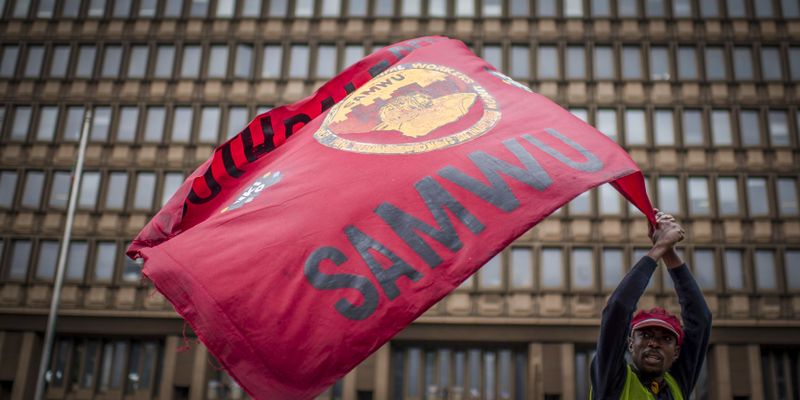
On the eve of Johannesburg’s municipal elections, outgoing mayor Dada Morero pledged that the incoming administration would be bound to honour a R10.3-billion salary agreement with City workers, with further tranches due in 2027.The City and the South African Municipal Workers’ Union (Samwu) signed an addendum on 3 November, the day before the polls. Morero said the next instalment would be provided for in the January 2027 adjustments budget, with disbursement expected towards the end of March.The elections produced a hung council, leaving whoever forms the next administration responsible for managing an agreement that the National Treasury has already challenged.In April, Finance Minister Enoch Godongwana warned that Johannesburg was in severe financial distress, described the settlement as unaffordable and directed the City to halt implementation. The signed addendum has not been publicly released, and there has been no confirmation that the Treasury has withdrawn its objections.The dispute, however, predates Morero’s administration by decades. Its origins lie in efforts to correct salary inequalities inherited from Johannesburg’s formerly segregated local authorities.What was unfair about workers’ salaries?Johannesburg is classified as a Grade 10 municipality, a remuneration category determined by factors including population and municipal revenue. Samwu says many ordinary employees continued to be paid on the lower Grade 8 municipal salary scale while senior officials received Grade 10 remuneration.These are municipal salary scales, not individual job grades. Moving a cleaner or general worker onto the next scale means recalculating pay for the same job, not promoting the employee into management.The dispute also concerns salary notches – pay points within a salary band – and whether employees advanced according to experience and length of service. Samwu argues that some remained on entry-level notches while others doing comparable work earned more.The politically facilitated agreement (PFA) is separate from the ordinary annual increases negotiated nationally for municipal employees. The union says it addresses historical pay disparities, not an additional across-the-board wage increase.Outgoing Johannesburg mayor Dada Morero announced a wage deal on the eve of the elections. (Photo: City of Johannesburg) How did the dispute begin?Around 1995, salary progression was frozen as Johannesburg sought to harmonise remuneration inherited from formerly separate black and white local authorities.Samwu’s account, recorded in a 2009 Labour Court judgment, says progression through salary bands was suspended under collective bargaining arrangements. By 2006, the union was again raising concerns about employees failing to advance through salary notches. The dispute reached the Labour Court in 2009.Following industrial action by Pikitup workers in 2015, Cooperative Governance MEC Jacob Mamabolo intervened. That December, the City agreed to produce a preliminary costing of salary disparities within two weeks, with negotiations scheduled to conclude by February 2016.The published record does not establish what that initial costing found or whether it was completed within the deadline.Garbage piles up in Joburg on 1 December 2015 during a strike by Pikitup workers. (Photo: Moeletsi Mabe / Gallo Images / The Times)In April 2016, the City and Samwu concluded a settlement facilitated by the Commission for Conciliation, Mediation and Arbitration (CCMA).It provided for common job grading, external salary benchmarking and a common salary scale across the municipality and its entities.Implementation was expressly subject to affordability and sustainability. The agreement recognised the pay problem but also made funding a condition of its resolution.Who received salary adjustments?The City’s records show that some adjustments were implemented.According to its 2022/23 annual report, adjustments for categories A and B – including general workers, messengers, administrative assistants, secretaries and machine operators – were completed by December 2016.Categories C and D received partial salary-notch adjustments in August 2018, backdated to July. Further adjustments recognising years of service followed for Category C employees in September 2022 and Category D employees in October.Organised labour nevertheless disputed how the agreements were interpreted and whether all eligible employees had benefited. The City established task teams to deal with outstanding issues.The annual report anticipated further adjustments of about R956 a month for approximately 36,000 employees in 2023/24, but did not establish whether all those projected payments were subsequently made.How did the bill reach R10.3bn?By July 2024, the City had recorded an estimated R10.39-billion cost for its proposed Common Key Salary Scale.Council minutes put the cost for categories A to D at R10.18-billion, plus R210.9-million for directors and group heads in categories E and F.The council noted the total but did not approve its immediate payment. Full implementation remained subject to funding and further approvals, while transitional salary-notch adjustments were limited to the R701-million budget for 2024/25.In November 2025, Morero’s administration reached a salary-parity settlement with Samwu valued at roughly R10.3-billion – a deal the City later acknowledged had not been incorporated into its budget, even as it signed an addendum on the eve of the November 2026 polls.Samwu members march to the Johannesburg city manager’s office on 27 October 2026 to demand payment under the politically facilitated agreement. (Photo: Fani Mahuntsi / Gallo Images)Samwu describes the amount as accumulated obligations arising from unequal remuneration, frozen salary progression and the failure to place employees on appropriate salary scales.But the City has not publicly released calculations showing how much represents historical underpayment, how much concerns higher salaries going forward, or whether interest is included.It is also unclear whether the 2025 settlement and the 2024 estimate were calculated on the same basis.What will workers receive?Morero told News24 that about 37,000 employees had received an initial payment totalling R1.2-billion.The payment was only part of the broader settlement. It does not mean each received the same amount: entitlements depend on job, salary notch, service history and the settlement terms.Employees may receive payments for past disparities as well as higher monthly salaries. Retrospective payments may be once-off, while permanent salary adjustments would increase the City’s recurring wage bill.There is no comprehensive public breakdown showing what cleaners, drivers, administrative workers or technicians will receive, or what the new salary scales will cost annually.Did the election-eve addendum change anything?The City described the 3 November addendum as a means of accelerating outstanding commitments and placing affected workers on the agreed salary scale.Samwu Regional Secretary Thobani Nkosi welcomed what he described as a more secure funding arrangement, intended to prevent another missed payment such as the one due in July 2026.Cooperative Governance MEC Mamabolo, who helped facilitate the agreement, and Morero said it would remain binding on the next administration.Gauteng Cooperative Governance MEC Jacob Mamabolo. (Photo: X)The original settlement envisaged substantial instalments in July 2026 and July 2027, but the City missed the July 2026 payment.The latest announcement points to further payments after the January 2027 adjustments budget, but does not establish that the funding problem has been resolved.The City has not released the signed addendum or full revised payment schedule, and has not demonstrated how the outstanding balance will be financed.The announcement also does not establish that another R5-billion has been added to the original R10.3-billion settlement.Treasury could still interveneGodongwana’s April warning raised concerns about affordability and compliance with the Municipal Finance Management Act.He also warned that national funding could be withheld if serious financial management problems were not addressed.Treasury officials subsequently met Morero, but there has been no public confirmation that the department has withdrawn its objections.The addendum could face further scrutiny, although the Treasury’s objections do not automatically invalidate the agreement.What does this mean for residents?Johannesburg must address its commitments to workers while maintaining water, electricity, roads, refuse collection and other services.Johannesburg Crisis Alliance coordinator Yunus Chamda said workers had a right to what was lawfully due to them, and residents had a right to reliable services and responsible management of public funds. “The City has an obligation to uphold both,” he said.Johannesburg Crisis Alliance coordinator Yunus Chamda. (Photo: David Harrison) Chamda called for a credible, transparent and affordable funding plan that protects essential services and infrastructure investment.“Johannesburg cannot resolve one set of financial obligations by creating another crisis elsewhere in the municipality.”Without sustainable new revenue or savings, higher personnel costs risk squeezing maintenance and infrastructure budgets.While that does not guarantee tariff hikes or cancelled projects, it makes the funding model directly relevant to ratepayers already footing the bill for services.The City has yet to disclose the settlement’s full recurring cost or explain how it will be funded. DMDaily Maverick’s Joburg Bureau is for people who love this city. Get the latest Joburg news, events and conversations sent straight to your phone every Friday. Join the WhatsApp Community.
EXPLAINER: Joburg’s new administration will inherit a R10.3bn wage debt — here’s how it accumulated
Full Article
Original Source
Read the full article at Dailymaverick →KhanList aggregates and links to publicly available news content. We do not host full articles from third-party sources. Always verify important information with original sources.