
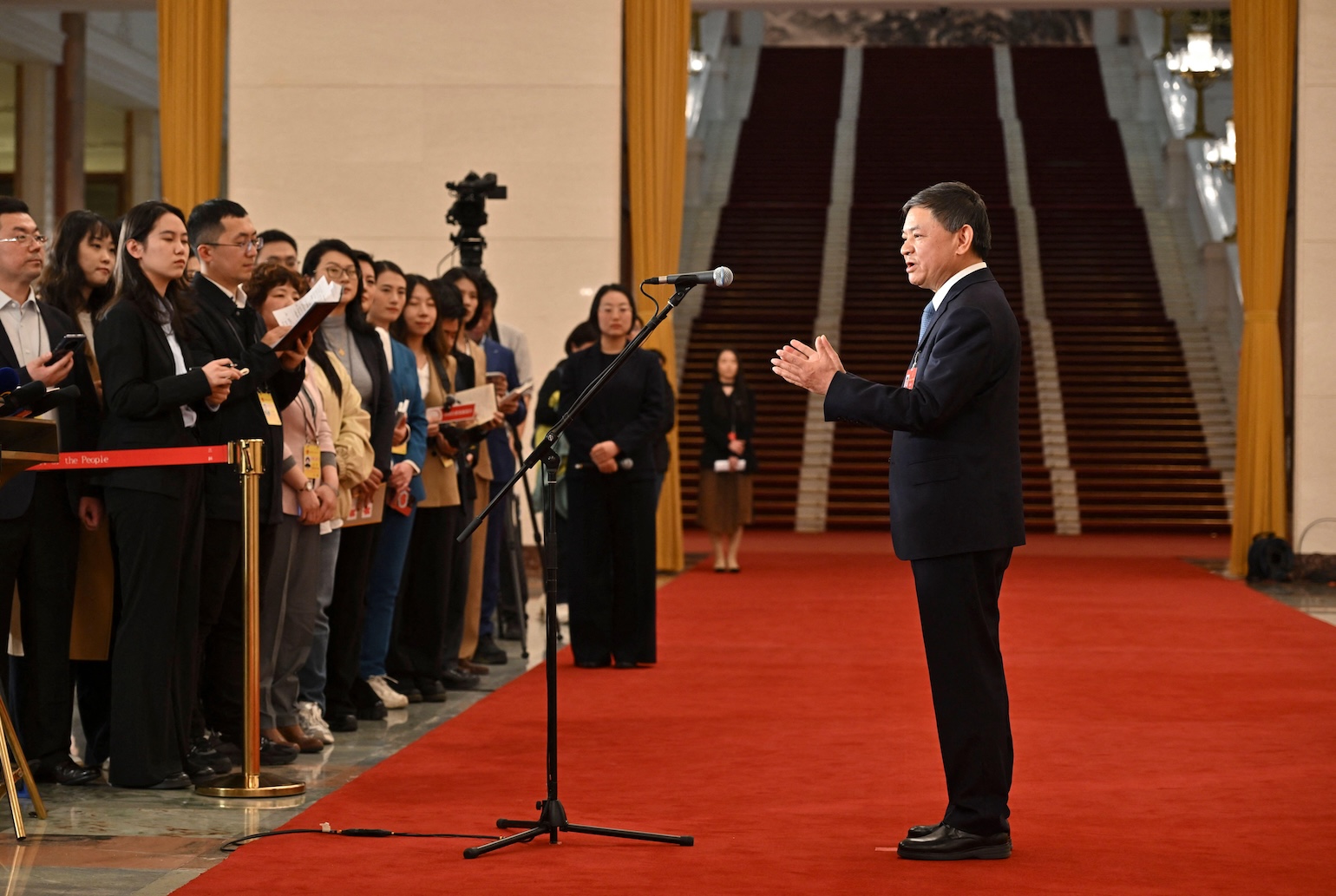
With the COP31 climate summit in Turkey looming, all eyes are on China to see what the country will push for in the negotiations. At COP30 last year, China helped to secure a “dialogue” on climate-related “unilateral trade measures”, as well as a two-year “work programme” concerning climate finance. The nation also championed south-south cooperation throughout the conference and co-led a summit on methane, alongside Brazil and the UK. In a recent press conference, China’s environment vice-minister Li Gao noted the need to “uphold multilateralism” and send a “clear political signal” that the global community is united around climate action. Li also pledged to advocate for an “open and efficient” trade system that “facilitates” adoption of clean-energy technologies. On the more traditional topics of mitigation and finance, Li highlighted the need to “address insufficient emission reduction efforts by developed countries and inadequate financial support” for developing countries. Carbon Brief asked six leading experts on China what they believe China wants from COP31 and what signals they will be watching for. Their responses have been edited for length and clarity. Kate Logan Director of the China climate hub and climate diplomacy, Asia Society Policy Institute In an era where global climate cooperation is severely challenged, China’s top priority at COP31 will be upholding multilateralism. With most “big ticket” items under the Paris Agreement now complete and constrained expectations for major new breakthroughs at COP31, China may be satisfied with a conference that produces no major drama and little else. Nevertheless, expect China’s vision for multilateralism to have a distinct flavor to it. Chinese officials may again leverage the COP stage to oppose unilateralism and promote an open and fair international trade system, reflecting Beijing’s persistent frustration with tariffs and other measures that have inhibited the global flow of Chinese clean technologies. One question is whether they will do this through existing spaces or push for a dedicated agenda item on trade, given that COP30’s trade outcomes, championed by China, mostly relegated discussions to mid-year technical meetings. China may also seek clarity on implementation pathways for existing targets, including nationally determined contributions (NDCs) and the $300bn climate finance goal. Amid US withdrawal, officials remain anxious about additional pressure that Beijing may receive. After vice-premier Ding Xuexiang shared at COP29 that China has provided and mobilised over 177bn yuan ($26.5bn) in climate finance for developing countries since 2016, China has refrained from issuing further quantitative updates, while maintaining the imperative for developed countries to take the lead on climate finance. China may be happy to let other developing countries push this agenda while serving as a broker in the end game to ensure its own interests are protected. Ma Jun Founder and director, Institute of Public and Environmental Affairs I think China wants COP31 to reaffirm confidence in multilateral climate cooperation and translate commitments into action. With the risk of overshooting 1.5C almost unavoidable, I expect China to seek clearer delivery of climate finance for developing countries; encourage reductions in potent, short-lived greenhouse gases such as methane; support a just transition; and highlight trade barriers affecting clean technologies. I will be watching whether negotiations produce credible plans for delivering finance, particularly for adaptation, as well as practical support for implementing national climate pledges. The climate-trade debate will also matter. Can countries address their differences while keeping renewable energy and other clean technologies affordable and accessible? It will be an important test of whether countries can achieve global energy-transition targets by 2030 and turn shared ambitions into measurable emissions reductions. Yao Zhe Global policy advisor, Greenpeace East Asia At COP31, I expect a continued push from China to integrate more trade perspectives into the climate negotiations. Beijing’s new five-year plan on climate action envisions a constructive leadership role in global climate governance, specifically calling for the proper handling of climate-trade issues and the free flow of low-carbon products. It will be critical to watch how this grand strategy plays out on the negotiation floor. I will also be watching how China responds to the COP presidency’s electrification initiative. Beijing increasingly views climate diplomacy through the lens of clean-energy diplomacy – an approach that directly leverages its industrial strength on renewables, electric vehicles (EVs), batteries and grid infrastructure. While China should naturally welcome a global electrification initiative that will lead to larger overseas markets, it likely remains reluctant to link these targets to any commitments regarding transitioning away from fossil fuels. Prof Ryna Cui Associate research professor and research director, University of Maryland Center for Global Sustainability There isn’t much on the formal negotiation agenda for this year’s COP. The core theme will continue to focus on implementation and delivery, which I think China has strong interests in. This is because of both progress made domestically with the clean energy transition and the overseas economic opportunities to support other countries’ implementation with low-cost Chinese clean technologies. One thing exciting for me to watch is that, as China reaches its coal and oil peak, it may open up space for increased interests and leadership in the global “transitioning away from fossil fuels” agenda. This may not happen immediately through formal government negotiations, but more likely through broader bilateral and multilateral engagements. As the world navigates options and challenges for the 1.5C overshoot future, China can also contribute critically beyond the energy transition, especially on opportunities for rapid abatement of methane, industrial nitrous oxide, hydrofluorocarbons and other non-CO2 gases as part of its 2035 all-sector, all-greenhouse gas NDC. Dr Joseph Dellatte Resident fellow and head of energy and climate studies, Institut Montaigne China will likely seek recognition as a climate leader while defending its position as the world’s cleantech manufacturing hub, amid growing trade tensions. I’ll watch whether it continues to frame the global transition primarily around access to Chinese technologies and open markets for its exports, or shows greater willingness to discuss cooperation that shares industrial benefits through local manufacturing, joint ventures and technology sharing. Its delegation and pavilion messaging will reveal how Beijing responds to partners seeking their own place in cleantech value chains. In the negotiations, I’ll watch whether China accepts greater responsibility for climate ambition while maintaining its leadership role among developing countries, including through additional voluntary climate finance. Electrification will be another test. Will Beijing support commitments linking electrification to cleaner grids and use its influence to bring reluctant fossil-fuel producers on board? Prof Jeremy Wallace A Doak Barnett professor of China studies, Johns Hopkins School of Advanced International Studies China seems to hold many cards in the notional game of global climate leadership. Its firms have innovated and scaled up production to make solar, batteries and EVs cost-competitive with or cheaper than fossil alternatives. It has led in deployment of these technologies. Yet, in preparation for COP31, China seems more interested in fighting battles abroad about “unfair” tariffs on these products than about demonstrating their effectiveness by accelerating adoption of the green-tech revolution at home. China’s renewables buildout has slowed dramatically in 2026, while new coal power and coal chemical facilities continue to be built. The Chinese government has restricted firms from taking their best manufacturing innovations out of the country when building factories abroad. Climate leadership is up for grabs. I’m watching to see if Beijing will play its cards and show that they are a winning hand. Analysis: China’s clean-tech exports in 2026 to avoid as much CO2 as Brazil emits in a year Chart: A record two-thirds of car sales in China are now electric vehicles Interactive: What China’s dozens of ‘five-year plans’ say about climate and energy Analysis: China’s CO2 emissions fall in Q2 2026 due to plummeting oil use
Experts: What China wants from the COP31 climate talks
Full Article
Original Source
Read the full article at Carbonbrief →KhanList aggregates and links to publicly available news content. We do not host full articles from third-party sources. Always verify important information with original sources.