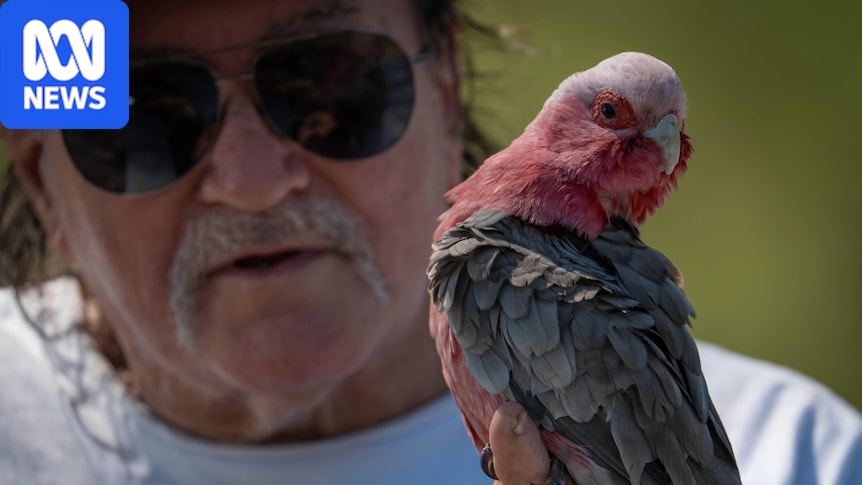
Veterinary authorities say it is "inevitable" H5N1 bird flu will spread to the Northern Territory, almost two months after the first case of the disease was identified in Australia.The virus, first detected in Western Australia in late June, has now been found in all six states, leading to bird vaccination programs in some of them.Senior Director of Species Management at the NT Department of Lands, Planning and Environment Tony Griffiths said the disease's arrival in the territory was imminent.Tony Griffiths says it's only a matter of time before the H5N1 bird flu strain arrives in the NT. (ABC News: Tristan Hooft)"It's definitely going to happen," he said."It could be weeks, it could be months, but it's a national event, it's the biggest national disease event that has ever occurred in Australia for wildlife."For bird owners like Darwin local "Datto", who frequents Nightcliff Jetty with his galah Buddy, the threat of the flu has created a looming sense of anxiety.The NT is home to 450 species of bird, 37 of which are considered threatened. (ABC News: Tristan Hooft)"It's going to take away a lot of privileges of me taking [Buddy] where the other birds are, and we're going to lose a lot of good birds over it," he said.Datto said an outbreak in Darwin's northern suburbs, where wild birds routinely flock along the coastline, would devastate locals who come to enjoy the wildlife."We get all myriads of birds here — the firebirds, the honey eaters and everything else — and it'll be a shame to see all of them in a little pile of feathers on the side of the road," he said.The NT's Chief Veterinary Officer Sue Fitzpatrick said it was not just wild species that were at risk, urging backyard poultry farmers and other bird owners to be vigilant against the disease.Sue Fitzpatrick says the Territory's backyard poultry owners can do their bit to help stop the spread of bird flu. (ABC News: Tristan Hooft)"While we don't have a commercial poultry industry, we certainly have many backyard poultry owners," she said."We're looking for bird keepers to protect their birds from wild birds, enclose their runs and put some roof over their runs, protect feed and water sources from wild birds."Birdwatchers essential to responseDr Griffiths said the plan to combat H5N1 in the NT would largely rely on wide-scale surveying of areas where birds are known to flock, such as the Top End coastline and Barkly Lakes.He said while experts had been rigorously sampling faeces and water supplies to identify contamination, vaccination of native species was not on the cards.The masked lapwing has small spurs on its wings which it uses to protect its chicks. (ABC News: Tristan Hooft)"We have 450 species of bird in the territory and 37 of those are threatened, but we don't rely on captive breeding programs to support the management of those species," he said."The threatened birds we have are dispersed over very large areas and it's very difficult to catch them to vaccinate."With a vast network of birdwatchers across the NT, Dr Griffiths said the government was looking to harness the power of the territory's avian enthusiasts to tackle the tyranny of distance.Keen birdwatchers are being urged to use their skills to help monitor the spread of bird flu in the NT. (ABC News: Tristan Hooft)Biodiversity Watch NT's Graeme Sawyer said having boots on the ground would be essential to the mitigation effort."The authorities' problem is always that they haven't got any staff in most places," he said."By using bird-watching fraternities, Indigenous communities and ranger programs, you've got people right across the country, and a lot of them know a heck of a lot about their birds."Mr Sawyer said anyone with a passion for birds and wildlife conservation could help to slow the spread of the virus.Graeme Sawyer says the NT's bird-watching fraternities, Indigenous communities and rangers "know a heck of a lot about their birds". (ABC News: Tristan Hooft)"I would just urge anybody who's got a remote interest in birds to sharpen up their eyes and get their binoculars out," he said."It is a big unknown and the more information we can get early, the better."
Experts warn H5N1 bird flu spread to the Northern Territory 'inevitable'
Full Article
Original Source
Read the full article at Abc →KhanList aggregates and links to publicly available news content. We do not host full articles from third-party sources. Always verify important information with original sources.