
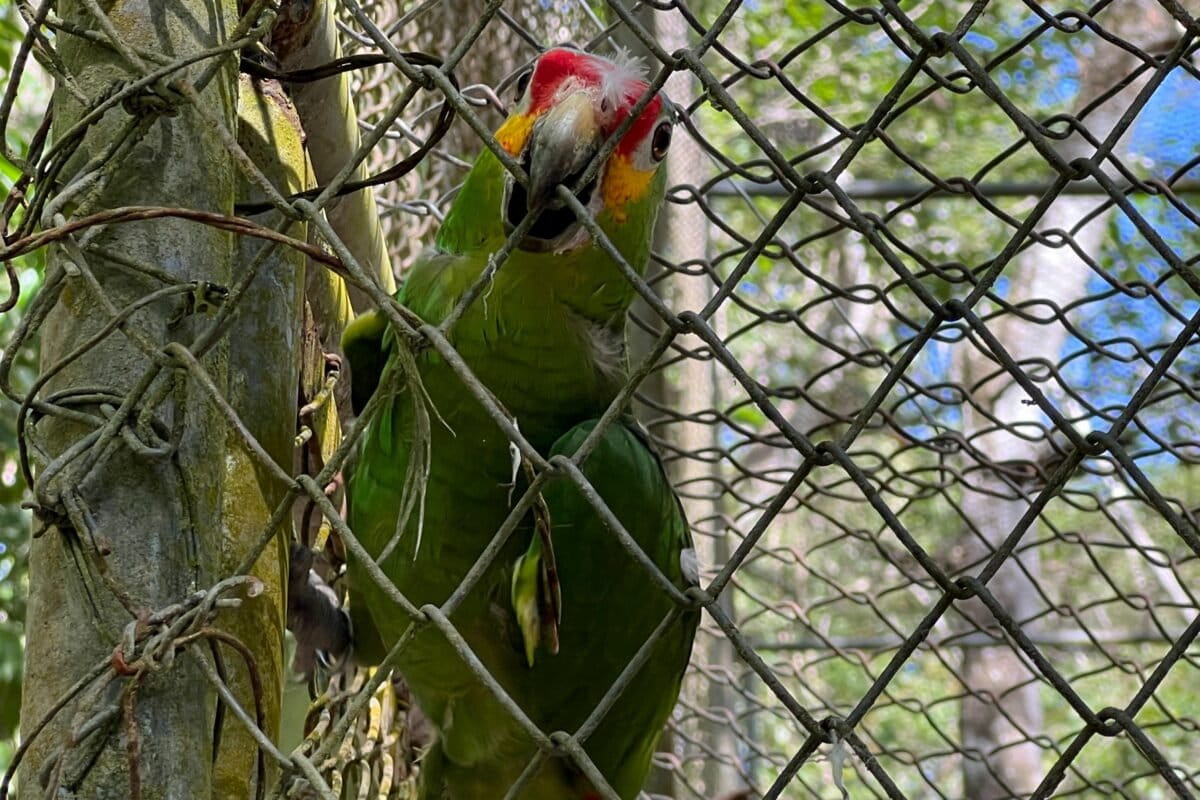
In India, the exotic pet trade is increasing the risk of zoonotic disease spillovers, as close contact with imported wild animals creates repeated opportunities for dangerous pathogens to jump to humans and vice versa, reports Mongabay India’s Arathi Menon. Dr. Rina Dev, an avian and exotic animal veterinarian in Mumbai who treats imported and seized wildlife, experienced the potential danger firsthand when she was hospitalized with a lung infection. “I hope it’s not something from the parrots I was treating,” Dev told Mongabay India after she was released from the hospital. Her concerns are warranted: diseases like avian chlamydiosis (psittacosis) are commonly contracted by people who handle birds, earning it the nickname “bird handler’s disease.” Dev noted that traded animals can carry a wide array of infections, including salmonellosis from reptiles, tuberculosis from primates, and avian influenza from birds. “Tuberculosis is increasingly being detected among primates, which is a big zoonotic concern,” she said. Uttara Mendiratta, a conservation researcher working on illegal wildlife hunting and trade, said disease transfer between humans and other primates is especially easy because we’re so closely related. Ebola and HIV can both pass from nonhuman primates to people, for example. Human diseases can also be deadly for wildlife. A global analysis revealed that traded mammals are 1.5 times more likely to share pathogens with humans than nontraded mammals. On average a traded species shares one additional pathogen with humans for every decade it’s traded. Additionally, a 2026 report by Humane World for Animals, a global nonprofit working to protect animals, estimates that 75% of emerging infectious diseases are zoonotic and roughly 850,000 unknown viruses in birds and mammals have the potential to infect people. Zoonotic risks are further heightened by animals in public places such as pet cafes, petting zoos, and interactive public events. “It is very risky, particularly from a public health perspective,” said Sumanth Bindumadhav, director of Humane World for Animals India and co-author of the 2026 report. Mendiratta said first responders like customs officials often lack disease-prevention equipment during wildlife seizures, and illegally trafficked animals bypass mandatory quarantine procedures entirely. “We have tried to raise this issue with people working on One Health because we believe exotic pets represent an important potential disease pathway,” she said, referring to the One Health framework that advocates for a holistic approach to health recognizing the interconnectedness of human, wildlife, and environmental health. “So far, we have not seen the level of response of investment we had hoped for,” Mendiratta added. Read the full story by Arathi Menon here. Banner image: A red-lored amazon, a parrot native to Central and South America. Those who handle exotic birds are often at risk of contracting avian chlamydiosis or psittacosis, an infection so common within the profession that it’s earned the nickname “bird handler’s disease.” Image courtesy of Humane World for Animals India. Credits Topics
Exotic pet trade poses rising zoonotic disease risks in India
Full Article
Original Source
Read the full article at News →KhanList aggregates and links to publicly available news content. We do not host full articles from third-party sources. Always verify important information with original sources.