
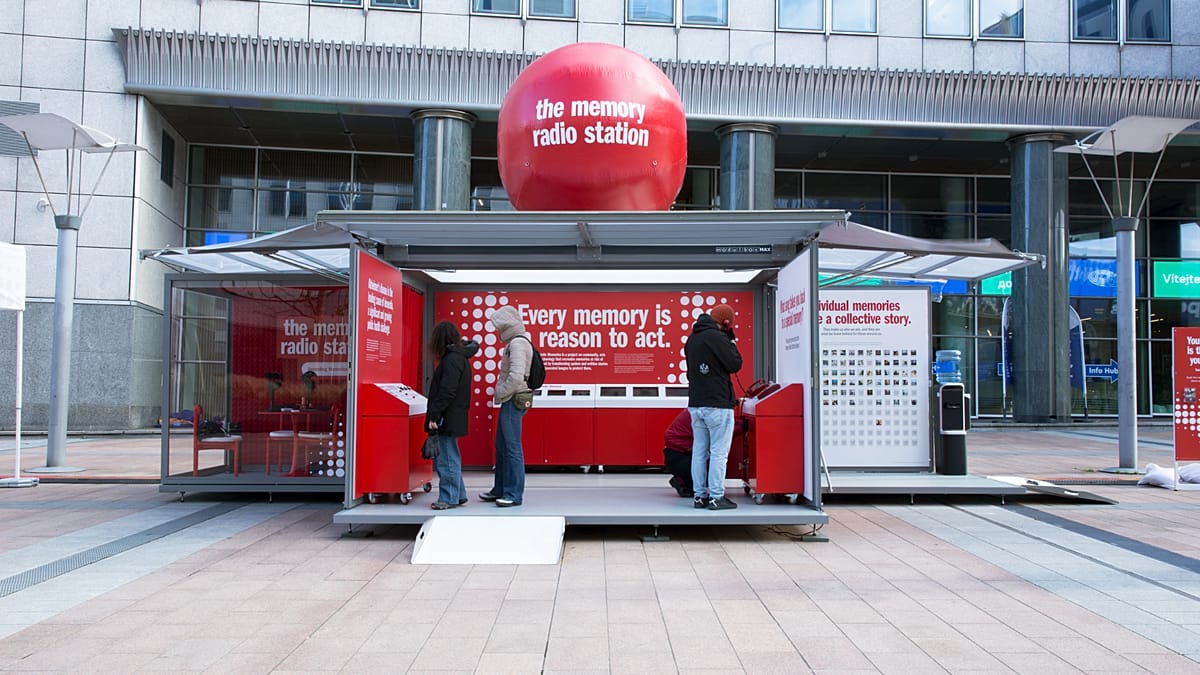
Watching someone you love gradually lose their memories can be a painful experience. For Hilde Vautmans, that meant seeing her father eventually stop recognising her. ADVERTISEMENT ADVERTISEMENT “That is something that hurts so much you cannot even describe it,” said Vautmans, a Belgian member of the European Parliament. Like Vautmans, many people across Europe watch family members with dementia struggle to recall personal stories and shared experiences. Alzheimer’s disease is the most common form of dementia and is associated with progressive cognitive decline, including difficulties with memory, thinking and communication. Dementia currently affects over 12 million people in Europe, with numbers projected to increase to 20 million by 2050. Alzheimer’s accounts for 60% to 80% of cases. Researchers say earlier diagnosis could help funnel people into treatment while the disease is still mild. Others are trying to improve the lives of people already experiencing memory loss, for example through reminiscence therapy. Traditionally, this approach involves using familiar objects, photographs and music to prompt people to recall and share experiences from their lives. Now, proponents of reminiscence therapy are eyeing virtual reality, interactive platforms, artificial intelligence (AI) and other technological tools to create more personalised experiences and help people reconnect with their memories. One of these initiatives is Synthetic Memories, a project from the Barcelona-based creative studio Domestic Data Streamers. It uses AI to recreate people’s memories and turn them into images, offering a new approach to preserving personal stories. The project's work with people living with dementia began in 2023 in care homes for older people, including residents with Alzheimer’s and other forms of dementia. The studio worked with social workers and neurotherapists in Spain for the project. During a one-hour session with someone suffering memory loss, an interviewer and an AI prompter guide participants through their memories. Generative AI models are then used to create visual representations of the experiences they describe. The project stresses that it is not intended as a cure, but as a tool to support reminiscence therapy. Synthetic Memories has since hit the road as part of The Memory Radio Station, a travelling exhibition launched in partnership with pharmaceutical company Eli Lilly. It is touring Europe to bring conversations about memory loss into public spaces. The exhibition invites members of the public to share their own memories, transforming spoken and written stories into AI images. They do not need to be suffering from memory loss to participate. In November, the exhibition is at the European Parliament in Brussels. That’s where Vautmans took part, recalling childhood memories and time spent with her father. She recalled going with him to the cow market in Sint-Truiden, the Belgian town where she grew up. “Those were wonderful moments with my father when I could go with him to the market and try to sell the cows and then put them on the scale [to weigh them]”, she told the radio station. Recognising the symptoms and obtaining an early diagnosis are also crucial to improving quality of life for people with Alzheimer’s. “In our case, it took a long time. It was a whole search; it was a denial,” Vautmans told Euronews. “It’s not Alzheimer’s; it’s just stress, it’s just too much work. Like we all say when we see somebody forgetting things”. Why early diagnosis matters Evidence shows that people who receive an early and accurate diagnosis experience improved psychosocial outcomes, including reduced anxiety and greater independence, the Alzheimer’s Society noted in its latest report. An early diagnosis also allows people to access treatments and interventions that address their clinical and care needs, with some treatments being most effective in the earlier stages of the disease. Yet one of the main barriers to an early Alzheimer’s diagnosis is limited awareness of the disease and its symptoms. A recent Europe-wide survey found significant gaps in public knowledge about dementia. Among 681 people surveyed in 12 countries, fewer than half knew that Alzheimer's disease is the most common type of dementia, while many people said Alzheimer’s cannot be prevented and is simply a normal part of ageing. While there is no guaranteed way to prevent Alzheimer’s, lifestyle factors such as diet, exercise and smoking can affect someone’s risk. “Without adequate knowledge, it can be difficult to spot the signs of different dementia subtypes,” the authors wrote. They said raising awareness among the general public could help people recognise symptoms and seek a diagnosis sooner. That’s where the travelling exhibition comes in. It aims to encourage people to reflect on the importance of memory and the impact of Alzheimer’s disease. “This is an engagement opportunity that demonstrates what is making us unique as human beings; that's the power of our brain,” Frederic Destrebecq, executive director of the European Brain Council, said at the opening of the exhibition in Brussels. “This is a reminder of how essential it is to look after and protect our best asset in life.”
Exhibition uses AI to recreate people’s memories and raise awareness of dementia
Full Article
Original Source
Read the full article at Euronews →KhanList aggregates and links to publicly available news content. We do not host full articles from third-party sources. Always verify important information with original sources.