
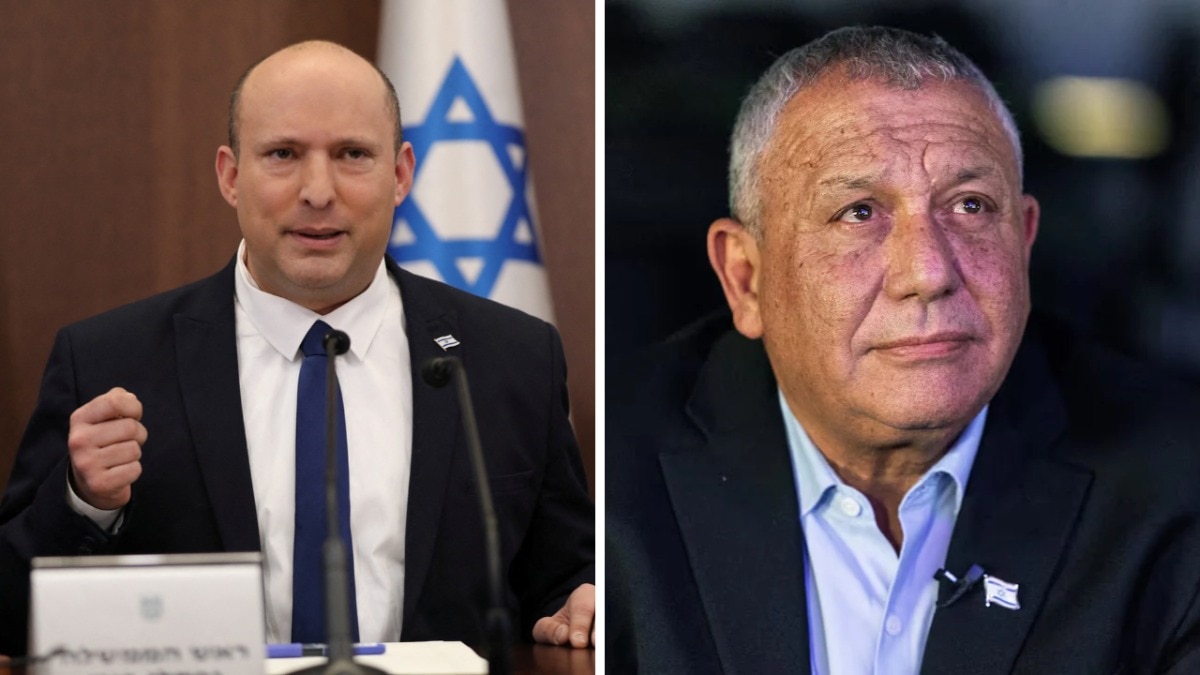
Former Israeli prime minister Naftali Bennett has backed Gadi Eisenkot to lead the country's next government while ruling out any possibility of serving under Benjamin Netanyahu, setting up a fresh test for the coalition talks now underway.Bennett, leader of the B'Yachad party, said Saturday that he was committed to building a "Zionist unity government" under Eisenkot, who is currently racing to form Israel's next government after the inconclusive October 27 election. His comments came days after a two-hour meeting with Netanyahu had triggered speculation that Bennett could break away from Eisenkot's bloc.Bennett said he was committed to forming a government led by Gadi Eisenkot with his political partners, while ruling out any possibility of his party joining a government led by Benjamin Netanyahu or his bloc.BENNETT BACKS EISENKOT FOR PMBennett said the objective should be to establish a government capable of pulling Israel out of its current political and security turmoil, arguing that Eisenkot offered the strongest route to achieving it. "I believe the best alternative to achieve all of this is a Zionist unity government led by," Bennett said. "Through the initiative I intend to advance, we will very quickly discover whether the Likud is genuinely interested in unity, or if they are merely attempting to squander the 29 days remaining in Gadi's mandate."The statement is significant because Bennett's position has been closely watched since his meeting with Netanyahu. Local media, citing sources close to Bennett, had previously denied that he was preparing to join a Netanyahu-led government, saying he would only consider a rotation arrangement in which Eisenkot would serve first as prime minister. Bennett also acknowledged the mistrust surrounding negotiations with Likud but said talks were necessary to determine whether a genuine unity government was possible."The distrust of Netanyahu is justified," he said, while arguing that the negotiations would soon show whether Likud was serious about sharing power or simply trying to run down Eisenkot's mandate.THREE CONDITIONS FOR BENNETT'S GOVERNMENTBennett also laid out the priorities he wants a new government to pursue.Among them is the establishment of a State Commission of Inquiry into the failures surrounding the October 7, 2023, Hamas attack. He also called for limiting a prime minister's time in office to eight years and changing economic incentives so that they benefit military reservists rather than those who avoid military service."We will steer the country from chaos toward effective governance, and rescue Israel from the head-on collision course upon which we are currently hurtling forward," Bennett said. He argued that political differences should not prevent leaders from working together, pointing to members of his own political camp who have served alongside one another during the war.Bennett has favoured a broad unity government with Likud rather than relying on the ultra-Orthodox or Arab-majority parties. But his insistence that Netanyahu cannot lead such a government leaves a major obstacle unresolved: Likud has demanded that Netanyahu remain prime minister in any unity arrangement.EISENKOT HAS UNTIL DECEMBER 6While Bennett is pushing for a unity government, Eisenkot has made clear that he will not allow negotiations to continue indefinitely. Eisenkot said Friday that he would pursue two remaining routes before resorting to a minority government: talks with the ultra-Orthodox parties and negotiations with Likud."All sides need to understand that I do not intend to drag this out. They need to understand that, at the right time, I will bring a new and good government under my leadership to the Knesset for approval," Eisenkot wrote on X."This is not a threat for negotiating purposes. It is the decision I have made out of an understanding of the responsibility and role placed upon me at this time of emergency," he added.Eisenkot's mandate expires on December 6, and he has indicated that he could present a government before then even if it does not command a conventional majority. Such a government could depend on support or abstentions from Arab-led parties. That possibility has exposed another fault line within the bloc trying to replace Netanyahu. While some parties are willing to consider an Arab-backed minority government, others, including Avigdor Liberman's Yisrael Beytenu, have opposed such an arrangement.- EndsWith inputs from agencies
Ex-Israeli PM backs Gadi Eisenkot for PM, says he won't serve under Netanyahu
Full Article
Original Source
Read the full article at Indiatoday →KhanList aggregates and links to publicly available news content. We do not host full articles from third-party sources. Always verify important information with original sources.