
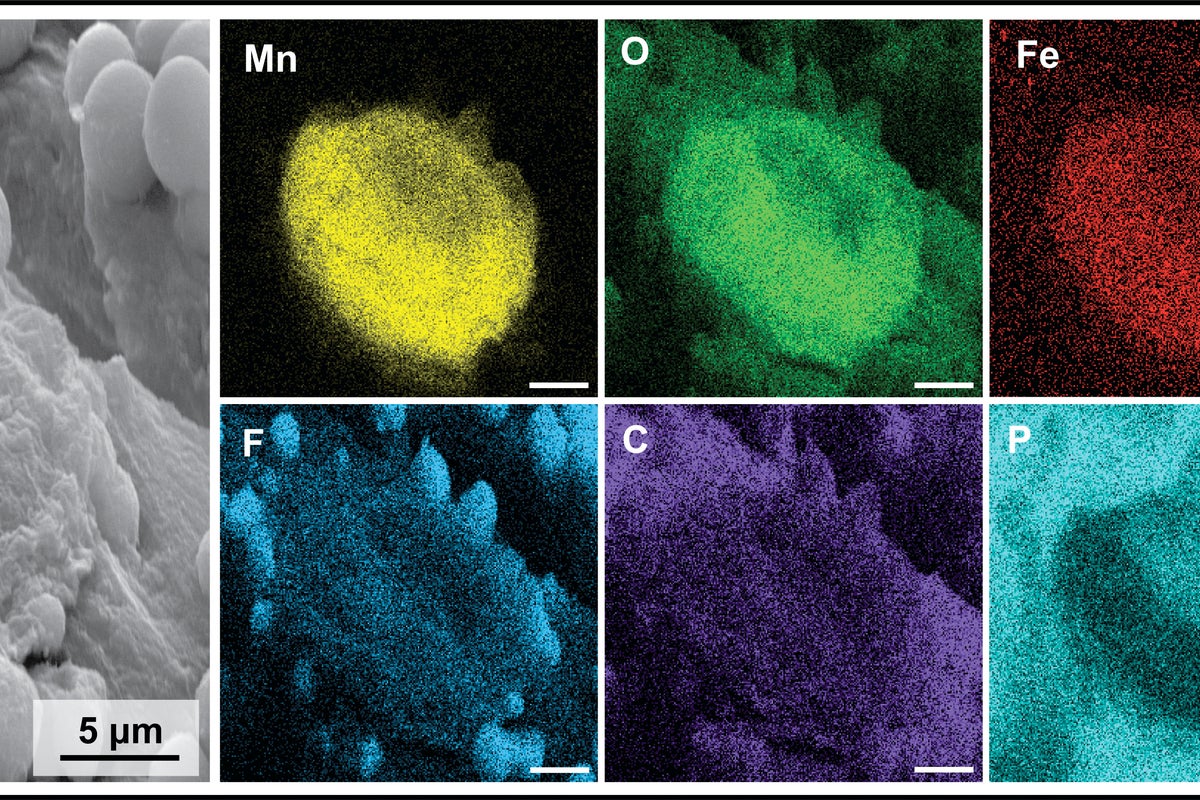
An international team of scientists believe they have found red blood cells in 115 million years old dinosaur bones for the very first time.Researchers have hailed a “landmark discovery” after analysing the limb bones of a juvenile, meat-eating dinosaur called an Aratasaurus and identifying numerous microscopic structures that appear to be fossilised red blood cells.The dinosaur bones had been unearthed in a gypsum mine in the Ceará state in northeastern Brazil in 2008 and kept at the National Museum of Brazil where researchers continued to examine them. Kliti Grice, the study’s co-author and chemist at Curtin University in Australia, said: “We have not found a vial of dinosaur blood. What we are seeing is a mineral and molecular echo of ancient biology, and that is scientifically much more interesting.“For me, the most surprising thing is that we can see the structures together with chemical evidence of their biological origin after such enormous geological time.“To detect intact heme derived molecules in 115-million-year-old red blood cells is astonishing: this really is a landmark discovery.”The 115-million-year-old fossil was found in Brazil in 2008 (Curtin University)Ms Grice said further research could help advance the understanding of blood’s evolution, dinosaur metabolism, and activity levels in ancient animals.Researchers added that knowing this type of preservation was possible could also mean similar traces of life may exist elsewhere in the universe.“These findings challenge longstanding assumptions that certain biomolecules such as haemoglobin cannot survive deep time,” Ms Grice said.“It not only extends the known fossil record of blood, but also offers a direct molecular window into the physiology of long-extinct animals so we may better understand them and the world they lived in.”Ms Grice added: “What the work does encourage us to do is keep testing the limits of molecular preservation rather than assuming that all biological information must disappear after a particular length of time.”Researchers said the bones likely belonged to a four-year-old dinosaur measuring over 10ft long and weighing about 75lbs.Head of the school of earth and planetary sciences, professor Martin Van Kranendonk, said the research redefined how molecular structures could be preserved over long time frames or in hostile conditions. “This study exemplifies how coordinated efforts across institutions, continents and scientific disciplines can unlock extraordinary insights into ancient life.”
Evidence of red bloods cells found in 115 115 million-year-old dinosaur’s bones
Full Article
Original Source
Read the full article at Independent →KhanList aggregates and links to publicly available news content. We do not host full articles from third-party sources. Always verify important information with original sources.