
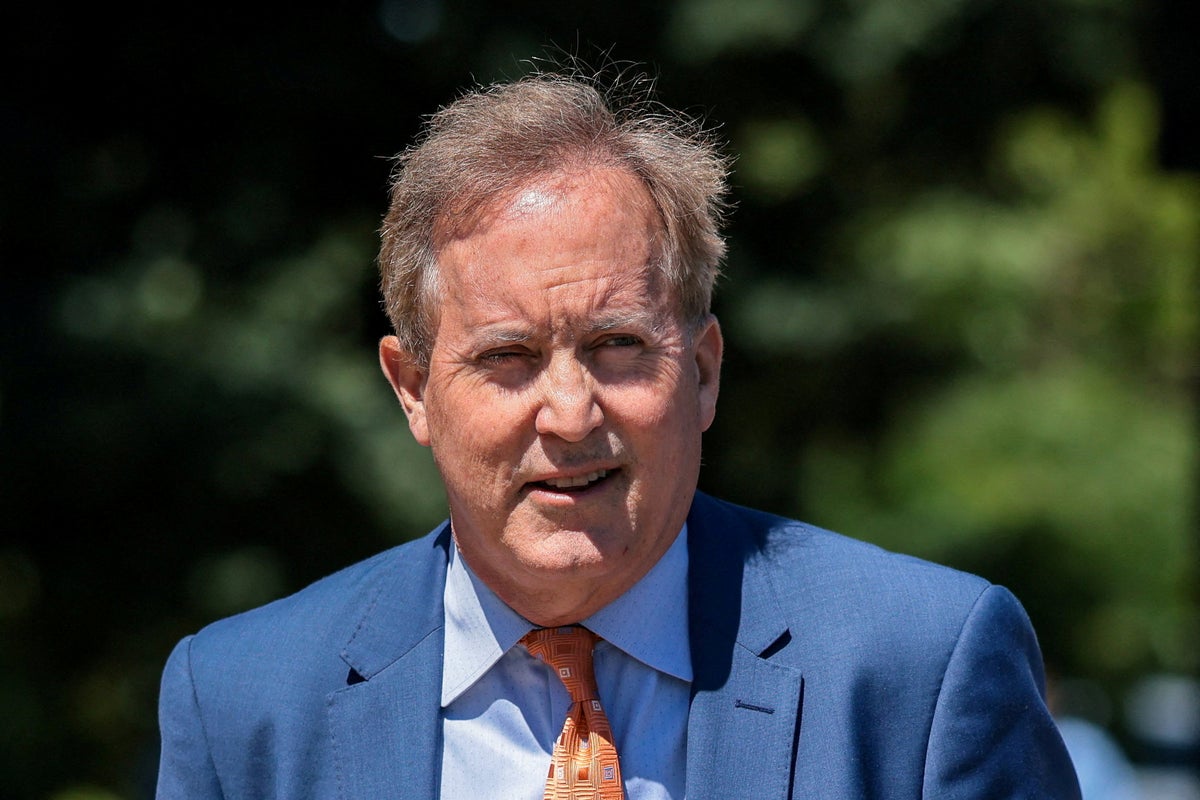
Control of the Senate has unexpectedly become a closely contested battle with less than two months remaining until Election Day, despite earlier expectations that Republicans would comfortably maintain their majority for the final two full years of President Donald Trump’s term.President Donald Trump’s declining approval ratings and widespread voter dissatisfaction with the economy have created a tough political landscape for Republicans, allowing Democrats to compete in once-unreachable states. However, several races Democrats previously counted on winning have also grown increasingly complicated.Total campaign spending across these midterm Senate contests is projected to surpass $3.4 billion. The overall stakes remain significant for Trump’s broader agenda and his ability to fill administration vacancies and open court seats, since the Senate can confirm or block presidential nominees.Ken Paxton won his primary despite facing a major cash disadvantage (Reuters)Republican officials maintain it is unlikely every key race will break in favor of Democrats, though they concede the current conditions are difficult. Senate Majority Leader John Thune told South Dakota’s KELOLAND News last week that he does "worry" about losing the chamber."I’m a realist," Thune said. "I don’t ever try and sugarcoat things. I think it’s a competitive environment right now."Democrats face expanding map and local setbacks in push for Senate majorityDemocrats need a net gain of four seats to capture the Senate majority. Their original roadmap relied on holding Michigan, Georgia and New Hampshire while retaking Republican-held seats in Alaska, Maine, North Carolina and Ohio. However, the map's dynamics have evolved."We now have multiple paths for the majority," Senate Democratic Leader Chuck Schumer said last month. "We found new states — Iowa, Texas — which people a year ago weren’t even paying attention to." Yet some states where Democrats felt most optimistic at the start of the election cycle, including Michigan and Maine, have grown considerably more complicated.In Michigan, an open seat this fall offers a battleground where no GOP contender has won a Senate election since 1994. Still, Democrats are struggling to unite behind nominee Abdul El-Sayed. The progressive favorite narrowly edged moderate U.S. Rep. Haley Stevens in the August primary, leaving raw feelings after a punishing race in which almost $70 million was poured into ads against El-Sayed.“We now have multiple paths for the majority,” Senate Democratic Leader Chuck Schumer said last month. “We found new states — Iowa, Texas — which people a year ago weren’t even paying attention to" (Getty)Republicans see an improved prospect for Mike Rogers, who fell short in the 2024 Senate race by fewer than 20,000 votes, to defeat El-Sayed. The Senate Leadership Fund — Senate Republicans’ spending PAC — injected an additional $6 million into its Michigan advertising campaign following El-Sayed’s primary victory, pushing their total investment to $51 million, the third-highest total nationally. Meanwhile, Democrats previously identified a strong opportunity to finally unseat five-term Republican Sen. Susan Collins in Maine, where Democratic Vice President Kamala Harris captured more votes than Trump in 2024.Progressive Graham Platner won the nomination handily in June, but exited the contest the following month over a sexual assault allegation that he denies. In late July, Democratic delegates picked Troy Jackson, a lesser-known former state legislative leader, as his replacement.Jackson has consequently been forced to play catch-up. Collins and her aligned super PACs have spent nearly $80 million to date, according to ad-tracking firm AdImpact, whereas Jackson and Democratic-aligned groups have spent and reserved close to $45 million since he stepped into the nomination.Controversial GOP primary winner Ken Paxton faces fierce Democratic challenge in TexasDemocrats increasingly view real electoral opportunities in several Republican-led states, including Iowa, Alaska, Ohio, and Texas—a long-elusive target for the party.In Texas, Democrat James Talarico is contesting state Attorney General Ken Paxton, who ousted four-term incumbent Republican Sen. John Cornyn during the GOP primary. Senate GOP leaders had supported Cornyn, believing he was the more formidable candidate for the general election.Legal and ethical questions have shadowed Paxton for decades, including securities fraud indictments that did not result in a conviction.James Talarico and allied groups have spent nearly $30 million on advertising since the May runoff, compared to less than $3 million by pro-Paxton groups (Reuters)Talarico and allied organizations have invested nearly $30 million in advertising since the May runoff, whereas pro-Paxton groups have spent under $3 million. Last week, a political fund associated with Trump injected $10 million into digital and television ads for Paxton, marking the first substantial general election investment by MAGA Inc. this midterm cycle. Senate GOP leaders had urged Trump’s political team to deploy part of the more than $400 million it held last month to help Paxton.Democrats have also escalated spending across GOP-held battlegrounds in Alaska, Iowa, Ohio, and North Carolina. Meanwhile, Republicans report heightened optimism regarding Michigan and New Hampshire, while committing additional resources to defend seats in Iowa and Alaska.This broadened map has increased overall projected spending. In June, AdImpact projected $3.4 billion would be spent on Senate race advertising, representing a marked rise from the $2.8 billion forecasted in the fall of 2025.Economic uncertainty and rising costs emerge as central obstacles for GOP midterm candidatesDemocratic prospects have expanded partly because of Trump’s declining job approval, particularly on economic management, which stood at 32% in a July AP-NORC poll — down from 40% in March 2025, shortly after he entered office.Trump’s commercial policies alongside the conflict in Iran, with corresponding inflated fuel costs, have heightened economic unpredictability for voters under two months before Election Day. "Things still cost too much. And so we’ve got to work on that issue," Republican Rep. Jim Jordan of Ohio told The Associated Press. "We understand that and we know that’s real."“Things still cost too much. And so we’ve got to work on that issue,” Republican Rep. Jim Jordan of Ohio told The Associated Press. “We understand that and we know that’s real” (AFP/Getty)Ohio Sen. Jon Husted heard these anxieties directly at a roundtable last month. Husted is attempting to hold off a comeback from former Sen. Sherrod Brown in another crucial contest for both parties.During a discussion on housing, one participant told Husted that expenses were "skyrocketing" partly due to uncertainty around tariffs."Uncertainty is the killer to this economy," said Dean Windham, a real estate developer who previously ran for office as a Republican.Some Republican Senate candidates have defended Trump’s measures while confronting concerns over economic fallout.In Michigan, where Trump’s tariffs on Canada have become a central topic, Rogers has supported the president’s strategy while leaving room for disagreement."President Trump is right to put America First — and tariffs are necessary, but are not a one-size-fits-all solution," Rogers said in a recent statement.Trump plans aggressive travel schedule as Republicans defend key Senate seatsEven if Democrats retain every seat they currently control, securing a majority would require flipping at least two seats in states Trump carried by double digits in 2024.Republicans are betting these foundational advantages will matter more as Election Day nears — particularly as Trump and the party focus on rallying the voters who helped return him to the White House.Last week, Trump informed reporters he will "be making a lot of stops" in the final 30 days before the election.Last week, Trump informed reporters he will "be making a lot of stops" in the final 30 days before the election (AP)Next week, Republicans are holding a midterm convention in Texas, where Trump is scheduled to speak and prominent Senate candidates including Rogers and Husted are expected to attend.However, Republicans acknowledge they have work to do."Politics is local," noted Republican Sen. Mike Rounds of South Dakota. He pointed to Trump’s decision on importing beef, which he said made farmers and ranchers "feel just like the administration pulled the rug right off from underneath" them."They’re hurt," said Rounds. "They feel like they’ve been let down."
Everything you need to know about the chaotic multi-billion-dollar battle for Senate majority
Full Article
Original Source
Read the full article at Independent →KhanList aggregates and links to publicly available news content. We do not host full articles from third-party sources. Always verify important information with original sources.