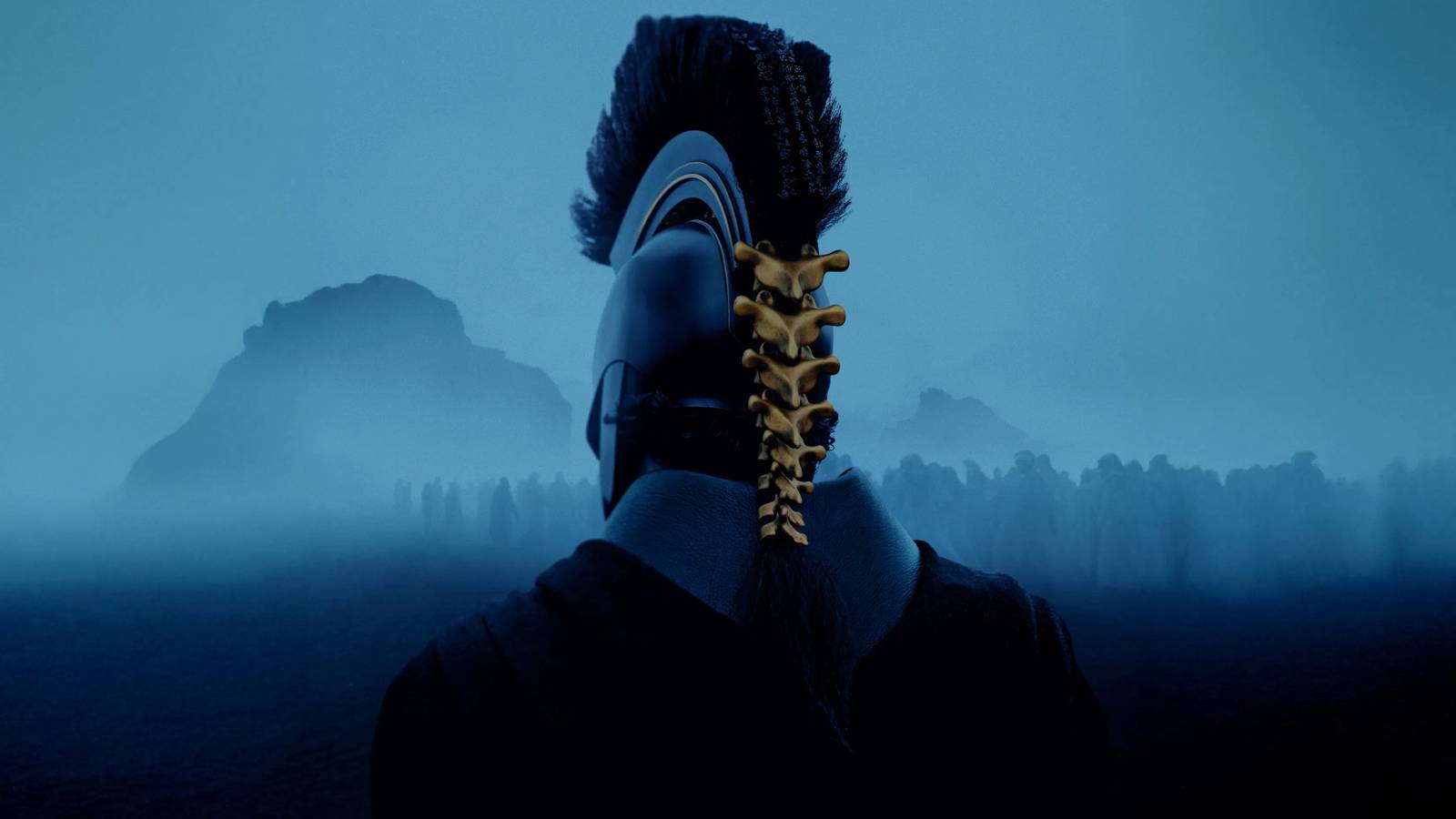
Image via Universal Pictures Published Jul 18, 2026, 12:36 PM EDT Jeremy has more than 2600 published articles on Collider to his name, and has been writing for the site since February 2022. He's an omnivore when it comes to his movie-watching diet, so will gladly watch and write about almost anything, from old Godzilla films to gangster flicks to samurai movies to classic musicals to the French New Wave to the MCU... well, maybe not the Disney+ shows. His favorite directors include Martin Scorsese, Sergio Leone, Akira Kurosawa, Quentin Tarantino, Werner Herzog, John Woo, Bob Fosse, Fritz Lang, Guillermo del Toro, and Yoji Yamada. He's also very proud of the fact that he's seen every single Nicolas Cage movie released before 2022, even though doing so often felt like a tremendous waste of time. He's plagued by the question of whether or not The Room is genuinely terrible or some kind of accidental masterpiece, and has been for more than 12 years (and a similar number of viewings). When he's not writing lists - and the occasional feature article - for Collider, he also likes to upload film reviews to his Letterboxd profile (username: Jeremy Urquhart) and Instagram account. He has achieved his 2025 goal of reading all 13,467 novels written by Stephen King, and plans to spend the next year or two getting through the author's 82,756 short stories and 105,433 novellas. Sign in to your Collider account There are so many questions worth asking when someone makes an adaptation of The Odyssey, obviously. The story itself is apparently close to 3000 years old, though the exact date it was first told or compiled is up for debate, because it’d be hard to ever prove or know. Whether Homer was real or himself a mythical figure of sorts cannot be said with certainty. He may have told and compiled the stories that make up The Iliad, but it also can’t be guaranteed. And then there are apparently other epic poems/stories attached to The Iliad and The Odyssey that are lost to time. Further, different translations have been made at different times in history, and some de-emphasize or focus on certain events more than other translations. So, pinpointing every single way The Odyssey, as in the Christopher Nolan movie, diverts from every version of The Odyssey would be impossible. In some instances, it would be a matter of opinion how to understand some language, before then determining whether it links up with Nolan’s adaptation. But these are some fairly significant changes made to recognizable elements of The Odyssey and most of its adaptations, not in any particular order (and not ranked in terms of least drastic to most drastic or anything). There will be some spoilers for The Odyssey (2026) and its differences from other versions of the story below. 10 No Conversation with Polyphemus Image via Universal Pictures If you’ve not read a translation or version of The Odyssey, but you're familiar with the events that precede the three parts of The Lord of the Rings (you know, stuff in The Hobbit), then you’ve read something similar to the Cyclops scene in The Odyssey. The "Riddles in the Dark" portion of The Hobbit feels a bit reminiscent, as a battle of wits alongside a fight for survival, with Gollum being the obstacle in The Hobbit, and the Cyclops, Polyphemus, being the obstacle in The Odyssey. The whole “Nobody” gambit in the source material is pretty great, and it’s a slight shame that part of the scene wasn’t kept in the movie. There’s still cunning needed to escape from Polyphemus in the movie, but Odysseus and his men don’t converse with the creature, and more just antagonize it before realizing quite late that it seems to speak (but also seems like it might be ignoring the men around it). The whole “Nobody” gambit in the source material is pretty great, and it’s a slight shame that part of the scene wasn’t kept in the movie… though what they did choose to show with the whole sequence was also excellent in its own right, and its own way. 9 Achilles Not Being Present During the Underworld Sequence Image via Universal Pictures If you had to spend a lot of time online in the last couple of months, you probably saw people getting frustrated about casting choices they didn’t really have a lot of information about. There were a few actors whose roles made sense within the movie, and they gave good performances, but negative predictions or assumptions sort of ran out of control. See the casting of Elliot Page, because some people seemed convinced he’d been cast as Achilles. Now, it would be a bit odd to have Page play Achilles, sure, but that was never the case. Page plays Sinon, who is not supposed to be properly physically imposing here, and whose involvement in the story as a soldier not suited for war who ends up being made to fight is tragic. Anyway, the confusion may have come from trailer material showing Elliot Page in what looked like the underworld/Hades scene, and it was Page, but not Page as Achilles, which does go against Achilles usually turning up in that scene. Achilles isn't there, and isn't in the movie at all, which is surprising… but Sinon gets a bigger role, and is a big part of that underworld sequence working as well as it does. 8 Phaethusa and Lampetia Present When the Cattle Are Killed Image via Universal Pictures Achilles is not the only character who could've shown up, but ended up being a no-show. This one’s minor, but two daughters of the sun god, Helios, are present in the original scene in The Odyssey where Odysseus's men eat the cattle that they're not supposed to. They're told they're doomed if they do, but that means it’s a matter of time before they test fate itself, and ultimately pay the price. It’s the final obstacle that is handled poorly, and it’s the one that finally sees Odysseus lose all the men he still had after all the other wild encounters. The presence of the two daughters, Phaethusa and Lampetia, isn't too wildly different, but in this scene, the cattle also behave a little differently. There’s more pain and horror regarding what happens when they're killed in the text, while in the movie, they're seemingly regular cows on their own, and Nolan didn’t seem keen to do another body horror-heavy beat so soon after the sequence with Circe turning the warriors into literal pigs. 7 More Guilt Over the Events of Troy Image via Universal Pictures The aftermath of the Battle of Troy is important in Homer’s The Odyssey, of course. The Iliad is a little more concerned with it, while The Odyssey is a bit more about the experiences of some after it. It depends on the translation, of course, but you don’t get the sense that war was particularly glorious from the text. It’s just that the movie leans harder on the anti-war sentiments. It’s done in The Odyssey (2026) by showing the triumphant part of the battle, which involves breaking out of the wooden horse and getting the gate open. It’s such a thrilling, tense, and exciting sequence, reminiscent of the better moments of Tenet, and all the very engaging action set pieces of Inception, in a way. But the second part of the whole battle is shown much later, and it’s horrific, explaining a good deal about Odysseus and the state he’s been in since the battle ended. Splitting the battle in this way, and showcasing the harsher truth about it later in the movie, ends up being very powerful, and also surprisingly anti-war in nature. 6 Antinous Plays More of a Directly Villainous Role Antinous is always one of a fair few bad dudes, to put it mildly, because there are a whole bunch of suitors pining after Penelope while Odysseus is gone, and they sort of just cause trouble and abuse hospitality, all the while some seem keen to seize Penelope for their own means. He is worse in The Odyssey (2026), though, compared to usual, and Robert Pattinson well and truly seizes the opportunity to be rotten and slimy throughout. Here, Antinous is even more cowardly than usual, he takes some extra steps to try to kill Odysseus’s son, Telemachus, and then Antinous is also responsible for manipulating Sinon into going to war, which serves to make Sinon more tragic and sympathetic. It’s the kind of change that works for the movie, since it kind of allows Pattinson to bring the same wonderfully unlikable energy to The Odyssey that Joaquin Phoenix brought to Gladiator (2000), when he played Commodus. 5 Telemachus Hanging a Dozen Maids Image via Universal Pictures So, Antinous is less efficient as a villain in the original text, overall not making as much of an impression as a villain at all (for better or worse; it depends on what you're after), but then you get to Telemachus, and he’s a bit more complex in the book, compared to the movie. He’s young either way, albeit he feels a bit more out of his element in the movie, and he doesn’t do the one honestly quite shocking thing he does in the book. As part of getting revenge on the suitors, and conquering them for good, Telemachus hangs a dozen female slaves/maids, all of whom had been having sex with the suitors, and some of them having maybe been part of deception/betrayal, but the idea that not all of them did an equal amount of wrong is alarming. It goes by in a flash in the source material, but it’s the kind of thing you wouldn’t really forget, if you saw plucky Tom Holland straight up executing a dozen young women, all before he and his parents get a presumably uplifting ending. It would've felt strange, within this particular film version of The Odyssey. 4 Laertes Is Not Seen Near the Story’s End Image via Universal Pictures Odysseus’s father, Laertes, still has a presence in the movie because of the shroud Penelope has been weaving. Her thing is that she’s weaving it for an elderly and ailing Laertes, but then when she finishes it, that’s when she’ll pick a suitor. She is, it turns out (in the broad story and the film version) that she’s unweaving it nightly, meaning she never really makes progress, and so she can keep putting off picking a suitor while she waits for Odysseus. It might've drawn things out a bit much, but there are some moving moments between Odysseus and his father at the very end of The Odyssey, but Nolan’s The Odyssey really speeds through the stuff that follows on from the battle with the suitors. Really, not much happens after the battle with the suitors. Speaking of… 3 More Closure Through an Epilogue... Image via Universal Pictures …There is a fairly different ending to The Odyssey (2026), compared to Homer’s The Odyssey. The epilogue of the book is cut out, and there is a streamlined new epilogue of sorts, serving as the ending for the movie, that is a bit more conclusive. Odysseus abdicates the throne, allowing Telemachus to become king of Ithaca, and then he and Penelope sail into the west, willingly exiling themselves after the ordeal gone through, and the moral lines crossed during that whole journey. It’s not really up to an article like this to say which ending is better. The movie ending is great for a movie, and the way most things wrap up in the text is solid. Maybe the very last scene ends a bit abruptly, but as for the last scene itself? It’s kind of interesting, and serves as another sequence that the movie cut out entirely. 2 ...But Also, No Post-Climax Scene with Vengeful Relatives of Suitors Wanting Revenge Image via Universal Pictures See, in the book, after all the suitors have been killed (oh yeah, and their maids/slaves and stuff), there is a sequence where people related to the suitors want vengeance for everyone being killed by a newly emerged Odysseus. It’s also worth stressing that he does disguise himself a little more directly in the lead-up to the suitor battle, and before, so it’s not just the Cyclops trickery where Odysseus shows off his cunning. There is a cycle of revenge that looks like it’s just going to keep spiraling out of control, but there is intervention from the gods. And once the situation is resolved from above, the story sort of just ends. Still, the cycle being broken is the main thing, so it’s not as abrupt as it could be, given that you can infer peace from that point onward, if you want. Suddenness of the book’s ending aside, it’s a good sequence, though, but Nolan had other plans, it seemed, for how he wanted to end his version of The Odyssey. 1 Most of the Gods Don't Directly Appear Image via Universal Pictures The gods don’t intervene nearly as much throughout 2026’s The Odyssey, which is a factor in why it might've felt awkward for the final scene of conflict to be suddenly resolved by the gods. Athena is the one god who does seem to appear to Odysseus throughout, but there is some ambiguity because of what’s learned during the final Troy sequence, in terms of whether maybe Athena is in his head, or whether she might be taking the form of a dead person whom Odysseus feels guilt about. Other gods have a definite presence throughout the text, but in the movie, lots of the stuff the gods might do… it’s just that. It’s stuff they might do. Storms they might cause, or misfortune that they possibly guide the hero and his men toward. It could also just be bad luck, or something else, and the ambiguity does work to keep things tense (though, for what it’s worth, there are undeniable fantastical creatures in this world… it’s just the gods that are a little more mysterious, which is a choice that really works for the overall story here).
Everything Christopher Nolan's 'The Odyssey' Changed From the Original Story
Full Article
📰 Original Source
Read full article at Collider →KhanList aggregates and links to publicly available news content. We do not host full articles from third-party sources. Always verify important information with original sources.