
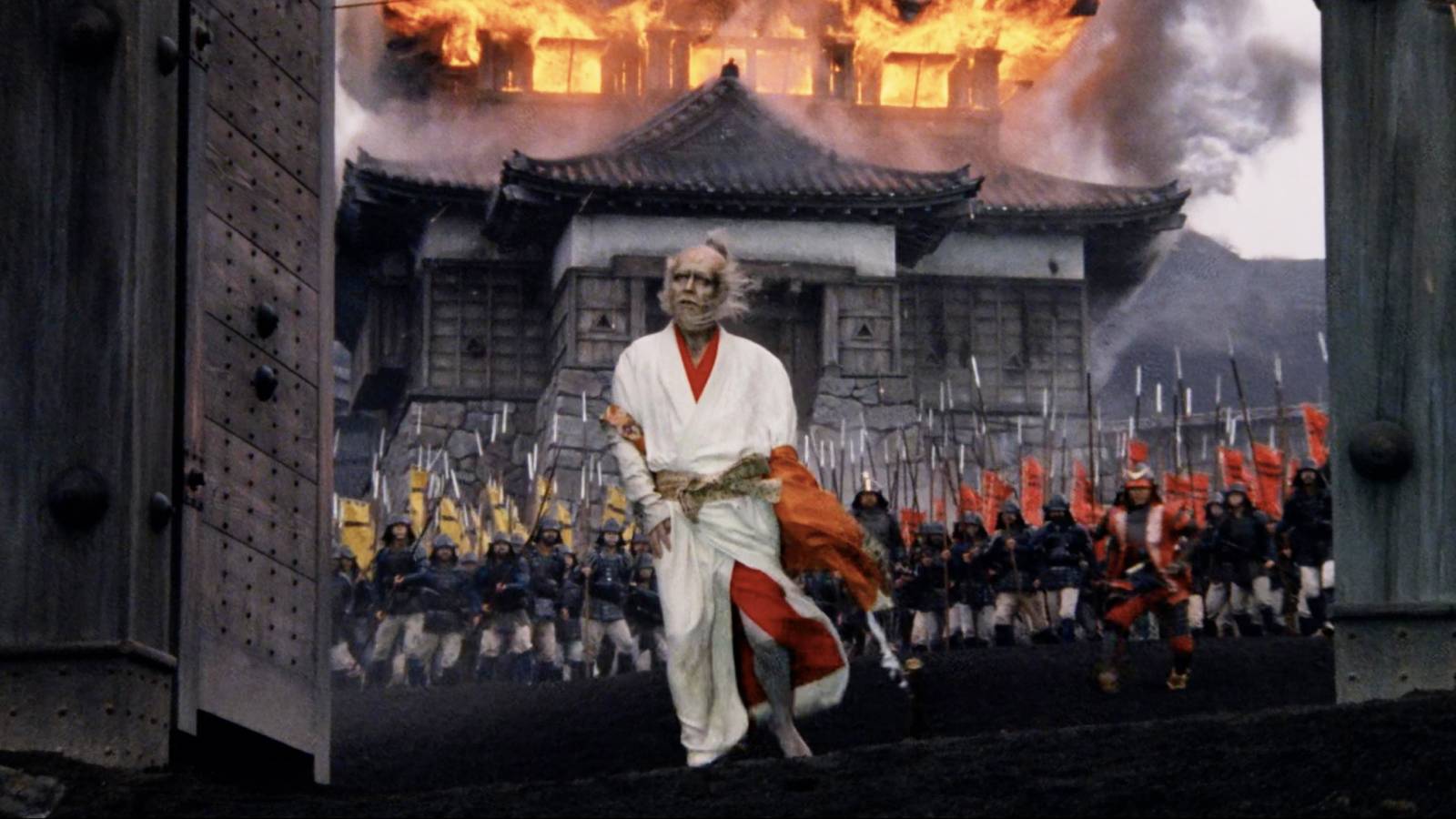
Image via Toho Published Oct 5, 2026, 5:37 AM EDT Jeremy has more than 2800 published articles on Collider to his name, and has been writing for the site since February 2022. He's an omnivore when it comes to his movie-watching diet, so will gladly watch and write about almost anything, from old Godzilla films to gangster flicks to samurai movies to classic musicals to the French New Wave to the MCU... well, maybe not the Disney+ shows. His favorite directors include Martin Scorsese, Sergio Leone, Akira Kurosawa, Quentin Tarantino, Werner Herzog, John Woo, Bob Fosse, Fritz Lang, Guillermo del Toro, and Yoji Yamada. He's also very proud of the fact that he's seen every single Nicolas Cage movie released before 2022, even though doing so often felt like a tremendous waste of time. He's plagued by the question of whether or not The Room is genuinely terrible or some kind of accidental masterpiece, and has been for more than 12 years (and a similar number of viewings). When he's not writing lists - and the occasional feature article - for Collider, he also likes to upload film reviews to his Letterboxd profile (username: Jeremy Urquhart) and Instagram account. He has achieved his 2025 goal of reading all 13,467 novels written by Stephen King, and plans to spend the next year or two getting through the author's 82,756 short stories and 105,433 novellas. Sign in to your Collider account Even without taking his epic movies into account, Akira Kurosawa is still one of the best and most important filmmakers of all time, having helmed the likes of Rashomon, Throne of Blood, Yojimbo, and High and Low. All those movies have a lot going on in them, and with High and Low, you do admittedly have something that’s pretty close to being epic in runtime, but it would be a slight stretch to call these movies epics in the traditional sense. Kurosawa did direct seven full-on epic movies, though, and they're all ranked below. Some of them are among his greatest films for sure, and a couple are even right up there among the best movies of all time. They're all worth watching, so really, this ranking is probably only useful if you want to know what order you should watch these films in or, like, what to prioritize, essentially. 7 'The Idiot' (1951) Image via Shochiku So, The Idiot is called that because it’s based on the Fyodor Dostoevsky novel of the same name, but on the topic of idiocy or foolishness, someone insisted the film be cut down from Kurosawa’s original vision, and then the longer version became lost to time. It’s not as bad as some other movies that are infamously entirely lost, because The Idiot, in its surviving state, is still epic at 166 minutes in length, and there is enough here to make it a worthwhile watch if you're a fan of Akira Kurosawa. But the original cut was 100 minutes longer, and so it would've ultimately been Kurosawa’s longest film if it had survived in that state. Even if released in two parts, it’d be viewable now as one whole epic, a bit of a Kill Bill: The Whole Bloody Affair kind of situation, maybe. Unfortunately, there was that foolishness, and the proper version was not preserved. So, judging what can be judged of The Idiot, it’s definitely flawed and feels incomplete, and so it sort of has to go in last place here, but Kurosawa can’t really be blamed for that, when he intended this to be even more of an ambitious epic (and who knows… that four-and-a-half hour cut could well have been phenomenal). 6 'Dersu Uzala' (1975) Image via Mosfilm After the 1960s were over, Akira Kurosawa’s output slowed down, because he went from pretty much directing an average of at least one movie a year between 1943 and 1965 (24 feature films in this span of time) to directing just seven between 1970 and 1993. But of those seven, three were full-on epics, so he definitely still had ambition in spades as he got older, and Dersu Uzala is indeed one of those epics, and probably the strangest one, too. It was a Russian-language film, and a Soviet + Japanese co-production, which definitely makes it an outlier among Kurosawa’s movies, and then feels unique also because it’s a survival film of sorts, focused on two people navigating and exploring parts of the Russian Far East near the beginning of the 20th century. It might be a tiny bit disappointing by Akira Kurosawa’s standards, yet it’s still quite good, and even “weak” by Kurosawa standards is still better than the best of what a good many directors are capable of putting out. 5 'Red Beard' (1965) Image via Toho Like The Idiot, Red Beard doesn’t entirely fulfill the conventions of the epic genre, but it’s got an epic runtime and proving decently ambitious, clocking in at a bit over three hours. It’s just that there aren’t really big set pieces here, nor a huge span of time covered, but there are a fair few characters, even if the central dynamic of Red Beard is about a pair of them: an experienced doctor and his somewhat unconventional mentoring of a young trainee. It’s long and not exactly fast-paced, but Red Beard is still an engaging and extremely well-acted drama. And it also takes place back in the 19th century, so that period setting is another thing that you often find in the epic genre. It’s long and not exactly fast-paced, but Red Beard is still an engaging and extremely well-acted drama (good acting is pretty much inevitable when Toshirō Mifune is the lead actor, but this was regrettably the final time – of 16 movies all up – he and Kurosawa collaborated on a film). 4 'Kagemusha' (1980) Image via Toho A step-up from Dersu Uzala, which was an early indication of Akira Kurosawa’s skilled use of color, Kagemusha came out half a decade later, and then it was something he built upon further in another five years (but more on that epic film in a bit). Kagemusha is something of a historical drama, with some basis in history, but then it’s also very surreal at times with its visuals, working as a psychological drama that feels kind of dreamlike at times, but without being either a fantasy or horror movie in the traditional sense. It’s about a warlord suddenly dying, and then those who served him get a double to pretend to be that warlord, just so news of his passing doesn’t lead to further conflict and bloodshed. Things don’t go to plan, of course, and the conflict continues in other interesting ways regardless. Kagemusha isn't perfectly paced or executed overall, and you definitely feel the three-hour runtime here, but it’s still got so much stuff that works, all to the point where it’s easy to call it a pretty great movie regardless. Image via Toho Perhaps the closest Akira Kurosawa came to directing a blockbuster (or the kind of movie that would later be classified as a blockbuster, since that’s more of a 1970s-onwards term), The Hidden Fortress is about two peasants helping to escort a man and woman who also happen to be a general and princess, respectively. They go through dangerous territory, and that’s what gives The Hidden Fortress an undeniable adventure feel genre-wise. It’s a little under 2.5 hours, so certainly on the slim side of things as far as epics go, but it’s still just enough of an epic (sufficiently grand in scale and all) to count here. The use of widescreen definitely contributes to the sense of grandeur, because it was the first time Kurosawa directed a movie that wasn’t in the previously standard 4:3 aspect ratio, so seeing him use that extra space to continue doing the great blocking and directing he’s always been known for doing is great. And The Hidden Fortress is a ton of fun as well, of course, being a crowd-pleasing kind of movie with decent helpings of action and comedy thrown in for good measure. 2 'Ran' (1985) As a war movie, something inspired by King Lear, and also a film that has some basis in historical events, Ran has a lot going on all at once. At the same time, it’s quite patiently paced, and then as far as epic movies go, it’s also on the shorter side of things, clocking in at 162 minutes. Ran plays by its own rules and feels unique in terms of pacing and its overall feel, and then further, it looks about as great as a movie has ever looked (honestly, no hyperbole). Arguing that Ran is Kurosawa’s magnum opus feels fair enough, being a culmination of everything he’d done/directed in the 40-ish years leading up to Ran, even if it didn’t end up being a literal finale for Akira Kurosawa’s filmography, since he directed several movies after Ran. Of them, Dreams was pretty great, but Ran still feels like his last all-out masterpiece, and it’s an essential watch, without a doubt, for anyone who’s even a little bit interested in classic/international cinema. 1 'Seven Samurai' (1954) Image via Toho For as phenomenal as Ran is, it does still have to be in second place whenever Seven Samurai is also in the conversation, since this is about as epic as epic movies have ever epic-ed. It’s also fair to call Seven Samurai one of the most influential and groundbreaking films of all time, because it did a lot to establish how best to handle an epic action movie in terms of structure, character development, pacing, and any other relevant narrative thing you can think of. Speaking of the narrative, it is technically simple, since the premise involves warriors being hired to help defend a village from attacking bandits, but it’s everything Seven Samurai does with the premise that proves special. Also, Seven Samurai is almost three and a half hours long, and it’s never even close to boring for a second of that runtime, being perfectly paced and constructed. It’s got everything you could want from an epic-length classic film, and it is the most masterful of all the Akira Kurosawa masterpieces.
Every Akira Kurosawa Epic Movie, Ranked
Full Article
Original Source
Read the full article at Collider →KhanList aggregates and links to publicly available news content. We do not host full articles from third-party sources. Always verify important information with original sources.