
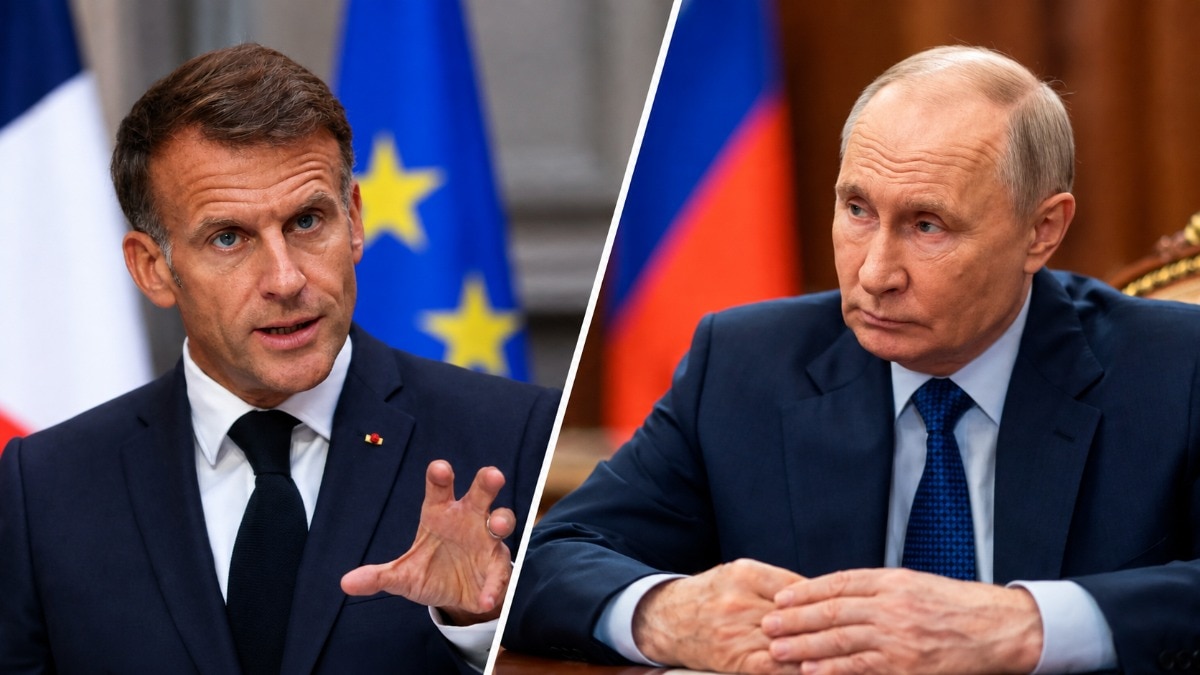
Europe is confronting what it has feared for years, the possibility of a wider security crisis caused by Russia. According to the latest reports, European countries are preparing for the possibility that Russia could test Nato resolve in defending its territory beyond the battlefield in Ukraine. From warnings of drone and missile strikes to growing concerns over sabotage and cyberattacks, European governments are increasingly preparing their populations for a potential confrontation with Moscow, even as Russian President Vladimir Putin insists that Moscow has "no aggressive intentions" towards Europe.The latest warning came from French President Emmanuel Macron on Friday (September 18), who said the Russian "hybrid threat" facing Europe and France had intensified.After meeting political party leaders and candidates ahead of France's 2027 presidential election, Macron said he had ordered a plan to protect critical infrastructure and sensitive defence-industry sites from possible drone and cyberattacks. He also warned that recent Russian hybrid attacks against France would not be left "without a response".Macron's warning came a day after Polish Prime Minister Donald Tusk told Parliament that intelligence assessments indicated Russia could launch drone or missile attacks against countries supporting Ukraine, including Nato members such as Poland. Tusk said such attacks could potentially be presented by Moscow as "accidental" strikes, designed to test whether Nato countries would invoke the alliance's collective-defence commitments. Therefore, for Europe, the concern is not necessarily an immediate Russian invasion of a Nato country. It is unclear whether Moscow could gradually test the alliance through limited strikes, drones, sabotage or cyberattacks which would create pressure without immediately triggering a full-scale war.RUSSIAN THREATS PUT EUROPE ON HIGH ALERTEuropean governments have reported a growing number of incidents involving airspace violations, suspected sabotage and other activities attributed to Russia. Nato members have increasingly described these actions as part of a broader Russian "hybrid campaign" intended to weaken European support for Ukraine. Hybrid warfare is a broad term covering activities that fall short of conventional war. Cyberattacks, sabotage, disinformation, interference in political processes and the use of non-attack drones can all form part of such campaigns. European officials have repeatedly accused Russia of using these methods, while Moscow has denied responsibility for such attacks.Macron said Russia had significantly increased its activities in recent weeks and referred to incidents including drone and cyber threats. France's new plan is expected to focus particularly on critical infrastructure and vulnerable sites linked to the country's defence and technology sectors.Germany — which in August accused Russia of a drone attack at the Leipzig airport — is also preparing its health infrastructure for the possibility of a major conflict, while Lithuania has updated evacuation plans.Nato forces have conducted military exercises in the Baltic region, including exercises involving Germany and Sweden near the strategically important Swedish island of Gotland.The preparations come as European officials increasingly discuss the possibility of Russia probing Nato's eastern flank.Tusk of Poland's warning was particularly stark. He said Russia could seek to create incidents involving drones or missiles entering Nato territory while portraying them as accidents. According to his assessment, repeated incidents could be intended to weaken confidence in Nato's collective-defence mechanism."In response to the deteriorating security situation, Switzerland has three objectives: strengthen resilience, improve protection and enhance defence capabilities. The Federal Council has adopted Switzerland's Security Policy Strategy 2026," the Swiss Federal Government posted on X after reports of security concerns were raised in Europe on Friday.However, European officials have not publicly established that an imminent Russian attack on Nato is certain, but the preparations and the situation in Europe seems like they are getting ready for one.GERMANY'S TENSIONS WITH RUSSIA GROWSThe German Consulate General in Russia's Saint Petersburg ceased operations on Friday, bringing an end to more than five decades of diplomatic activity in the city.According to the mission's website, its responsibilities will now be handled by the German Embassy in Moscow. Germany-based DW's media outlet's Russian-language service reported that on September 17, the German flag, coat of arms and other official symbols were removed from the consulate building.The German Consulate General in Saint Petersburg has been operating since 1972."People have no idea how close we are to World War 3," Rome-based journalist Thomas Fazi posted on X reacting to the closure of the German Consulate in Russia.According to a Bloomberg report published on September 16, German hospitals are preparing for a potential war, with the Bundeswehr expecting to receive up to 1,000 wounded soldiers a day.Germany's five military hospitals would quickly be overwhelmed, forcing civilian hospitals to treat battlefield casualties. The country is also reviving Cold War-era medical facilities, including a nuclear bunker hospital in Ulm designed to accommodate up to 2,000 people.Civilian surgeons are being trained to handle combat injuries, while Germany is working to reduce its dependence on China for critical medical supplies.HOW OTHER EUROPEAN COUNTRIES ARE PREPARING FOR EMERGENCY Across Europe, governments are quietly strengthening evacuation, civil-defence and emergency-response plans as fears of a wider security crisis grow. Lithuania approved a national evacuation plan in July, estimating that around 75% of its population could evacuate independently, while authorities would assist the rest. Routes from Vilnius include a corridor towards Poland's Podlaskie region, while Baltic states have coordinated plans for the possible movement of hundreds of thousands of people near the Russian and Belarusian borders.Poland has similarly updated evacuation plans covering military threats, war and other emergencies, including provisions for vulnerable groups. Finland has added guidance on drone threats and air-raid warnings to its national preparedness system, while civil-defence exercises simulate cyberattacks, sabotage, infrastructure disruption and missile threats.Latvia has intensified eastern-border security, expanded drone and counter-drone capabilities and launched a new security operation along the frontier. Even the United Kingdom is urging households to maintain basic emergency supplies. On Friday, Luxembourg Airport briefly halted operations after unauthorised drones were sighted, disrupting flights and triggering an investigation. PUTIN SAYS RUSSIA DOES NOT WANT WAR WITH EUROPEMoscow has, however, rejected the warnings and concerns raised by Europe.Russian President Vladimir Putin on Saturday (September 19) said that Russia had "no aggressive intentions toward Europe or European countries" and was ready to restore relations and cooperate with European neighbours.He accused European leaders of using the alleged Russian threat to justify their own policies and said they were preparing for war with Moscow.Putin also criticised Nato and European military exercises in the Baltic Sea, accusing participating countries of preparing to seize civilian vessels. He warned that Russia would respond if necessary."Let us live in peace — otherwise, we, too, will be forced to respond," Putin said on Saturday.Putin's comments reflect the Kremlin's broader position that European governments are escalating tensions by expanding military preparations and continuing support for Ukraine.Russia's Foreign Minister Sergey Lavrov earlier had also warned that a direct confrontation between Nato and Russia could result in a very short war, underscoring how dangerous any escalation between the two sides could become.US MULLING TO WITHDRAW TROOPS FROM EUROPE, ADDS FUEL TO RUSSIA FEARAdding another layer of uncertainty and triggering more fear has been Washington's future military presence in Europe.The Pentagon is reportedly considering options to withdraw between 25,000 and 40,000 US troops from Europe, according to an NBC News report.Around 80,000 US troops are currently stationed across the continent, meaning the larger option would represent a substantial reduction. No final decision has been made.Germany, Italy and Spain, which host some of the largest US deployments in Europe, could be affected if the Pentagon withdraws soldiers from Europe. The options are part of a broader Pentagon review of the American military presence on the continent.The timing of their developments is significant. Europe has relied on the US military presence and Nato's collective-defence structure for decades as a deterrent against Russia.A possible reduction comes at a moment when European governments are already warning about Russian hybrid operations and the possibility of attacks on Nato territory.But the troop review does not itself mean that the US is abandoning Nato or that a withdrawal has been ordered. The proposals remain under consideration.European governments are preparing for the possibility of a more dangerous confrontation with Russia. Their warnings, military exercises and infrastructure preparations show that they regard Moscow's hybrid activities and the risk of escalation as serious security concerns.But there is a distinction between preparing for a possible attack and establishing that Russia has decided to launch one.- EndsPublished By: Avinash KateelPublished On: Sep 20, 2026 08:30 IST
Europe is preparing for its worst crisis. Will Russia attack Nato countries?
Full Article
Original Source
Read the full article at Indiatoday →KhanList aggregates and links to publicly available news content. We do not host full articles from third-party sources. Always verify important information with original sources.