
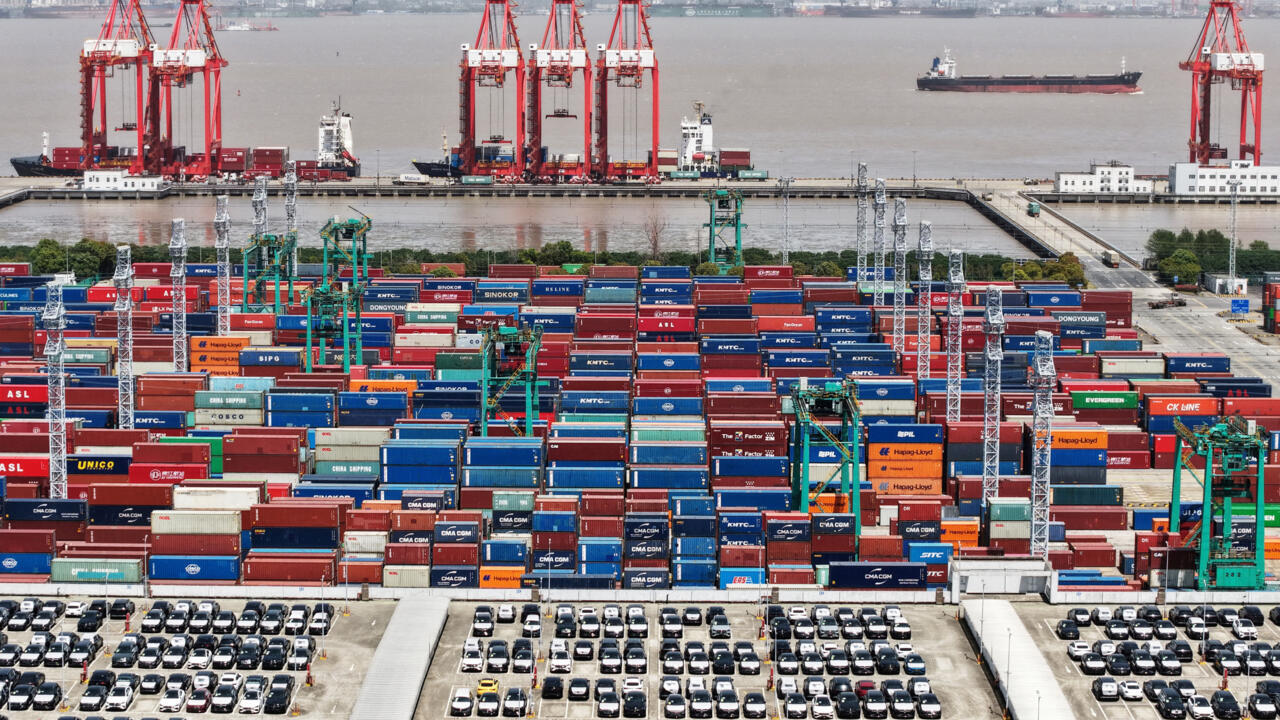
European Union trade commissioner Maros Sefcovic arrives in Beijing on Thursday for two days of high-stakes talks with China, with Brussels seeking a pilot agreement to curb the surge in Chinese hybrid-car exports and reduce a trade deficit now running at around €1 billion per day. Issued on: 08/10/2026 - 06:10 2 min Reading time Sefcovic and Chinese Commerce Minister Wang Wentao will co-chair the second EU-China Trade and Investment Council, with negotiations expected to continue into late Friday. Brussels says it wants “tangible, meaningful and measurable” results before EU leaders meet in Brussels next Thursday, when China will be high on the agenda. The central proposal is a “proof of concept” deal covering one sector – expected to be cars – that could later be extended to chemicals, plastics and other industrial goods. The EU is seeking voluntary Chinese limits on hybrid exports, while warning that failure to agree could trigger safeguard measures, including quotas. The issue has become crucial because Chinese battery-electric vehicles have faced EU anti-subsidy duties since October 2024, but plug-in hybrids were not covered. Chinese hybrid exports subsequently rose sharply, from around 3,800 vehicles in October 2024 to 50,000 in July 2026, increasing pressure on European carmakers. Beijing has previously rejected voluntary export restrictions and firmly opposes import quotas. EU hesitates over investment deal with increasingly authoritarian China The talks are taking place against the backdrop of the stalled EU-China Comprehensive Agreement on Investment (CAI). Agreed in principle in December 2020, it was designed to improve market access and address issues including subsidies, state-owned enterprises and forced technology transfer. But the European Parliament has refused to consider ratification since China imposed counter-sanctions on European individuals and entities in 2021, leaving the deal blocked. 'Massive industrial shock' The Beijing meeting comes as France and Germany push the European Commission to develop a new rapid-response trade instrument. In a joint letter to Commission President Ursula von der Leyen, French President Emmanuel Macron and German Chancellor Friedrich Merz warned of a “massive industrial shock” to sectors including cars, pharmaceuticals, aerospace and machine tools. Their proposal would make it easier for the EU to restrict access to its single market for countries deemed to be undermining fair competition, while also reducing dependence on individual foreign suppliers for critical goods. German officials said the new mechanism could be activated within days, although legislation would still require approval from EU governments and the European Parliament. China’s foreign ministry said during a press conference on Tuesday that the two economies’ supply chains were "highly integrated and mutually beneficial," urging the EU to resolve concerns "through dialogue and consultation". (with newswires)
EU and China open crunch trade talks in Beijing on hybrid car exports
Full Article
Original Source
Read the full article at Rfi →KhanList aggregates and links to publicly available news content. We do not host full articles from third-party sources. Always verify important information with original sources.