
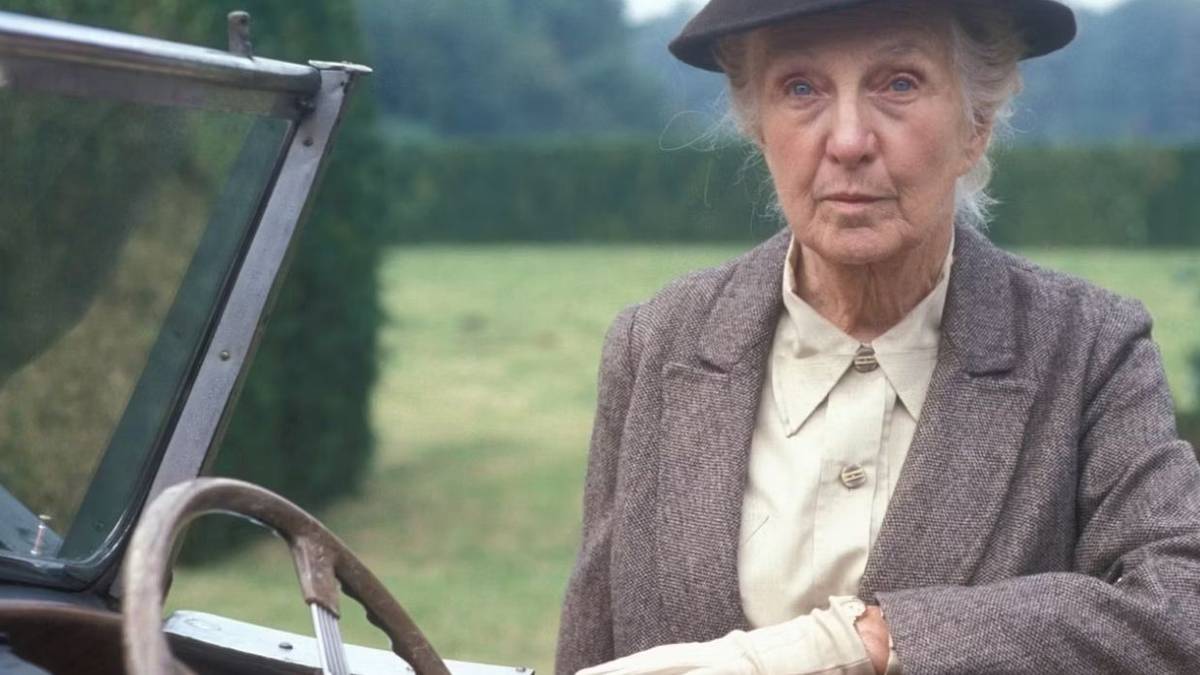
Published Oct 29, 2026, 5:16 PM EDT Paulina is a Contributor for ScreenRant, writing about books. After starting her career reporting breaking news as an undergrad, Paulina completed a Master of Arts in Journalism from NYU in 2026. She has spent the last four years writing about books and pop culture as a freelance journalist, including for Texas Monthly, The Daily Beast, and her Substack, Alienated Young Woman. Sign in to your ScreenRant account Lucy Foley’s new Miss Marple novel, Murder at the Grand Alpine Hotel (Sept 22, 2026), quickly proved a refreshing addition to Agatha Christie’s nearly century-old series. Nine decades after the first Miss Marple novel, Foley captured precisely what made Christie's best ensemble-heavy mysteries so enthralling: a confined setting, a cast of suspects so dubious that there is no clear frontrunner, and a discerning detective who knows just how to unravel the story. But Murder at the Grand Alpine Hotel is just the tip of the iceberg for Miss Marple stories. After all, Christie’s beloved detective appears in 13 other novels and dozens of short stories. Christie was still in the early stages of her career when she introduced Jane Marple to readers in 1927, but already, she was no stranger to building fan-favorite detective series. She’d published four Hercule Poirot novels, establishing that character as an icon of the mystery genre, and had even introduced the lesser-known detective duo Tommy and Tuppence. But Miss Marple was something new: not a jet-setting private detective constantly seeking out cases in the big city, but a keen observer with an eye for solving murders in a suffocating small town that couldn’t seem to stop producing them. An extroverted, deceptively docile retiree whose primary pastime was knowing everything about every neighbor in the sleepy fictional village of St. Mary Mead, Miss Marple subverted every expectation of what a brilliant detective should be. That’s exactly why, after nearly 100 years, we love her more than ever. You can buy the latest Miss Marple here. What To Know About Miss Marple Before Reading The Series If you’re unfamiliar with Miss Marple, here's one detail that might surprise you: she's almost never the protagonist of her books. Unlike Poirot, she never officially works as a private detective. She simply encounters murders by chance or solves them as a favor to a friend after the police fail to turn up a result. That means Christie almost always finds another way into the mystery. While Miss Marple’s perspective is central to any story in the series, most books shift between narrators as the story continues. In a select few novels, however, the titular detective is arguably a supporting character, while someone else, often a police detective assigned to the same case, narrates the entire story. In short, Miss Marple may not arrive at the crime scene until after the fact, but Christie makes sure her readers are always in the room where it happens. The Best Order To Read The Miss Marple Books The answer is simple: you should generally read the Miss Marple books in the order Christie published them. Keep in mind that, like all Miss Marple stories, Lucy Foley’s new book easily stands alone—but it’s an even richer experience to read her take with full knowledge of what came before. The Essentials The Thirteen Problems (1932): While these stories weren’t collected until 1932, they were published individually starting in 1927, three years before the first Miss Marple novel. That makes them her first-ever appearance in literature, and a brilliant introduction to the character. The Murder at the Vicarage (1930): Christie’s first full-length Miss Marple novel is like an orientation manual for every quality that defines the series: it introduces readers to both Miss Marple and the intricate politics of St. Mary Mead, through the eyes of a vicar who sees everyone for exactly who they are. When a neighbor turns up dead at the vicar’s home, it’s also the perfect avenue for Miss Marple to flex the mystery-solving skills that made her an icon. The Body in the Library (1942): This novel came a staggering 12 years after The Murder at the Vicarage, but it was worth the wait. The Body in the Library introduces one of Christie’s most iconic premises (and one of her most frequently adapted stories): a prominent local couple finds the body of a young woman stashed in their library, with no idea how she got there. They immediately run into an even bigger problem: no one knows exactly who she is. The Moving Finger (1943): Wicked Little Letters meets Wake Up Dead Man in this disarmingly delightful, darkly comedic Miss Marple tale about a neighboring small town whose residents start receiving poison-pen letters—and occasionally turn up dead—until they call on Miss Marple to unravel the yarn. A Murder Is Announced (1950): Christie loved to set her murder mysteries at parties, where the suspects were bountiful, the motives muddy, and the quarters close. In this novel, Miss Marple has her first thrilling encounter with that trope when a local newspaper publishes a listing announcing the date and time of an upcoming murder, which most readers interpret as an invitation to a murder-mystery party. The partygoers are sorely mistaken, but Miss Marple rarely is. They Do It With Mirrors (1952): Lucky for her neighbors, not all of Miss Marple’s cases took place in her hometown. In They Do It With Mirrors, the detective is visiting a friend out of town when she encounters one of her most baffling murders yet: she witnesses one man being shot, while another drops dead across the building. A Pocket Full of Rye (1953): Halfway through the Miss Marple series, Christie took on another of her favorite mystery tropes: a family so vile that each of its members is a viable suspect. When a wealthy London businessman dies in the middle of his morning tea service—and an autopsy reveals he was poisoned—anyone in his orbit could be the culprit. It’s up to Miss Marple to untangle this web of deceit. 4:50 from Paddington (1957): This is the Miss Marple novel that inspired dozens of offshoots, from a movie and a TV episode to books like The Girl on the Train 60 years later. The reason is clear: this story, which follows a friend of Miss Marple’s who witnesses a murder on a passing train, is one of Christie’s best, and most evergreen premises. The Mirror Crack'd from Side to Side (1962): One of Christie’s best books, The Mirror Crack’d from Side to Side sees Miss Marple return to St. Mary Mead—and encounter a newly arrived movie star with a dark past. A Caribbean Mystery (1964): Unlike Hercule Poirot, Miss Marple isn't one for traveling. Set in a Caribbean resort where Miss Marple stumbles upon a decades-old unsolved murder, this novel holds the special distinction of being the detective’s first international mystery and her first encounter with a cold case. At Bertram's Hotel (1965): Though it's technically a Miss Marple novel, At Bertram’s Hotel will be the briefest interaction you have with the title detective. Set in London, the novel follows Scotland Yard detective Fred Davy, who investigates a murder at a high-end hotel in the city—where Miss Marple happens to be vacationing. Nemesis (1971): Nemesis isn’t the end of Miss Marple, but it was the last novel Christie ever wrote for the series. Fittingly, it’s all about inheritance: Miss Marple takes on this case after a character from A Caribbean Mystery assigns it to her in his will. Sleeping Murder (1976): Though it wasn’t published until after Christie’s death in 1976, Sleeping Murder was one of the first Miss Marple novels she ever wrote, having completed a first draft during the Blitz in 1940. That timeline means it could arguably be read as the second novel in the series, but it works even better as a conclusion. Set back in St. Mary Mead, Sleeping Murder is one of Christie’s most experimental mysteries, toying with dreamscapes, flashbacks, and buried memories instead of Miss Marple’s usual hard evidence. It’s all the more satisfying if you’ve already witnessed Christie master the rest of the mystery genre. Murder at the Grand Alpine Hotel by Lucy Foley (2026): The 100-year-old detective is up to her old tricks in this brand-new Miss Marple story from mystery maven Lucy Foley. Only this time, she’s hundreds of miles from St. Mary Mead—on vacation high in the Swiss Alps, snowed into her hotel after a blizzard—when another murderer crosses her path. Other Appearances of Miss Marple While those 14 books are the essential Miss Marple series, they aren’t her only appearances. The author featured Marple in dozens of short stories throughout her career—so many, in fact, that they haven’t even been compiled into one collection. But if you’re seeking more Miss Marple, there are a few key places to look. Miss Marple’s Final Two Cases and Other Stories (1979): Though published three years after Christie’s death, this collection includes some of the first words she wrote about her beloved detective. The title is a red herring: there are actually six Miss Marple mysteries in this book, written between the 1930s and 1950s, plus two unrelated ghost stories. It’s the perfect coda to Christie’s carefully planned novel sequence. The Regatta Mystery (1939) and/or The Adventure of the Christmas Pudding (1960): Beyond the posthumous collection, most of Miss Marple’s other appearances aren’t collected quite as neatly. However, she does appear in several short story collections Christie published during her lifetime, most notably these two. If you’re nearing the end of your Miss Marple journey, this is an excellent way to say goodbye, and simultaneously get acquainted with the rest of her detective characters. Marple: Twelve New Mysteries (2022): Lucy Foley isn’t the only contemporary mystery writer to get her hands on Miss Marple. Before Murder at the Grand Alpine Hotel, Foley was one of twelve writers—including Ruth Ware, Leigh Bardugo, and Natalie Haynes—whom the Christie estate approved to show off their takes on Marple in short-story form. Think of it as an audition, one Foley clearly nailed. How The Standalone Books Connect To Form A Specific Reading Order Technically, you can read any Miss Marple novelas a standalone mystery. Each book has little bearing on the plot of the next. For the most part, the biggest holdover from one novel to the next is Miss Marple herself, though a few characters—mostly local detectives or friends of Miss Marple—appear in multiple novels and are thus introduced as established characters after their first appearance. For example, Miss Marple’s friend Dolly Bantry first appears inThe Thirteen Problems, serves as a key witness in The Body in the Library, and plays supporting roles in The Mirror Crack’d From Side to Side and Sleeping Murder. Essentially, Christie never assumes you’ve read all her books, but if you pick up midway through any series, she will assume you have some basic knowledge. But heed one warning before diving in: in later Marple novels, Christie sometimes references earlier books, and occasionally those references even include how she solved past cases. Think of these as Easter eggs, with a spoiler alert attached. How Lucy Foley’s New Miss Marple Novel Impacts The Original Series Murder at the Grand Alpine Hotel doesn’t necessarily impact the original series so much as it fits neatly into it. Set in 1950, the novel sits smack dab in the middle of the original novels. However, it's also set abroad, so most of Miss Marple’s friends and colleagues from St. Mary Mead don’t appear, and Foley has free rein to introduce a new ensemble. But one major character does return: Dolly Bantry, Miss Marple’s friend from the original series, acts as her travel companion in this book. That’s yet another reason why it’s best to save this novel for last. Watching All Miss Marple Adaptations In Order After Murder at the Alpine Hotel, you’re pretty much done with the Miss Marple series. But if you still need your fix, you’re in luck: the detective has been a fixture in UK and US film and TV adaptations for the last 60 years. The 1960s Film Series As the first woman to play Miss Marple on screen, Margaret Rutherford’s stint as the title detective feels like a natural starting point. But be warned: Christie disapproved of this interpretation. Rutherford starred in four Miss Marple movies between 1961 and 1964, but only the first—Murder, She Said—was actually inspired by a real novel in the series, 4:50 from Paddington. The next two films, Murder at the Gallop and Mrs. McGinty’s Dead, were adapted from Hercule Poirot novels, while the final film, Murder, Ahoy! borrowed elements from both They Do It With Mirrors and Christie’s non-Marple play, The Mousetrap. (In case you’re wondering, the answer is no, you do not have to have read any of Christie’s Hercule Poirot novels to understand Miss Marple. The characters don't interact in the books.) A Star-Studded 80s Interpretation Angela Lansbury took up the Marple mantle in the 1980 film The Mirror Crack’d, which is worth watching for the all-star cast alone. Besides Lansbury, the film features Elizabeth Taylor, Rock Hudson, Tony Curtis, Kim Novak, and even an early-career cameo from Pierce Brosnan. Lansbury never played Miss Marple again, but her turn as the detective did help her land another iconic role. Though she wasn’t offered a Marple sequel, Lansbury publicly said she’d return as the character for the right opportunity. The creators of Murder, She Wrote, which had just lost its original star, reached out. Miss Marple Comes To British TV Agatha Christie's Ms Marple Naturally, the best adaptations of this episodic series have come from TV. First, in the US, Helen Hayes starred as the detective in two CBS TV movies: A Caribbean Mystery (1983) and Murder With Mirrors (1985). During Hayes’ run on American TV, the BBC produced the first comprehensive adaptation, Agatha Christie's Miss Marple, adapting all 12 of Christie’s Miss Marple novels between 1984 and 1992. All 12 episodes starred Joan Hickson, who had previously received a blessing to play the character from Christie herself. Finally, fans of British crime series will likely remember the ITV series Agatha Christie’s Marple. That series ran for six seasons, producing 23 adaptations of Christie’s novels and short stories between 2004 and 2013. (Most episodes were inspired by Miss Marple stories, though a select few inserted the character into other Christie novels.) Geraldine McEwan starred as the title detective in the first three seasons, while Julia McKenzie starred in the final three. There Are Potential New Miss Marple Adaptations In The Works Angela Lansbury was the last actress to play Marple in an English-language film, nearly 50 years ago. However, after the success of Kenneth Branagh’s Hercule Poirot movies, 20th Century Studios boss Steve Asbell said in 2024 that the studio planned to adapt unspecified Miss Marple novels into films. The studio has not yet announced if it will move forward with this idea, much less which novels are in contention, whether Branagh will return to direct, or, most importantly, who will play Miss Marple. Miss Marple Release Date 1984 - 1992-00-00 Network BBC One Cast Ann Queensberry Miss Wimpole Arthur Bostrom George Bartlett Barbara Barnes Esther Walters
Essential Guide to Reading Miss Marple Books in Order
Full Article
Original Source
Read the full article at Screenrant →KhanList aggregates and links to publicly available news content. We do not host full articles from third-party sources. Always verify important information with original sources.