
Rob Brenneman, president of the National Pork Producers Council, which has long pushed for the decision, said in a statement: “This move confirms what farmers have long known: Every farm is different, and there is no one-size-fits-all model to apply to them.” Heinzen noted that the agency’s decision simply means that this administration has no intention of regulating air emissions from CAFOs, but for now, the Clean Air Act still requires permits for facilities that exceed emissions thresholds. The amnesty granted to these facilities will no longer be in effect now that the agreement has concluded. “There’s no EPA-issued methodology to estimate emissions,” she said. “That doesn’t mean that there aren’t good studies out there of emissions from different types of animal feeding operations that can be used.” Heinzen pointed to California, which has models for livestock emissions that it uses to enforce its own air regulations. “We just don’t have one set of national emissions factors from EPA,” Heinzen said. “That does not absolve these factory farms from their obligation to comply with federal law.” Still, under this administration, it’s clear air emissions from factory farms won’t be measured and monitored any time soon. “No one’s going to estimate anything,” Heinzen noted. “As EPA said in its press release, we’re certainly not about to try to enforce the law.” The Air Compliance Agreement did not extend to methane. The U.S. livestock industry is the single-biggest source of methane in the country, but Congress effectively blocks livestock facilities from reporting methane emissions in annual spending bills. Georgina Gustin covers agriculture for Inside Climate News, and has reported on the intersections of farming, food systems and the environment for much of her journalism career. Her work has won numerous awards, including the John B. Oakes Award for Distinguished Environmental Journalism, and she was twice named the Glenn Cunningham Agricultural Journalist of the Year, once with ICN colleagues. She has worked as a reporter for The Day in New London, Conn., the St. Louis Post-Dispatch and CQ Roll Call, and her stories have appeared in The New York Times, Washington Post and National Geographic’s The Plate, among others. She is a graduate of the Columbia University Graduate School of Journalism and the University of Colorado at Boulder. This story originally appeared on Inside Climate News.
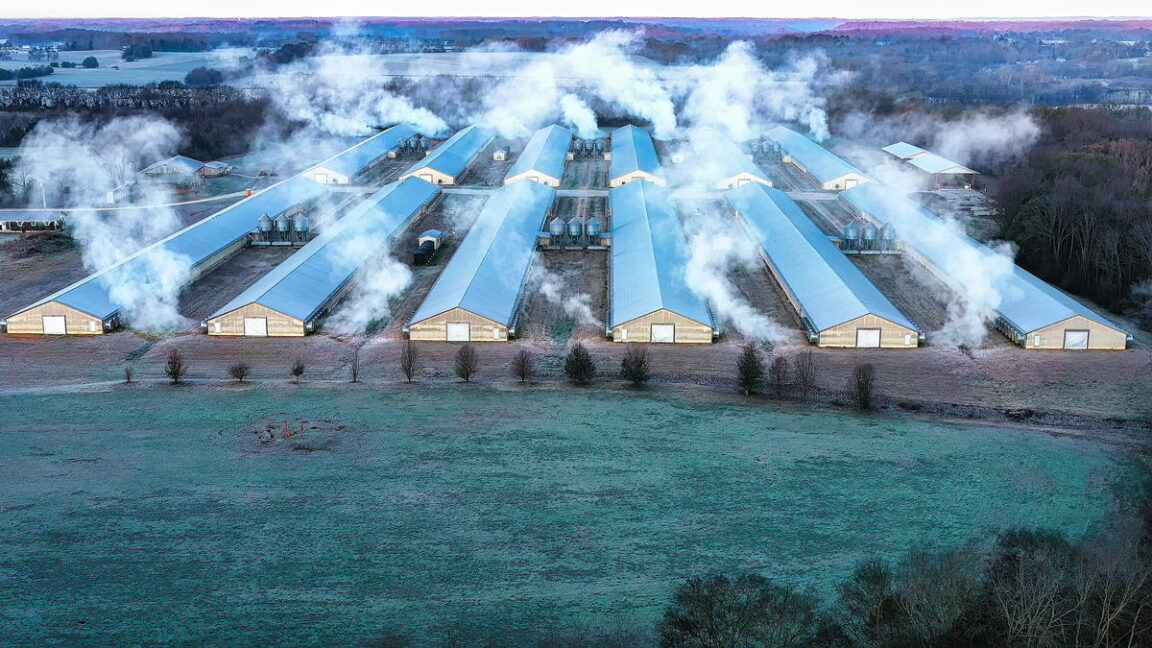
EPA throws in the towel on policing air pollution from factory farms
Full Article
Original Source
Read the full article at Arstechnica →KhanList aggregates and links to publicly available news content. We do not host full articles from third-party sources. Always verify important information with original sources.