
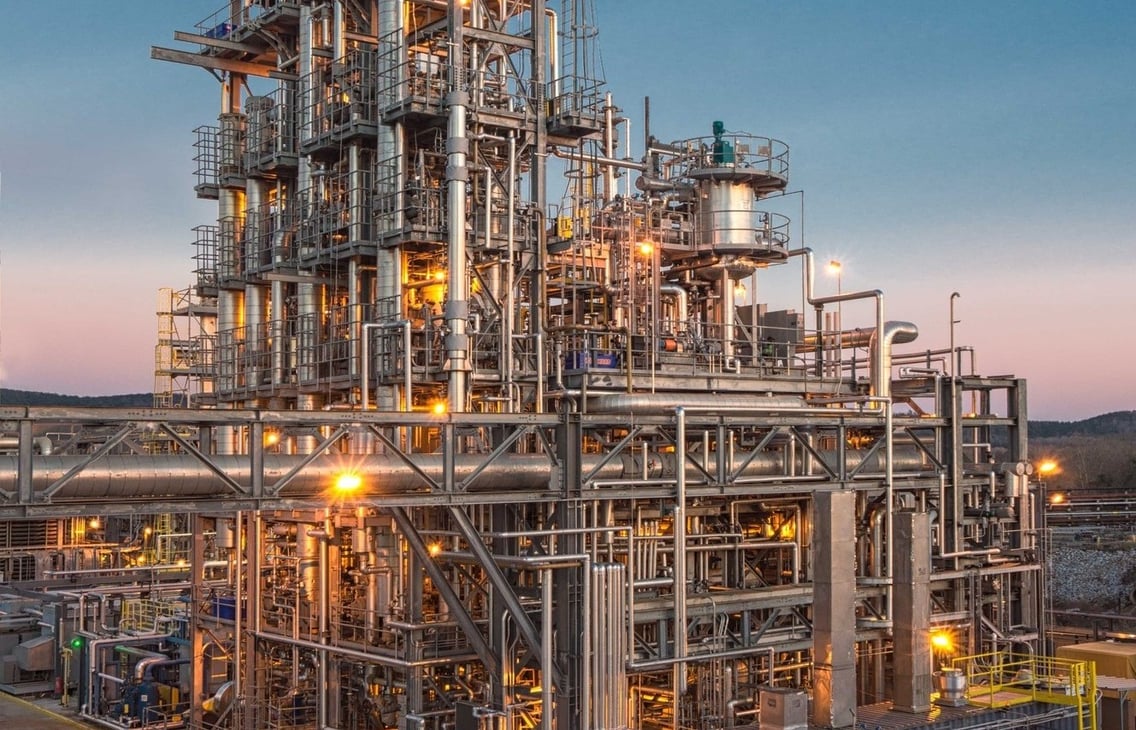
TerraVault was one oil and gas company's plan to inject and store up to 2 million tons of carbon dioxide underground every year.(CN) — A Superior Court judge ruled Tuesday that Kern County’s approval of California’s first carbon capture and storage project violated the state’s bedrock environmental law, the California Environmental Quality Act.The ruling is a win for local environmental justice and conservation groups, including the Sierra Club and the Center for Biological Diversity, who argued the county had left “multiple environmental, public health and safety issues” unaddressed when it approved the landmark project.“For years, Kern County residents have raised serious concerns about increased pollution and the safety of millions of tons of CO2 stored beneath their community," Ileana Navarro of the Central California Environmental Justice Network said in a written statement. “We are so grateful that the court recognized what Kern County failed to see and gave community concerns the serious consideration they deserve.”Located at the Elk Hills Oil Field in the San Joaquin Valley and built by the California Resources Corporation, the state’s largest oil and gas company, TerraVault began capturing carbon dioxide from oil wells and injecting it underground in May. Once completed, the two vaults, made from depleted oil reservoirs, are expected to capture more than 2 million tons of carbon dioxide every year — the equivalent of what more than 400,000 cars would emit annually.In an email, President and CEO of the California Resources Corporation Francisco Leon expressed disappointment in the ruling, writing: “This project is the result of years of work, including close consultation with surrounding communities where we received overwhelming support for our efforts. This order is a step in the wrong direction for addressing the impacts of climate change and reflects the weaponization of CEQA by a narrow group of special interests. We are still evaluating the order and will aggressively pursue all available options to protect and advance this important project.”Some environmental groups have said TerraVault I will, in effect, extend the life of the Elk Hills Oil Field, the seventh most productive in the U.S. The California Resources Corporation has said it could also store carbon from a range of not-yet-built factories in the region, which could produce, among other things, cement and steel. These new industries, opponents say, would further pollute a low-income area already struggling with bad air quality.In their CEQA lawsuit, the plaintiffs argued the environmental impact report, prepared by the California Resources Corporation and approved by Kern County, didn’t properly account for the eight possible industries TerraVault I could capture carbon for, even though the new factories were a “reasonably foreseeable consequence” of the project. Superior Court Judge Marcos Camacho agreed.“The record evidence shows that all CO2 capture equipment, transportation pipelines, compression facilities, injection and monitoring wells, and underground pore space exist solely to receive and store CO2,” Camacho wrote in the ruling. “Thus, the source facilities and industries unquestionably change the scope and nature of the project… The Court finds that such omission indicates that the whole of the project was not considered, in violation of CEQA.”The judge found plenty of other shortcomings in the environmental report, referred to in the ruling as the REIR. “The issue of atmospheric leakage of CO2,” for example, was not “fully addressed.” He also found the report “fails to adequately mitigate the project’s greenhouse gas impacts.”“This is a lack of analysis in the REIR, not a disagreement among experts,” Camacho wrote.The ruling means TerraVault must temporarily shut down. The California Resources Corporation will have to prepare a new environmental impact report, a long and costly process, before it can restart operations.The fight over TerraVault exposes a deep and long-standing divide within the environmental movement. Some groups believe climate change is the biggest threat to life on earth, and to avoid the most dire consequences, we must employ any and all tactics to remove carbon from the atmosphere. One report by the Intergovernmental Panel on Climate Change reads, “The deployment of [carbon dioxide removal] to counterbalance hard-to-abate residual emissions is unavoidable if net zero CO2 or GHG emissions are to be achieved."Other groups, including the plaintiffs suing to stop TerraVault, say the way to stop climate change is to cut emissions.“California needs to invest in real solutions like clean wind and solar to solve our energy and climate emergencies,” said Michelle Ghafar, an attorney with Earthjustice that represented the plaintiffs, in a written statement. “We can’t waste time on ‘Hail Mary’ projects pushed by the fossil fuel industry that will only delay our progress and further entrench pollution in frontline communities.”Subscribe to our free newslettersOur weekly newsletter Closing Arguments offers the latest about ongoing trials, major litigation and rulings in courthouses around the U.S. and the world, while the monthly Under the Lights dishes the legal dirt from Hollywood, sports, Big Tech and the arts.Additional Reads
Environmentalists successfully block California’s first carbon capture project
Full Article
Original Source
Read the full article at Courthousenews →KhanList aggregates and links to publicly available news content. We do not host full articles from third-party sources. Always verify important information with original sources.