
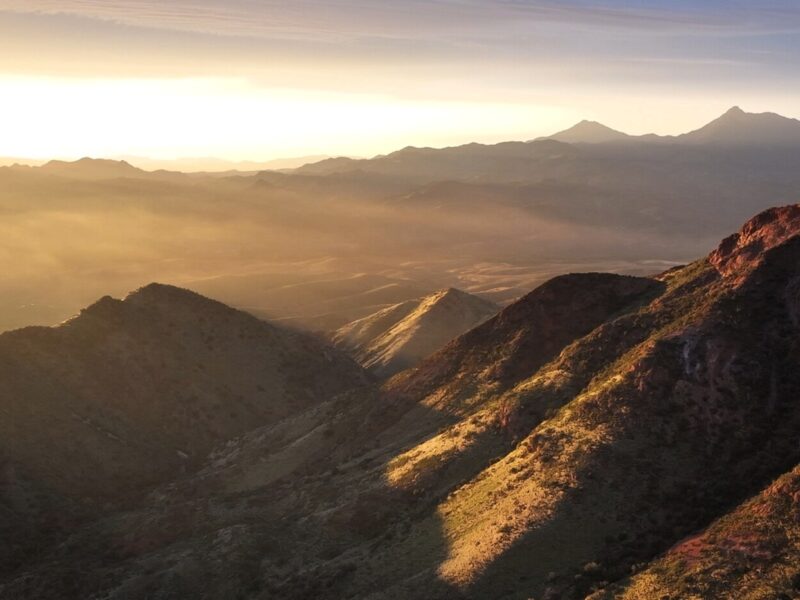
The Center for Biological Diversity says the Trump administration violated the Endangered Species Act by failing to consider the effects of a heavy metal mine expansion on jaguars, ocelots and other imperiled species.PHOENIX (CN) — Conservationists sued the Trump administration Tuesday to challenge the expansion of a heavy metal mine they say will carve up one of Arizona’s ecologically important mountain ranges.In consultation with the U.S. Fish and Wildlife Service, the U.S. Forest Service approved the expansion of Australian company South32 Hermosa’s mineral extraction operations to 52,438 acres in the Patagonia Mountains of southern Arizona, directly through one of the last remaining migration corridors for endangered jaguars and ocelots.According to the agencies’ own assessments, the expansion project would threaten the only corridor for roughly 120 miles where the cats can cross the U.S.-Mexico border.“Federal agencies that are supposed to protect public lands and endangered animals are planning to sacrifice one of the most important wildlife corridors in the Southwest,” said Russ McSpadden, Southwest conservation advocate at the Center for Biological Diversity. “Once these mountains are carved up and their aquifers depleted, there’s no putting them back together. The Patagonia Mountains are worth far more as a thriving ecosystem than they’ll ever be worth to a giant mining company.”A rare ocelot was last seen via trail cam in the Patagonia Mountains in July 2025, according to the conservation groups. Jaguars are often seen moving through adjacent ranges.The Center for Biological Diversity and the Patagonia Area Resource Alliance say in their lawsuit that the federal agencies violated the Endangered Species Act by failing to properly evaluate and protect listed species and their designated critical habitat.The groups accuse the agencies of downplaying the mine expansion’s impacts on endangered species and relying on “vague and unsupported virtue monitoring or other mitigation measures.”The Patagonia Mountains contain habitat that is vital for threatened Mexican spotted owls and western yellow-billed cuckoos. They harbor some of the most important remaining populations of several other imperiled plants and animals, including Bartram’s stonecrop, beardless chinchweed, Gila topminnow and northern Mexican gartersnakes.The plaintiffs claim the Forest Service also violated the National Environmental Policy Act by failing to provide an adequate analysis of the project’s threats, including its effects on groundwater and other public resources.The mine expansion would destroy and fragment wildlife habitat, cause massive water drawdowns in the Patagonia Mountains, bury hundreds of acres beneath mine waste and carve new roads and powerlines through pristine public lands, the plaintiffs claim. They say it may also affect the municipal water source for nearby communities, including the town of Patagonia, Arizona.The Forest Service’s decision, and the Fish and Wildlife biological opinion on which it relies, authorize a 113-year timeline of construction, operation, and closure.The project would bring industrial development deep into the public forest, including a 225-acre tailings facility capable of holding up to 38 million tons of mining waste, a 7.6-mile permanent access road, 7.2 miles of new power transmission lines, up to hundreds of exploratory drill holes and six groundwater wells. Groundwater pumping would draw down the water table by as much as 250 feet and may reduce or even eliminate surface water flows.In its own mining plan, the company admits that without a new waste dump facility, currently approved operations would cease within 10 years, as the existing facility would reach capacity. Despite the waste dump’s limited capacity, the Forest Service approved the project based on South32’s assertion that it could mine for another 50 years or more on its private lands, suggesting it could truck all of the millions of tons of ore across federal land to be processed and dumped at a yet-to-be-determined location.In its final environmental impact statement issued in March, the Forest Service admits that plan has not yet been fleshed out.The plaintiffs accuse the federal government of rushing its environmental review through the FAST-41 permitting process. Derived from the Fixing America’s Surface Transportation Act of 2015, FAST-41 allows qualifying sponsors to streamline the federal permitting process for infrastructure and energy projects. In support of his directive to accelerate domestic critical mineral production, the Trump administration has been adding more mining projects to the Fast-41 program.“Communities across the country should understand: This is just the beginning,” said Anna Darian of Patagonia Area Resource Alliance. “Hermosa may be the first hardrock mining project approved under FAST-41, but it is being held up as a model for what comes next. The long-term effects of weakening or waiving environmental protections could have irreversible consequences for frontline communities like ours.”The Forest Service did not respond to a request for comment.Subscribe to our free newslettersOur weekly newsletter Closing Arguments offers the latest about ongoing trials, major litigation and rulings in courthouses around the U.S. and the world, while the monthly Under the Lights dishes the legal dirt from Hollywood, sports, Big Tech and the arts.Additional Reads
Environmentalists challenge southern Arizona mining expansion over habitat concerns
Full Article
Original Source
Read the full article at Courthousenews →KhanList aggregates and links to publicly available news content. We do not host full articles from third-party sources. Always verify important information with original sources.