
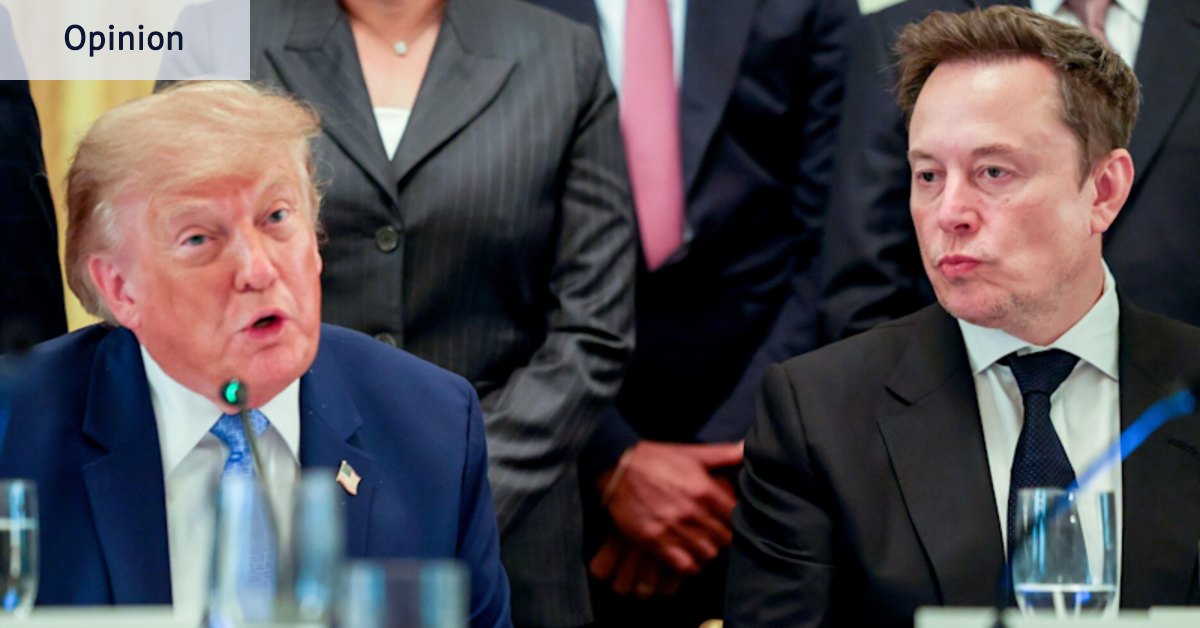
OpinionFormer White House stafferOctober 4, 2026 — 4:30pmElon Musk is back.Last year, the world’s wealthiest man left the White House after 130 chaotic days as the technically informal head of a department that hacked at the federal government’s ability to deliver on its duties. On his last day, he stood in the Oval Office with a black eye and a golden key to the White House.Weeks later, he ignited a public feud with President Donald Trump, finding himself outside the president’s small decision-making circle.The world’s weathiest man has been appointed to a US committee on the future of warfare.BloombergNow Musk has been announced as one of three members of a new Pentagon commission tasked with mapping the future of American warfare, alongside former House Speaker Newt Gingrich and Palmer Luckey, chief executive of military technology company Anduril.Project Meridian marks a new step in a political transformation larger than any of those men, shifting important responsibility away from democratic government.Rather than privatising how the state operates, Trump’s Washington is now testing the privatisation of decisions about what the state will need.Beginning in 1980, the Reagan administration redrew the line between the private and public sector. Services once seen as the duty of a responsible government were entrusted to the open market, which could price them as they saw fit.Despite the logging of the pillars of government, judgment remained the core responsibility of the state. Companies could sell to the government, but the companies did not decide what a defence strategy required.Project Meridian moves this line yet again.The old relationship between defence and industry is falling apart. It used to point from requirements, set by the government, to capabilities, built by private companies. Now, the same firms and technologies (including artificial intelligence) cover much more territory on either side of the dividing line between civilian and defence than they did before.A Fury autonomous fighter jet inside Anduril’s California headquarters.Chris ZapponeMusk and Luckey lead companies with a combined $US53 billion ($76 billion) in Pentagon contracts and are now tasked with identifying the capabilities that the US military should develop to fight the battles of the future.Luckey described his company’s business model as using “our own money to decide what products to build, how to build then, then we build those products, then we sell them to the government”.He is now one of three people tasked with defining exactly what the government wants to buy.The neoliberal dream of the 1970s resulted in private companies taking on public tasks. We are now seeing the privatisation of strategic imagination.But governments and businesses are not meant to do the same thing. Navies should not be designed to run a profit. Nor should prisons or hospitals. Governments exist to weigh the interest of its citizens above all else, including alliances and the risk of war itself.This project is part of a longer strategy played out by the Trump administration.In the opening weeks of his second term, Trump signed executive orders making the sale and export of American weapons a top diplomatic and trade priority, to be hawked by American embassies and consulates abroad.The America First Arms Transfer Strategy published this year by the White House says American arms deals are a core part of American foreign policy, used to expand production at home. The administration even made a handy catalogue of items that it encourages allies to acquire, cheapening the highwire task of diplomacy in the 21st century to selling expensive weapons.The strategy doesn’t stop at bombs. Earlier this year, Trump signed another executive order, declaring another foreign policy goal of the administration to get other countries to adopt American AI technology.An ally buying an American F-35 fighter jet is one thing. An ally building its military decision-making capability around American AI models is more tightly wound.As allies become more dependent on American technology, the question of who gets to define the priorities of that technology becomes extremely important.That was made painfully obvious last month with news about OpenAI, a company with deep ties to the White House, gaining unauthorised access to Australian government systems without any human direction.The stakes for Australia stretch wide. One step below the famous submarines of the AUKUS deal is Pillar II, which focuses on building technological capabilities. It’s designed to make the Australian, British and American militaries work more closely together.The three countries are already jointly testing autonomous systems. They’re sharing sensitive data, and refining how new cutting-edge technology works, together.Integration of the old generation meant ensuring that ammunition from one country could fire in the guns of another. Today, it’s about making sure their software and sensors can talk to each other.A change in how America decides what future military power should look like becomes a change in the assumptions around which Australian defence capability is built.For the past five years, the controversy around AUKUS has been whether it makes Australia too materially dependent on American shipbuilding. The question is now whether Australia is too dependent on American decisions about the future of warfare itself.The final decisions on how to act and where still reside in Canberra. But the recommendations made by Musk, Luckey and Gingrich will shape the options available.That is, ultimately, why the spectacle of American politics matters so much here, thousands of kilometres away. The decisions made in small rooms in Washington affect how allies, dependent on American systems, can operate.While Reagan’s revolution asked how much the government was needed, this new strategy asks how much decision-making power still belongs to government itself?AUKUS and other alliances mean these questions will not just stay on one side of the Pacific. Cory Alpert is a PhD researcher at the University of Melbourne looking at the impact of AI on democracy. He previously served the Biden-Harris administration.The Opinion newsletter is a weekly wrap of views that will challenge, champion and inform your own. Sign up here.Cory Alpert is a PhD researcher at the University of Melbourne looking at the impact of AI on democracy. He previously served the Biden-Harris Administration for three years.From our partners
Elon Musk is back in the White House as privatisation spreads to warfare
Full Article
Original Source
Read the full article at Smh →KhanList aggregates and links to publicly available news content. We do not host full articles from third-party sources. Always verify important information with original sources.