
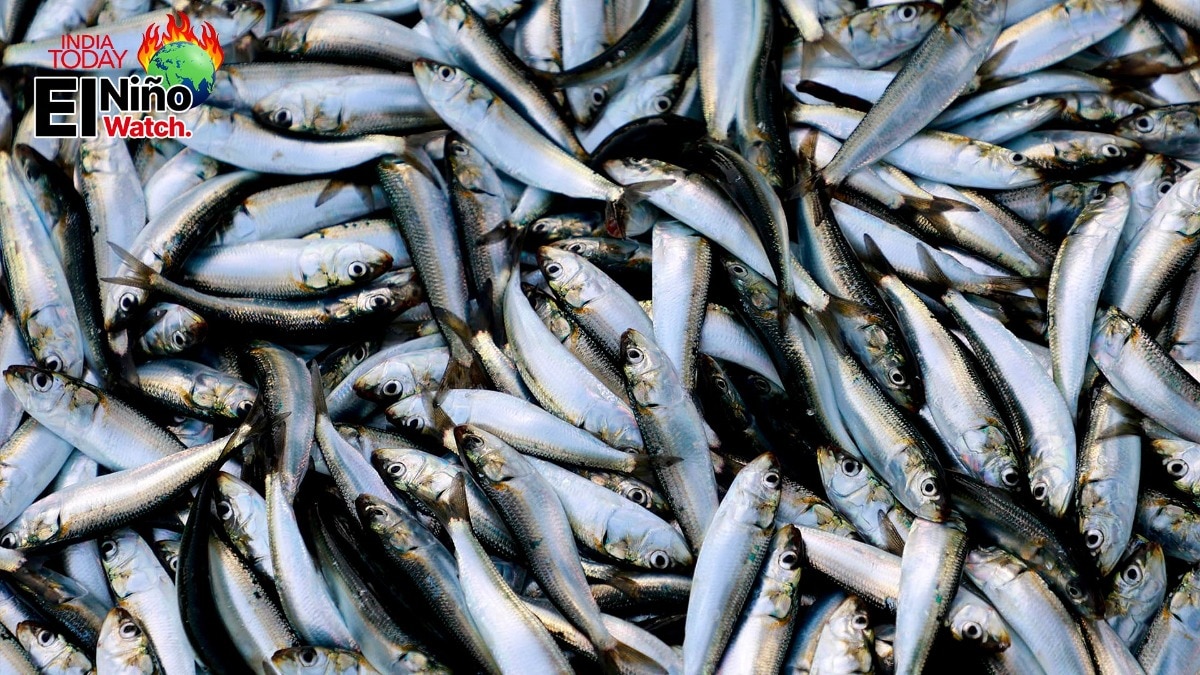
El Nino's growing influence could be felt not just through weather extremes, but also in the waters that sustain India's fishing communities.As the Pacific Ocean warms, rising sea temperatures could affect marine productivity, shift fish habitats and reduce the availability of commercially important species.India, the world's most populous country, has a specific reason to closely monitor these changes. A fisherman in Kerala casts a net to fish. (Photo: Getty) The reason is that the strengthening El Nino conditions could contribute to a decline in Indian oil sardine availability in 2027, as warming spreads to the northern Indian Ocean, according to the Indian Council of Agricultural Research's Central Marine Fisheries Research Institute (CMFRI). The warning does not mean India's fish supplies are headed for a collapse, but it does shine the light on a lesser known consequence of El Nino, birthed by changes beneath the ocean surface that could affect fishing livelihoods, seafood availability and prices.HOW CAN EL NINO DISRUPT MARINE LIFE?El Nino occurs when surface waters in the central and eastern tropical Pacific become unusually warm, altering ocean circulation and atmospheric patterns. One major consequence of that warming is the disruption of upwelling, a process in which winds help bring cold, nutrient-rich water from deeper ocean layers to the surface. An illustration shows the warming Pacific Ocean due to a stregthening El Nino. (Photo: X) Along South America's Pacific coast, this water supplies nutrients that support phytoplankton, microscopic organisms forming the base of the marine food chain. When El Nino weakens upwelling, plankton growth can decline, leaving less food for fish and other marine animals.A December 2025 study published in the ICES Journal of Marine Science examined the Peruvian anchoveta fishery using simulations of ocean and ecosystem conditions from 1980 to 2015.Researchers found that during the powerful El Nino events of 1982–83 and 1997–98, abnormal warming disrupted the timing between plankton blooms and the early feeding stages of fish larvae.This mismatch could reduce larval survival and, eventually, fishing yields. Put bluntly, a warming Pacific will starve the creatures underwater.INDIA'S SARDINES AT RISK TOOIndia's fisheries face a different set of ocean conditions, but warming still remains a concern.In July 2026, CMFRI warned that El Nino-related warming could intensify marine heatwaves and reduce Indian oil sardine availability in 2027. The effects of that reduction could reach the northern Indian Ocean around April–May next year. An image shows a plankton bloom along a sea shore. (Photo: Getty) The Indian National Centre for Ocean Information Services (INCOIS) has also warned that the Arabian Sea and Bay of Bengal could experience thermal stress, with sardines and Indian mackerel among the species potentially affected.Fish may migrate towards more suitable habitats, become less abundant in fishing grounds or fail to reach their usual size.The warning rings loud when taken within the context of research suggesting these species are already sensitive to changing ocean conditions.A review published in Ocean & Coastal Management in 2024 examined Indian oil sardine fisheries, including fluctuations in annual catches and the influence of environmental and human pressures. It highlighted the need to improve predictions of where suitable sardine habitats are likely to occur.Similarly, a 2025 research examining small-pelagic fisheries along the Malabar Coast also investigated links between changes in sardine and mackerel landings and environmental conditions between 1985 and 2023. Workers load fish onto a boat in Kochi, Kerala. (Photo: Getty) Together, these studies reiterate the need to track ocean temperatures, fish habitats and fishing pressure rather than attribute every change in catches to El Nino.FISHING BOATS TO FOOD SUPPLIESThe effects of El Nino on fisheries can extend beyond the communities where fish are caught. Peru's anchoveta fishery, for instance, supplies a substantial share of global fishmeal production, which is used in aquaculture feed.A major fall in catches can therefore affect fishmeal supplies and raise costs for fish farmers elsewhere.In India, a sustained decline in oil sardine or mackerel availability could affect fishing incomes, coastal markets and the supply of affordable fish. Fisherman put push into a basket to prepare them for market. (Photo: Getty) But the extent of any price increase would depend on the scale of the decline, consumer demand, alternative supplies and the ability of fishers and traders to adapt.El Nino is also not the only pressure on marine ecosystems. Long-term ocean warming, marine heatwaves, overfishing and habitat degradation can compound the effects of natural climate variability.For India, monitoring sea temperatures, marine productivity and fish landings will be crucial over the coming months. As the Pacific warms and marine conditions change, El Nino grows more likely to impact more than just India's monsoon.- Ends
El Nino is heating up the oceans. Could India's fish supplies be at risk?
Full Article
Original Source
Read the full article at Indiatoday →KhanList aggregates and links to publicly available news content. We do not host full articles from third-party sources. Always verify important information with original sources.