
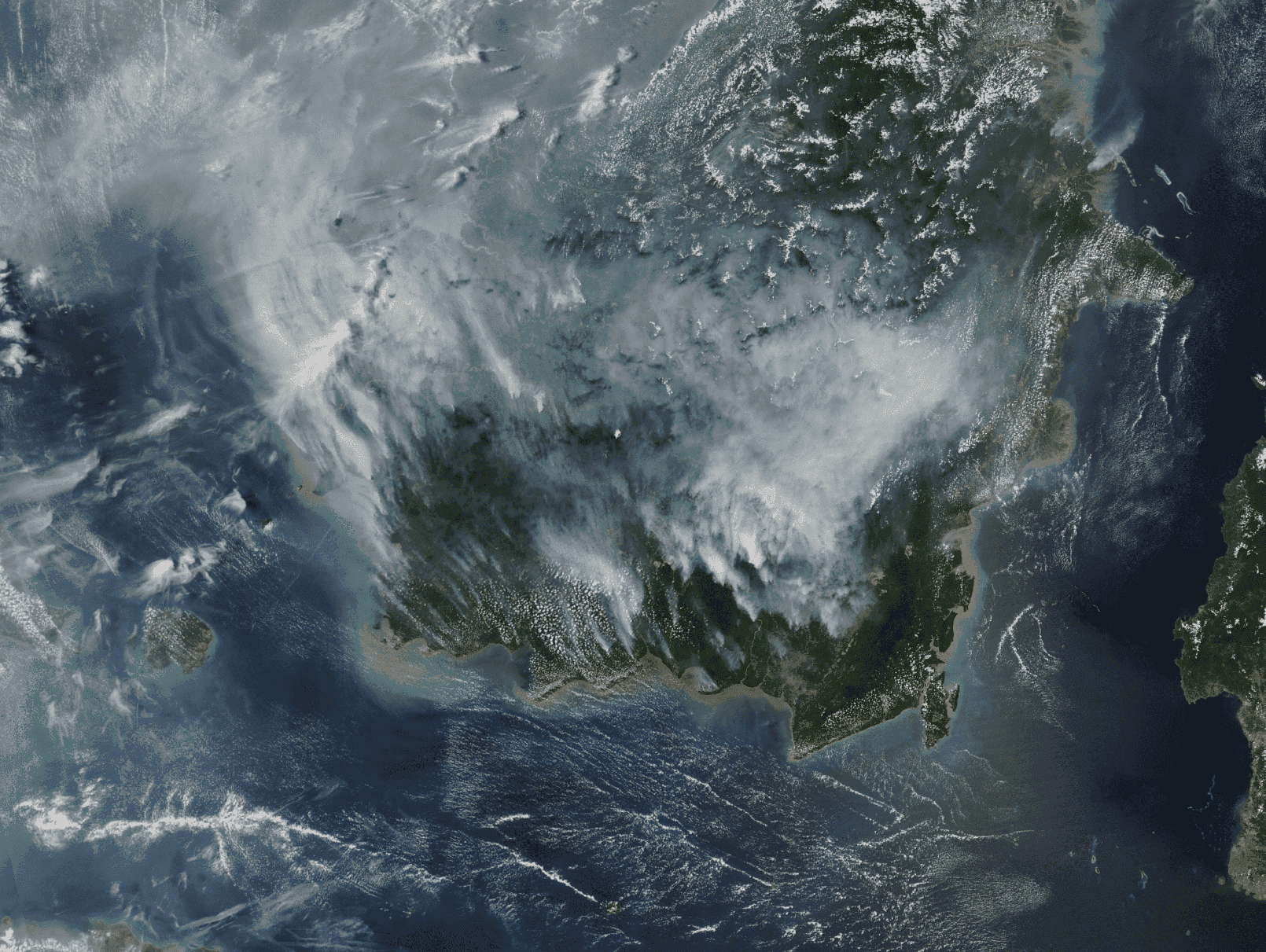
Human-caused climate change significantly amplified extreme heat during Indonesia’s 2026 fire season, turning an El Niño-driven drought into a severe regional crisis, according to a recent rapid analysis. The report was released by World Weather Attribution (WWA), a global network of researchers who analyze the influence of climate change in extreme weather events. The researchers analyzed weather conditions across western Indonesia during the dry season between August and October 2026, when fires burned approximately 1.9 million hectares (4.7 million acres) of peatland and rainforest. The resulting toxic haze exposed 12.5 million people across Southeast Asia to hazardous air pollution and caused more than 400,000 respiratory infections in Indonesia alone, according to findings from the WWA report. Researchers found that while a strong El Niño was the primary driver of an “extreme lack of rainfall,” cutting seasonal precipitation by roughly 50% during the three months, record-breaking temperatures were overwhelmingly driven by global warming. Human-induced climate change made the season 1.6° Celsius (2.9° Fahrenheit) hotter; such extreme heat would be virtually impossible without greenhouse gas emissions, the researchers found. Meanwhile, El Niño added 0.3°C (0.5°F) of warming. Climate change also tripled the likelihood of weeklong hot, dry atmospheric extremes. “The top line of the study is that this year’s El Niño set the conditions for very low rainfall, a major fire season drought, and that this drought was then exacerbated by record heat throughout the fire season, which was made possible due to human-caused climate change,” report co-author Theodore Keeping, extreme weather and wildfire researcher at Imperial College London, U.K., said at an online press briefing. Co-author Friederike Otto, a professor of climate science at Imperial College London, said climate change impacts are increasingly outweighing natural variability. “Especially on the temperature effects of El Niño, we have already seen in past years … that the effect of climate change is surpassing the effect of El Niño in many cases,” Otto said. The WWA authors said changes in climate compounded decades of severe landscape degradation. Between 1990 and 2010, peat swamp forest cover declined by 45% in Borneo and 63% in Sumatra due to agricultural drainage and logging. Drained, dried-out peatlands ignite easily, and fires there smolder underground for weeks, releasing massive carbon reserves. “Indonesian landscapes have changed dramatically over the last 30 years, with extensive peatland drainage and deforestation creating a landscape that is extremely vulnerable to ignition,” said co-author Pramudhian Firdaus, a meteorologist at the University of Melbourne, Australia, and with the Indonesian meteorological agency. “The El Niño effect set the stage, but the peatland also is what makes Indonesia fires so severe.” WWA researchers added that protecting intact forests, restoring drained peatlands, and enforcing zero-burning land clearing are essential to prevent future catastrophic haze events as global temperatures rise further. Banner image: Satellite imagery of the smoke emitted by wildfires in Indonesia. Image by VIIRS Imagery captured by the NOAA-20 satellite via Wikimedia Commons (Public domain). Credits Topics
El Niño drove drought, but climate change intensified Indonesia’s fire crisis: Study
Full Article
Original Source
Read the full article at News →KhanList aggregates and links to publicly available news content. We do not host full articles from third-party sources. Always verify important information with original sources.