
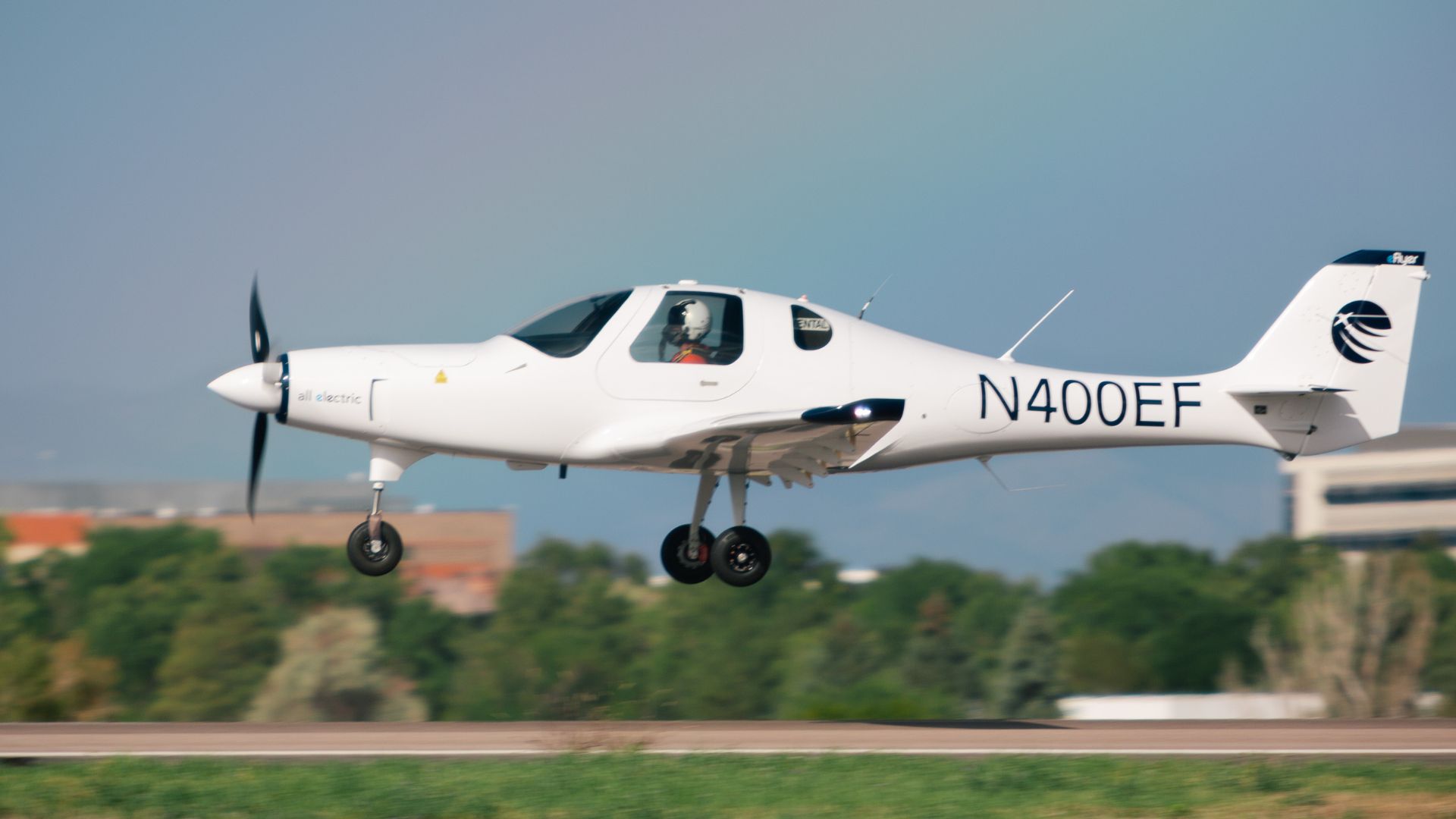
Bye Aerospace has put its eFlyer 2 into the air for the first time, opening the flight-test campaign for an all-electric aircraft aimed at U.S. pilot training. The Colorado-based company says the aircraft could cut operating costs by as much as 80 percent while producing no in-flight emissions. Chief Test Pilot Elliot Seguin flew the aircraft through its planned test profile from Centennial Airport near Denver. Engineers used the flight to gather early data on handling, aerodynamics, and propulsion performance. The first flight now gives Bye Aerospace a working aircraft for the next stage of development. It also moves the eFlyer 2 closer to FAA certification and eventual customer deliveries. Electric aircraft enters testing The eFlyer 2 pairs an electric propulsion system with a lightweight composite airframe. Its design targets the economics of flight training, where fuel and maintenance can make every flight expensive. Bye Aerospace says the aircraft can reduce operating costs by up to 80 percent. That figure could become important for U.S. flight schools facing high training costs and pressure to keep aircraft flying. The aircraft also removes combustion emissions during flight. Its electric architecture could help operators reduce their exposure to volatile aviation fuel prices. Rod Zastrow, CEO of Bye Aerospace, said the first flight delivered strong results across several areas. “The first flight of eFlyer 2 exceeded all our expectations,” Zastrow said. He cited the aircraft’s aerodynamics, handling, and propulsion performance. The flight also recorded no maintenance discrepancies, according to the company. Designed around pilot training Flight schools represent the primary market for the eFlyer 2. Bye Aerospace also expects interest from air taxi operators and private owners. Pilot training creates a particularly demanding environment for aircraft. Students need predictable handling, while operators need high availability and manageable maintenance costs. The eFlyer 2 seeks to address both requirements through its electric powertrain and lightweight structure. Bye Aerospace also designed the aircraft around safety and repeatable handling for student pilots. Seguin said the aircraft handled well during the first flight. He added that the test validated years of engineering and ground testing. The program arrives as aviation faces persistent demand for new pilots. Lower operating costs could give training organizations more flexibility as they build flight hours for students. FAA certification work begins The first flight marks the beginning of a broader flight-test program. Bye Aerospace plans to progressively expand the aircraft’s flight envelope as testing continues. Engineers will collect additional performance data during those flights. The results will help establish the handling characteristics required for certification and training operations. The eFlyer 2 also brings together components from a broad aerospace supply chain. Suppliers include Safran Electrical and Power, magniX, Siemens, Toray, Garmin and Sensenich Propeller. Other partners include Composite Approach, Electro.Aero, Flying S, M4 Engineering, ACME Aero and Risse Racing. Their systems and components contribute to the aircraft’s electric propulsion, avionics, structure, and other functions. The next phase will test the aircraft across increasingly demanding conditions. Each flight should add data needed to support the FAA certification process. Get the latest in engineering, tech, space & science - delivered daily to your inbox.Aamir is a seasoned tech journalist with experience at Exhibit Magazine, Republic World, and PR Newswire. With a deep love for all things tech and science, he has spent years decoding the latest innovations and exploring how they shape industries, lifestyles, and the future of humanity.
eFlyer 2 all-electric aircraft takes first flight with 80% lower operational costs
Full Article
Original Source
Read the full article at Interestingengineering →KhanList aggregates and links to publicly available news content. We do not host full articles from third-party sources. Always verify important information with original sources.