
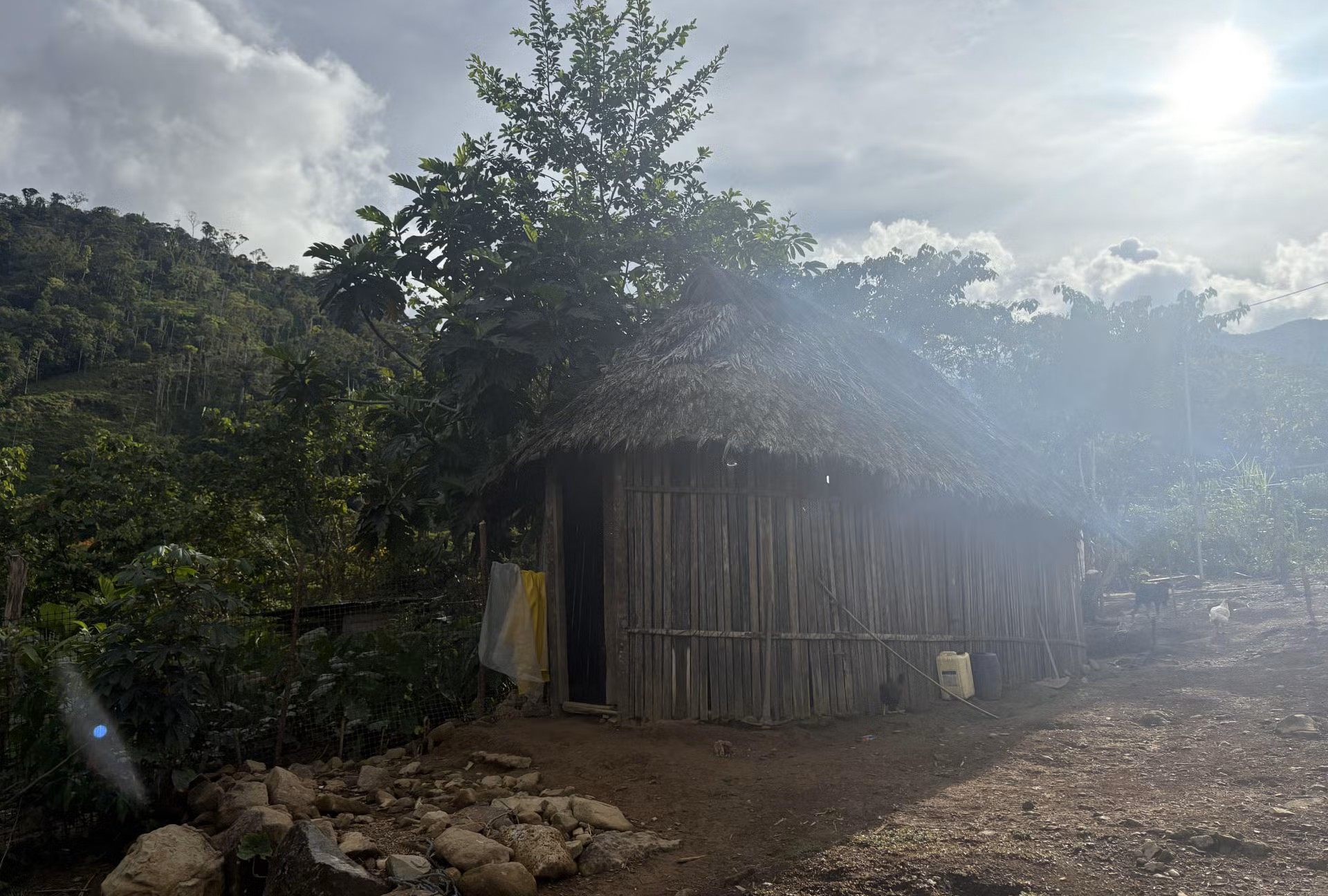
The Warintza copper mine in southeastern Ecuador could force Indigenous Shuar communities to relocate, while clearing primary forest and altering natural waterways.The mine would operate within the Indigenous territory, overlapping with a stretch of the Andes mountains known as the Cordillera del Cóndor.Critics of the project say the government granted exploration rights without consulting the communities.Now, the government is conducting another consultation. However, many residents say they no longer trust the process and believe the project will move forward regardless of their objections. A proposed copper mine on Indigenous land in southeastern Ecuador is getting closer to opening despite opposition from some Shuar communities, who say they reject the project altogether and don’t want to participate in talks with the government. The Warintza mine received environmental authorization this year, and officials will now begin meeting with Indigenous communities about how the project, if constructed, would impact their way of life. But some community members don’t want to be consulted at all, and say they’re worried about relocation from the territory. “We want absolutely nothing to do with mining,” one community member, who asked to remain anonymous due to fear for his personal safety, told Mongabay. “And we don’t even want to be consulted.” If the project moves forward, Lowell Mineral Exploration Ecuador S.A., a subsidiary of Solaris Resources, would extract copper for around 22 years from approximately 8,660 hectares (21,399 acres) across six concessions. It would also extract molybdenum concentrates and some gold and silver. Construction would clear more than 2,025 hectares (5,003 acres) of primary forest and divert the Warints and Piuntz rivers, critical to Indigenous communities’ way of life, according to the environmental impact assessment, which received technical approval in April. It could irreversibly change the landscape in some places even after the mine is closed, the assessment said. Surface water and groundwater quality also face high risk, threatening aquatic flora and fauna. The area sits in the Cordillera del Cóndor, a stretch of the Andes that extends into Peru. The mine site provides habitat for 552 plant species, 20 of them endemic, according to the assessment. It also has 154 bird species, 69 amphibians and reptiles, and 31 mammal species, including the Andean bear (Tremarctos ornatus). A soccer game in the center of the Maikiuaints community. Image by Brandi Morin/Survival International. One activist, who wished to remain anonymous due to fear for his personal safety, told Mongabay the assessment left out other threatened and endangered species, and disregarded some pollution risks. “There are serious errors regarding the types of chemicals that will be emitted, the heavy metals and the radioactive metals that will come out of the mine,” he said. Solaris Resources didn’t respond to a request for comment from Mongabay in time for publication. The mine would also overlap with homes in the Shuar communities of Warints and Yawi, the assessment said. The open pit would be around 3.4 kilometers (2.1 miles) long and 1.2 kilometers (0.75 miles) wide, and a tailings facility would cover around 860 hectares (2,125 acres). The operations are so close to the villages that it would be unsafe for them to stay, the assessment said. It recommended total relocation of residents, approximately 512 Warints people and 210 Yawi. It rejected “scattered individual relocation” and moving into nearby mestizo communities as options. Members of the Maikiuants community. Image by Brandi Morin/Survival International. “The impact cannot be avoided or minimized through design adjustments, so relocation is unavoidable, and planned relocation is an enabling condition for eliminating exposure and serious risk,” the assessment said. Relocation is first subject to Free, Prior and Informed Consent (FPIC), a process in which communities are given the nature, size, pace, reversibility and scope of the project and how it could impact their lives. In 2021, a complaint with the International Labour Organization (ILO), a U.N. agency, argued that Ecuador should have begun that process before granting the company exploration rights in the area. In 2024, the ILO upheld that position and also said the mine shouldn’t move forward without consulting the Shuar communities of Maikiuants, Warints, Yawi and Tinkimints. In a September statement, Solaris Resources said it’s working toward finalizing water permits, mining concession administrative processes, infrastructure-related clearances and other legal requirements. It also said the Warints and Yawi communities had finalized “life plans,” defined as community-led, long-term development frameworks that identify each community’s priorities and aspirations and provide a roadmap for future decision-making. Company agreements with communities don’t qualify as consultation, the 2024 ILO ruling noted. The Ministry of Energy and Mines didn’t respond to Mongabay’s request for comment by the time of publication. Some residents say they’ve lost confidence in the consultation process after the exploration rights were granted without consultation in 2021. They said they’re worried the government will authorize the project regardless of what the communities decide. “The government violates [our] constitutional rights and the international rights reinforcing them. Nevertheless, after all of that, they want to hold a prior and well-informed consultation,” the same community member told Mongabay. If the communities ultimately reject the process, the project can still legally move forward. Ministry of Energy and Mines regulations say consultation results are non-binding, and the state can proceed without consent if it makes efforts to minimize impact and fairly compensate residents. “It’s no longer a consultation process,” the activist said, “but instead becomes a process of negotiation and harm.” Banner image: The outside of a traditional Shaur kitchen. Image by Brandi Morin/Survival International. See related from this reporter: Ecuador’s new ecological corridor connects Andes and Amazon ecosystems FEEDBACK: Use this form to send a message to the author of this post. If you want to post a public comment, you can do that at the bottom of the page. Credits Topics
Ecuador copper mine advancing despite opposition from Indigenous communities
Full Article
Original Source
Read the full article at News →KhanList aggregates and links to publicly available news content. We do not host full articles from third-party sources. Always verify important information with original sources.