
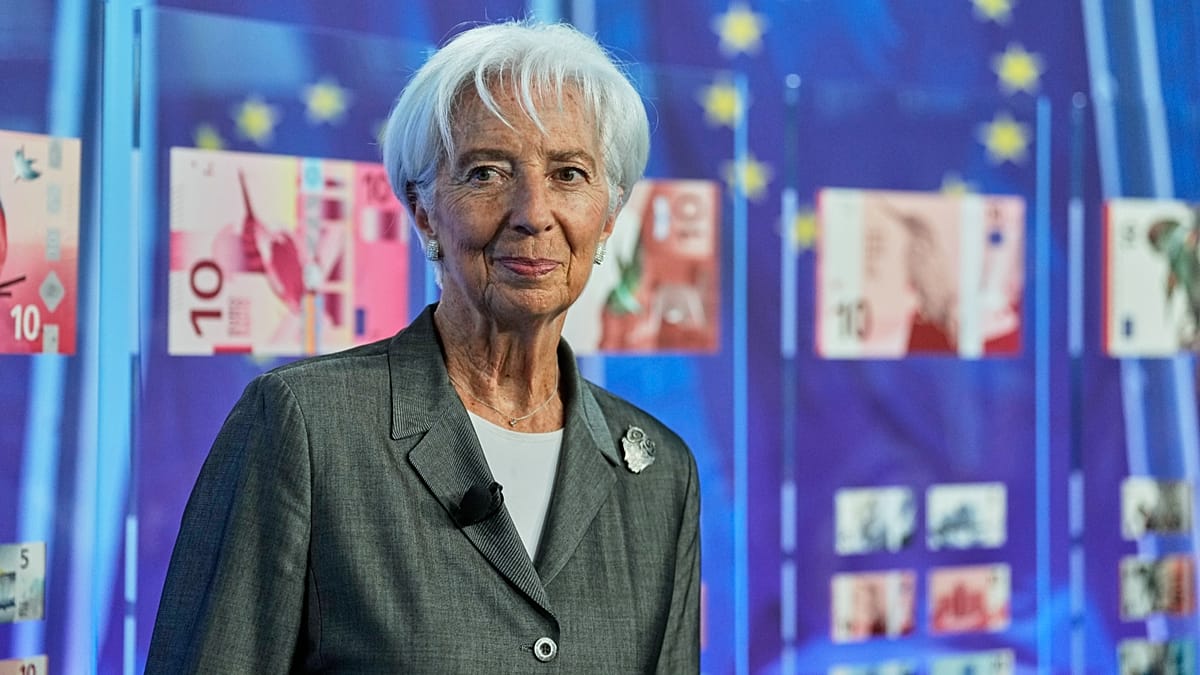
Birds, rivers and figures from European culture, including composers, are among the design choices the ECB is asking people to consider for future euro banknotes. More than 9 million people have already voted, but the ECB is encouraging more people to share their opinions before the survey closes next Monday. ADVERTISEMENT ADVERTISEMENT The ECB has previously consulted Europeans about the redesign, but this is the first time it has launched a survey asking them to assess the ten shortlisted designs. The proposed designs also differ markedly from those on existing banknotes. In an increasingly cashless world, the ECB is sending a message to Europeans: cash is here to stay, and they can help choose what it will look like. "Cash is not simply a legacy of the past. It is part of daily life for millions of Europeans," ECB Executive Board member Piero Cipollone said during an event on euro banknotes in Brussels on Monday. The survey covers ten shortlisted designs under two possible themes: “European culture” and “Rivers and birds”. The results will inform, but not determine, the ECB Governing Council’s final decision, which is expected around the end of 2026. The new banknotes will then take several years to develop and are expected to enter circulation gradually from 2029. "More than 31 billion euro banknotes, worth over €1.6 trillion, are in circulation, with an annual growth of around 3%. There are also more than 150 billion euro coins in circulation," Cipollone said. He also noted that cash still plays a role when other payment methods are disrupted, for example during power or internet outages. The role of cash could be further reinforced by proposed EU legislation known as the Single Currency Package. The package, which is under negotiation in Brussels, includes measures intended to strengthen the legal-tender status of cash and its mandatory acceptance. "Cash provides something that is difficult to replace: a tangible anchor of stability and trust. Cash also fosters financial inclusion. It is simple and intuitive. It protects privacy. And, perhaps most importantly, it safeguards freedom of choice," Cipollone said during his speech. According to a 2024 ECB survey, a growing majority of Europeans think that retaining cash as a payment option is important. "Cash is the only form of money that every citizen can hold directly. Once you have cash, you don’t need any intermediaries or devices to use it," Cipollone said. Digital and physical euro In its payment strategy, the ECB is investing not only in the redesign of banknotes but also in the creation of the digital euro, an electronic form of central bank money that would complement cash. The ECB says its support for cash is intrinsically linked to this new electronic means of payment, which is intended to enable both offline and online transactions with a high degree of privacy. The digital euro could be issued for the first time in 2029 if negotiations in Brussels are concluded by the end of 2026. "We are investing in both euro cash and the digital euro. Together, they will ensure that Europeans have access to central bank money in both physical and digital form for day-to-day transactions," Cipollone said. Together, the two forms of central bank money could ensure that a "European solution is available for all types of payment, at all times, throughout the euro area," he said. One reason the ECB has developed a new payments strategy is the need for strategic autonomy amid significant geopolitical uncertainty and the EU's heavy reliance on US payment infrastructure. Visa and Mastercard, both American, account for 61% of card payments in the eurozone and nearly all cross-border card transactions, according to 2025 ECB data.
ECB invites Europeans to vote on future banknote designs as deadline approaches
Full Article
Original Source
Read the full article at Euronews →KhanList aggregates and links to publicly available news content. We do not host full articles from third-party sources. Always verify important information with original sources.