
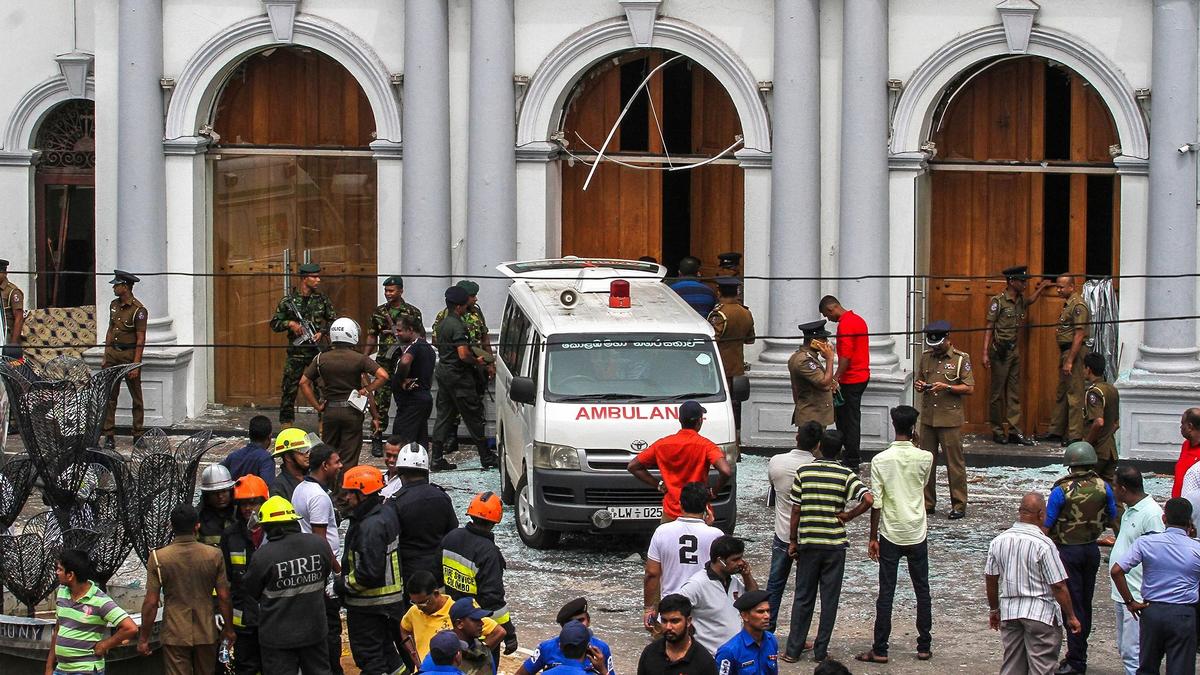
Sri Lankan Army soldiers secure the area around St. Anthony Shrine after a blast in Colombo, Sri Lanka, on April 21, 2019. | Photo Credit: AP Sri Lanka’s High Court on Tuesday (September 22, 2206) convicted 14 of the 24 men for being directly involved in the 2019 Easter Sunday bombings, which killed 279 people.The three-judge Bench found that 14 of the accused were guilty on all charges, which included murder, conspiracy to commit terrorism and possessing firearms and explosives under the Prevention of Terrorism Act.Also read | After the civil war, the stifling impasse in Sri Lanka A 15th defendant was found guilty of only some of the charges, while nine others were acquitted.The presiding Judge told a packed court that sentencing would be done later on Tuesday (September 22, 2026). Dozens of police commandos provided security outside as the verdicts were read.The men were accused of aiding and abetting the suicide bombers who struck three luxury hotels and three churches on April 21, 2019, killing 279 people, including 45 foreigners.Local media has said some could face the death penalty, although Sri Lanka has not carried out an execution since 1976 and capital punishment is typically commuted to life imprisonment.In 2021, authorities filed 23,270 charges against 24 suspects accused of planning or inspiring the attacks. The charges included murder, conspiracy to commit terrorism and firearms and explosives offences under the Prevention of Terrorism Act. None of those believed to have directly participated in the attacks are alive.Twenty-five men were originally charged, but one defendant died in custody. Investigators blamed the attack on a homegrown Islamist extremist group.Among those convicted on all charges was Mohamed Naufar, whom prosecutors identified as the ringleader who provided support to the eight-member suicide squad that carried out the coordinated bombings.‘Mastermind’ spy bossThree of the defendants were also charged by U.S. authorities with terrorism-related offences linked to the bombings in December 2020.Five Americans were among those killed, including a U.S. Commerce Department employee who was in Colombo on official business.Other foreigners killed include citizens of Australia, Bangladesh, China, Denmark, India, Japan, the Netherlands, Portugal, Spain, Sweden, Switzerland, Turkey and Britain.The trial has unfolded against the backdrop of a separate and highly sensitive investigation into allegations that elements within the Sri Lankan state may have had links to those responsible for the attacks.Former intelligence chief Suresh Sallay is in custody facing accusations that he had orchestrated the bombings, allegations he denies.Public Security Minister Ananda Wijepala told Parliament in June that investigators believed he had worked with Islamist extremists before the bombings were carried out.Investigators said the network was cultivated to manufacture a security threat that would in turn bolster political support for the Rajapaksa family, which returned to power several months after the attack with Gotabaya Rajapaksa’s election as president.No international inquiry possible into 2019 Easter bombings: Ranil WickremesingheAccording to court filings, investigators believed the objective was to create chaos and present Mr. Rajapaksa, a former defence chief, as the leader best placed to restore security.He was credited by supporters with crushing Tamil separatist rebels in 2009 after a decades-long civil war. The Rajapaksa family dominated Sri Lankan politics for nearly two decades, but its camp has rejected allegations of state involvement. Published - September 22, 2026 06:55 pm IST
Easter Sunday blasts case: Sri Lanka court convicts 14 accused; nine others acquitted
Full Article
Original Source
Read the full article at Thehindu →KhanList aggregates and links to publicly available news content. We do not host full articles from third-party sources. Always verify important information with original sources.