
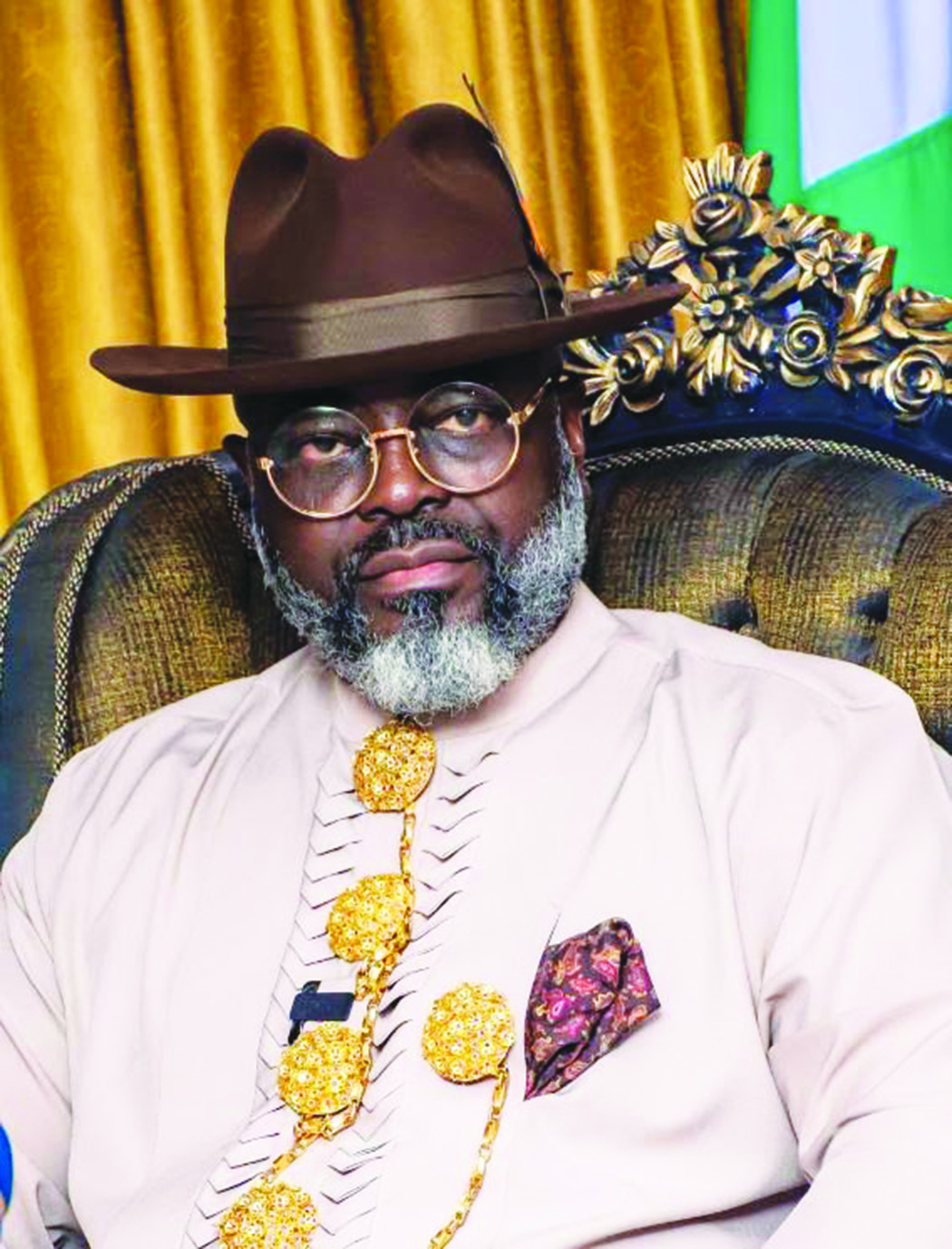
The governorship candidate of the Nigeria Democratic Congress in Rivers State, Chief Dumo Lulu-Briggs, recalls growing up at a time when he sometimes had no food at home and had to rely on the kindness of neighbours, an experience that shaped his belief in community and a shared future. He discusses his vision for Rivers State, plans to diversify the economy, create jobs, improve education, promote transparency and protect the environment ahead of the 2027 governorship election. He also addresses his previous electoral experiences and questions surrounding his alleged links to business interests and government contracts. Blessing Ibunge presents the excerpts. Why are you contesting the governorship election? I am running because I believe political power must return to public purpose. We are children of the same soil. Whether we come from the riverine communities or the upland communities, whether we were born here or have built our lives here, we share the benefits when Rivers State succeeds and the consequences when it fails. For too long, political conflict has consumed attention that should have gone into jobs, schools, healthcare, safer communities, working infrastructure and stronger businesses. The cost of this crisis is not only found in economic estimates. It is found in postponed government decisions, weakened citizens’ confidence, projects delayed or abandoned, businesses that did not expand, young people who waited too long for opportunity, and communities that watched politics become louder than governance. That is why I am running: to move Rivers State from politics without purpose to disciplined and committed public work; from sharing poverty to creating prosperity; and from a state known mainly for oil and gas to a state respected for what its people built, produced and became. You repeatedly use the word “reset.” What exactly does “Reset Rivers State” mean? Reset is not revenge. For me, Reset Rivers State has six clear implications. First, we must reset politics so that it becomes peaceful, civil and purposeful. Second, we must reset the government so that institutions are honest, predictable and competent. Third, we must reset the economy so that production, services, logistics, enterprise and exports matter more than dependence on monthly allocation. Fourth, we must reset opportunity so that work, finance, markets and advancement do not depend on political connection. Fifth, we must reset trust through fairness, truth, continuity and respect for the rule of law. Sixth, we must reset our commitment to the environment so that clean water, monitoring, emergency response, remediation and resilience are treated as matters of public safety and economic justice. Rivers State belongs to the people. It needs a reset. What is your immediate economic agenda if you become governor? Rivers State possesses much of what it needs to succeed: human resources, energy and gas, ports and waterways, industrial experience, enormous potential in tourism, the blue economy, agriculture, culture and creativity, and the commercial strength of Port Harcourt. Our challenge is conversion, turning these assets into reliable power, productive firms, safer movement, skilled work, stronger local businesses, better public services and more secure household incomes. We must build an economy where the government creates the conditions for businesses to succeed rather than becoming the economy itself. The state budget should provide essential public services, prepare serious projects and build infrastructure that enables production. Government should not pretend that ownership is the only path to progress when a commercial project can attract private development financing and professional operatorship. You have spoken of moving Rivers from about $20 billion to a $200 billion economy. Isn’t that too ambitious? Dream big, because you cannot be bigger than your vision. Our vision is long-term but honest about what one administration can do. We will lay the foundation for moving Rivers State from the current approximation of a US$20 billion economy to one that can become a US$200 billion economy in 15 years. We will not be there in 15 years. But by the time we leave, we will have achieved enormous progress and set the foundation for solid growth. It will require serious economic expansion. That is why we are looking at tourism, agriculture, fisheries, logistics, industrial production, services, the creative economy, exports and private-sector investment. The opportunity is enormous. But you must get the politics right before you can get the economy right. What would you do differently from previous administrations? We will use public money with discipline. Useful inherited projects and lawful obligations will be judged on evidence, not on who started them. Projects must be properly prepared. They must be economically justified. Where private financing and professional operatorship can deliver better results, the government should create the conditions for that. At the end of our tenure, the people should be able to ask: Are politics safer? Are institutions more trusted? Have priority projects moved beyond announcements? Are small and medium-scale enterprises working better? Has tourism grown? Has the creative sector been given its proper place? Are more people moving from training into real work? Is environmental monitoring stronger? Government must be able to tell the people clearly what succeeded, what failed and what needs to be corrected. You have spoken passionately about education. What would your administration do in that area? We have to invest very heavily in education. My background was very humble, but I attended the best schools, our public schools. Sons and daughters of commissioners and government secretaries were in the same schools with ordinary children. That created a sense of common ownership and a common future. That was the Rivers I knew. Every child had a fair chance of success in the race of life. Today, the reverse is increasingly the case. We have created an opportunity gap. Education must therefore become a central economic policy, not simply a social policy. We need employer-linked skills, quality public education, technical training and an environment where young people can move from training into real employment. What shaped your belief in this idea of a common future? Growing up, I always accepted people. There were times when I had no food to eat in my own home, and I went to my neighbours’ homes. Whenever they cooked for their children, they found me there. There was a sense that every child belonged to the community. We all believed in what our parents did. If your children were there, you cared about them. You did not pull another person’s child down. You did meaningful things to help them. We were friends. We were family. That sense of common ownership has weakened. Politics has become so divisive that even people who should naturally support one another have become suspicious of one another. That is why when I say reset, I mean returning to that sense of common future. Critics have suggested that you were not serious about previous elections and that you may have compromised your political interests. What is your response? I am not a regular politician. What drives me into politics is my conviction about what needs to change in Rivers State. I have continued to serve Rivers people in and out of season. My concern has never been simply about holding political office. In 2019, I had a complicated experience with the political process. I became a candidate through the process available to me, but there were disputes and litigation surrounding the candidacy. I fought that election to the very end. The broader point is that Rivers has experienced political conflicts that go beyond ordinary democratic competition. People have lost lives. Communities have suffered. Elections have been disrupted. We cannot continue like that. People should be allowed to participate. The political space must be open. Genuine representatives should have an opportunity. You should not have to depend simply on who you know. You have faced questions about alleged links with Lubrik Construction and other family business interests. What is your position? I am not a contractor. At no point have I had anything to do with Lubrik Construction. There may be family connections and there may be businesses associated with the wider family history, but I have no dealings, directly or indirectly, with Lubrik Construction. My position is very clear: I do not do government contracts. If anybody says that I have anything to do with Lubrik Construction because of family relationships, that is not correct. What I am interested in is creating opportunities for communities and businesses to operate transparently and competitively. What plan do you have for the creative industry which many believe has been neglected over the years? The creative industry is one of Rivers State’s enormous opportunities. We have talent. We have culture. We have history. We have music, entertainment, arts and creativity. The government must create the infrastructure and policy environment that allows those talents to become businesses. We need spaces where people can create, perform and develop their skills. We need investment and incentives that attract private capital. We need to connect the creative sector with tourism. Tourism and the creative economy should not be treated as afterthoughts. You have also spoken about tourism and the blue economy. What is your plan for that? Rivers State has enormous potential along its coastline, waterways and communities. We should not simply build beautiful roads and leave the communities as they are. Development must generate economic activity. Tourism can create hotels, restaurants, transport services, entertainment, cultural businesses and jobs. The blue economy can create opportunities in fisheries, marine transport, logistics and other water-based industries. But this requires infrastructure, security, planning and a government that understands economics. What about environmental challenges, particularly in the riverine communities? Development that destroys the conditions for life and livelihood is not transformation. From riverine communities facing pollution and coastal risks to urban communities facing flooding, unsafe water and failing drainage systems, our people deserve credible information, faster response and practical protection. Environmental protection must become part of the core duty of government. We need proper monitoring, emergency response, remediation and resilience. You come from the private sector. Why should Rivers people trust you with public resources? People should trust demonstrated competence. I have worked in the private sector and have experience in governance and institutional management. I have also served in public roles where I had responsibility for organisations and institutions. The principle is the same: good governance requires good governance structures and disciplined business processes. If you are trusted with public resources, you must demonstrate what those resources achieved. I want every credit, every expenditure and every major opportunity to be traceable. Transparency must be central. What do you want Rivers people to remember about your administration if you win? I do not ask for a blank cheque. I ask for the opportunity to serve and be judged by the evidence we publish and the difference our people can see in their lives and communities. At the end of our tenure, I want every community to be able to say: “The state sees us, hears us, respects us and works for us.” I am not asking people simply to support Dumo Lulu-Briggs. I am asking them to join us in returning political power to service. Let us choose purpose over capture, work over noise, competence over permanent conflict and prosperity over poverty. That is what this journey is about. Rivers State belongs to the people. And it needs a reset.
Dumo Lulu-Briggs: Growing Up, There Were Times We Had No Food at Home
Full Article
Original Source
Read the full article at Thisdaylive →KhanList aggregates and links to publicly available news content. We do not host full articles from third-party sources. Always verify important information with original sources.