
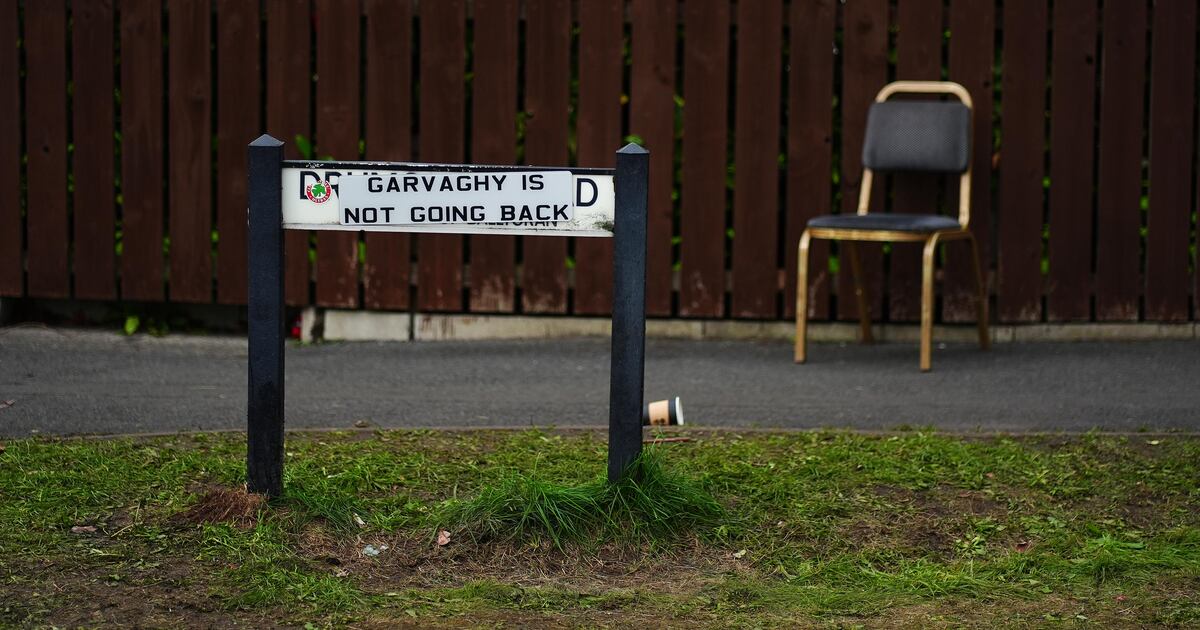
The Garvaghy Road is northern nationalism’s line in the sand, its watershed moment, its crocodile. The reptiles were the defining image of the Assembly election in March 2017, which played out in a not dissimilar atmosphere of rancour and division between nationalists and unionists. Referring to the demand by Sinn Féin for an Irish Language Act, the then first minister and Democratic Unionist Party (DUP) leader Arlene Foster, remarked that “if you feed a crocodile it will keep coming back and looking for more”. The widespread sense of nationalist outrage was embraced by Sinn Féin; turnout increased by almost 10 per cent and unionists lost their overall majority at Stormont for the first time. Now, nearly 10 years on, another Assembly election beckons, by next May at the latest. It does so against the backdrop of a crisis that has revealed the extent of the sectarian divide still permeating politics and society in Northern Ireland. It has further weakened, perhaps fatally, the Northern powersharing institutions. READ MOREBut the standoff at Drumcree, still ongoing in advance of yet another legal challenge on Monday, is more than just another crocodile. The resurrection of this march of all marches, with its bitter, bloody history, has tapped into something visceral in the nationalist psyche, into that collective memory of discrimination, of marching for civil rights, and of being batoned off the street by B Specials in Derry exactly 58 years ago on Monday. Sinn Féin has taken the lead at the protests – and is certainly making political hay – but also present were the SDLP, People Before Profit, Aontú and dissident republicans. In conversation after conversation over the last week with people from nationalist backgrounds of all shades of green, it is clear they are united in their resolve that the Orange Order cannot be allowed to march down the Garvaghy Road. There would be no going back to the days of being “second-class citizens”, many said. As one lifelong SDLP voter put it, “no more Croppies lie down”, in a reference to the British folk song that celebrates the defeat of Irish rebels in 1798.[ ‘There’s so much change’: Young Spencer on finding common ground with Kneecap in BelfastOpens in new window ]Yet, even in Northern Ireland, time has moved on. The civil rights movement is 60, the Belfast Agreement almost 30, and this is not the Drumcree of those days. A whole generation has grown up proud of its Irishness and its culture – from the Irish language to the GAA to Kneecap – and has the freedom to express it. Witness the musicians who have performed for the Garvaghy Road protesters; not just the likes of Christy Moore, but mainstream Irish acts such as members of Beoga and The Mary Wallopers. Several thousand people attended the protest on Saturday, with its near-festival atmosphere. This was young, confident nationalism, ready to stand up and be counted, and with others ready to stand beside them. It is highly significant that more than 1,000 “concerned individuals from a Protestant background” have thus far signed an open letter calling on the Orange Order to end the parades impasse “in the interests of our entire community”.[ ‘Everybody wants this to end’: Protestant group pushes UK government to end Drumcree standoffOpens in new window ]Speaking on the BBC’s The View on Thursday, SDLP leader Claire Hanna explained why, in 15 years as an elected politician, it was the first time she had objected to a parade. “I wish to see the traditions of this region flourish together, and I am very, very clear that’s not what I think was happening,” she said. “People – Catholic, Protestant and dissenter – are not buying this.” As the standoff continues, it is already clear its consequences will be profound; for the people of the Garvaghy Road, for the politics of Northern Ireland, and for the debate about its very future.
Drumcree consequences will be profound. That’s why it’s a line in the sand for nationalists
Full Article
Original Source
Read the full article at Irishtimes →KhanList aggregates and links to publicly available news content. We do not host full articles from third-party sources. Always verify important information with original sources.