
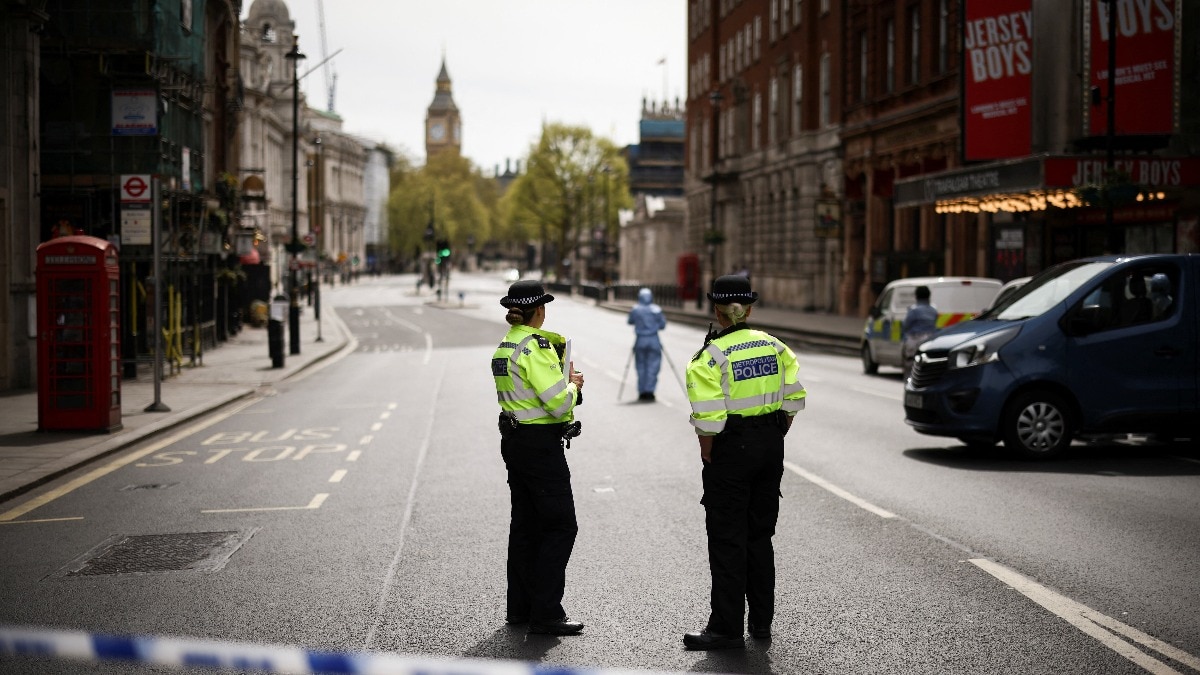
Police officers in the United Kingdom have been advised to dress modestly, avoid interrupting Muslims during prayers and be mindful of gender sensitivities when interacting with members of the community. The guidance, part of a National Faith Toolkit issued by the National Police Chiefs' Council (NPCC), has triggered a political backlash, with critics accusing the police of encouraging "two-tier policing".Police officers in the UK are being advised to follow a series of religious and cultural considerations when interacting with Muslims, including removing their shoes when entering mosques or Muslim homes, avoiding the use of dogs and taking gender sensitivities into account. The guidance has triggered a political backlash, with opposition leaders accusing the police of bending over backwards to accommodate religious practices, according to a report by The New York Post.The recommendations are part of a National Faith Toolkit published by the National Police Chiefs' Council (NPCC), which offers practical advice to officers on engaging with different religious communities. The document covers several faiths but has come under scrutiny over its detailed provisions relating to Muslims, who account for around 6.5 per cent of the UK's population.Under the guidance, officers visiting Muslim homes or mosques are advised to dress modestly, cover or remove their shoes, behave quietly and respectfully, and avoid using police dogs. They are also asked not to interrupt people engaged in prayer or enter sections of religious buildings designated for members of the opposite sex. The toolkit further advises officers to consider cultural sensitivities when interacting with Muslims of the opposite sex, including physical contact and verbal communication. In certain situations, it suggests that an officer of the same gender may be better placed to handle an interaction, The New York Post reported.It also addresses religious considerations surrounding death and post-mortem examinations. The guidance suggests that a male member of a Muslim woman's family should be allowed to be present if a male medical examiner is conducting her autopsy. The NPCC has defended the toolkit, saying that religious and cultural considerations did not override the law or officers' operational responsibilities.OPPOSITION LEADERS SLAM UK COPS' RULESThe recommendations for officers drew sharp criticism from far-right Reform UK leader Nigel Farage, who accused the police of compromising equal treatment under the law."This is outrageous and yet more proof of institutional two-tier policing. The police should not be bending over backwards to placate sexist and outdated cultures," Farage told The Telegraph.He demanded that the NPCC withdraw the guidance, arguing that officers should uphold the same standards for everyone irrespective of religious background.Shadow Home Secretary Chris Philp also criticised the toolkit, saying police officers should treat people equally regardless of their faith or ethnicity."This is precisely the kind of guidance that is harming policing. The police should treat everyone the same, whatever their faith or the colour of their skin, and any document telling officers otherwise is plainly wrong," he told The Telegraph.The toolkit was developed with contributions from several organisations representing different communities, including Police Chaplaincy UK, the Christian Police Association, the National Black Police Association, the National LGBT+ Police Network, the National Sikh Police Association, the National Association of Muslim Police and the British Association for Women in Policing.Defending the initiative, an NPCC spokesperson said the toolkit was designed to help officers understand and engage with the UK's increasingly diverse communities. "Religious and cultural considerations do not override the law or the operational duties of police officers," the spokesperson told The New York Post.GROOMING GANG SCANDAL AND POLICE FAILURESThe controversy comes amid longstanding criticism of UK police and local authorities over their handling of organised child sexual exploitation, particularly grooming gangs that targeted vulnerable girls in towns such as Rotherham, Rochdale and Telford.A national audit conducted by Baroness Louise Casey in 2025 exposed serious institutional failures, including poor record-keeping, inadequate information-sharing and reluctance to investigate sensitive aspects of group-based sexual exploitation. It found that some authorities had avoided examining suspects' ethnicity or cultural factors for fear of appearing racist or triggering community tensions, allowing concerns about community relations to overshadow the protection of victims.The issue has resurfaced following the release of Shabir Ahmed, the ringleader of a notorious Rochdale grooming gang, from prison in July 2026. Ahmed, 73, was convicted in 2012 of multiple rape and sexual offences against girls, some as young as 12, and served 14 years in prison.His release triggered fresh outrage after victims were informed that he could not be deported to Pakistan because of provisions under the Immigration Act 1971. Ahmed had been stripped of his British citizenship following his conviction but retained Pakistani nationality.Prime Minister Keir Starmer subsequently asked Home Secretary Shabana Mahmood to review the case amid calls for legal changes to facilitate his deportation. Ahmed was released under strict licence conditions and placed in supervised accommodation with electronic monitoring.The grooming gang scandal has intensified scrutiny of whether concerns about race, religion and community relations affected the response of police and other public authorities to abuse allegations.The NPCC, however, maintains that its faith toolkit is intended to improve engagement with diverse communities and does not dilute officers' legal or operational responsibilities.- Ends
Dress modestly, avoid interacting: Guidance to UK cops on conduct with Muslims
Full Article
Original Source
Read the full article at Indiatoday →KhanList aggregates and links to publicly available news content. We do not host full articles from third-party sources. Always verify important information with original sources.