
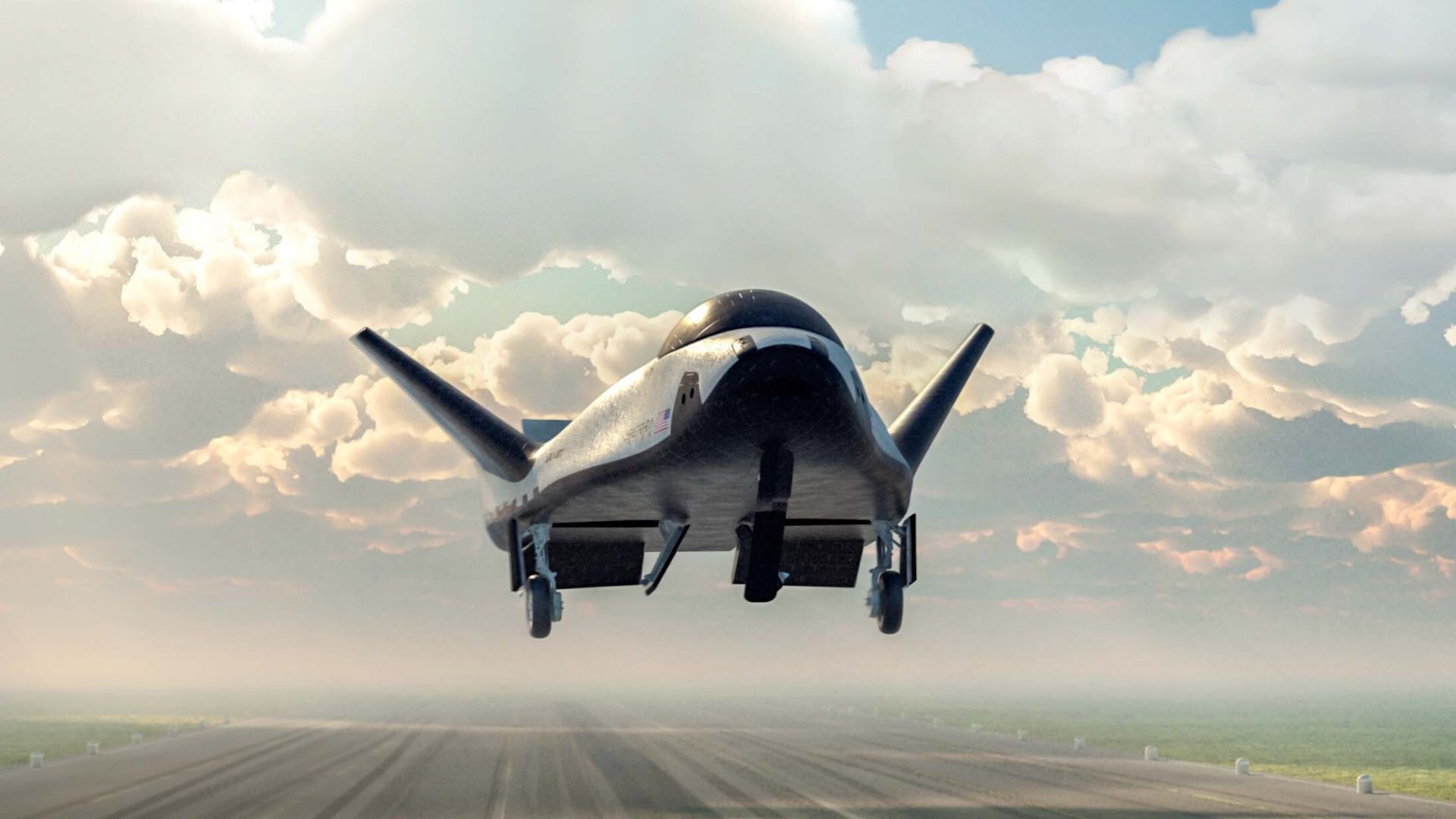
Sierra Space has secured a key regulatory approval for Dream Chaser, bringing its long-delayed spaceplane closer to its first orbital flight. The Federal Aviation Administration (FAA) has authorized the spacecraft to return from orbit and land at Vandenberg Space Force Base in California. The authorization addresses a critical part of Dream Chaser’s flight operations. Its first mission will launch from Florida aboard United Launch Alliance’s Vulcan Centaur rocket. The spacecraft will then travel back through Earth’s atmosphere before touching down on a conventional runway. Vandenberg becomes primary landing site The FAA issued Dream Chaser’s vehicle operator license on November 9. Sierra Space confirmed the approval the following day. The five-year license permits up to four reentries annually under an unchanged vehicle configuration and mission profile. Vandenberg now serves as the designated landing location for the spacecraft. That represents a change from Sierra Space’s original plans. During an environmental review in 2024, the company identified Kennedy Space Center’s former Space Shuttle runway as its preferred landing site. Another milestone for #DreamChaser!The @FAANews has issued Sierra Space a license authorizing Dream Chaser to reenter and land at Vandenberg Space Force Base.Thank you to the FAA for its collaboration and support of commercial space innovation. pic.twitter.com/qIJgQL54CA— Sierra Space (@SierraSpaceCo) November 10, 2026 Vandenberg initially appeared as a backup option. The newly issued license instead identifies the California installation as Dream Chaser’s landing destination. The arrangement also gives Sierra Space an approved runway for its first flight. However, the FAA authorization does not establish a launch date. Mission timing still depends on the availability of a Vulcan Centaur rocket. Tenacity brings cargo back Dream Chaser’s first spacecraft, Tenacity, combines a lifting-body design with folding wings. The configuration allows it to fit inside Vulcan’s payload fairing during launch. Once in orbit, the spacecraft can carry approximately 12,100 pounds of cargo. Its return capacity reaches 4,080 pounds, according to the FAA’s environmental assessment. That capability addresses an important limitation of conventional cargo spacecraft. Capsules typically return through parachute-assisted landings, often involving ocean recovery. Dream Chaser instead offers a runway landing. Sierra Space says returning cargo experiences less than 1.5 times Earth’s gravity during the journey. The company also claims the spacecraft can use runways designed to accommodate Boeing 737 aircraft. That flexibility could benefit experiments and sensitive equipment requiring careful handling after landing. NASA mission takes new direction Dream Chaser spaceplane originally entered NASA’s commercial resupply program in 2016. Sierra Space secured a contract to develop the spacecraft for International Space Station cargo deliveries. Repeated development delays and propulsion system problems pushed its debut further back. NASA and Sierra Space eventually revised their agreement in September 2025. The revised plan removed the space station docking requirement from Dream Chaser’s initial demonstration. Tenacity will instead conduct an independent free-flying mission in orbit. NASA can still purchase future resupply missions if the demonstration proves successful. Sierra Space has also lined up national security and commercial customers for the inaugural flight. In September, the company confirmed those customers would contribute payloads alongside NASA cargo. However, it has not disclosed their identities or the specific equipment planned for launch. Sierra Space previously targeted late 2026 for the debut mission. The company has tied that schedule to Vulcan Centaur availability. With the year nearing its end, the launch window remains uncertain. The FAA’s approval removes another regulatory hurdle. Tenacity still needs its launch vehicle and remaining mission preparations before its runway return becomes reality. Get the latest in engineering, tech, space & science - delivered daily to your inbox.Aamir is a seasoned tech journalist with experience at Exhibit Magazine, Republic World, and PR Newswire. With a deep love for all things tech and science, he has spent years decoding the latest innovations and exploring how they shape industries, lifestyles, and the future of humanity.
Dream Chaser spaceplane hauling 12,000 pounds wins FAA clearance for runway landings
Full Article
Original Source
Read the full article at Interestingengineering →KhanList aggregates and links to publicly available news content. We do not host full articles from third-party sources. Always verify important information with original sources.