
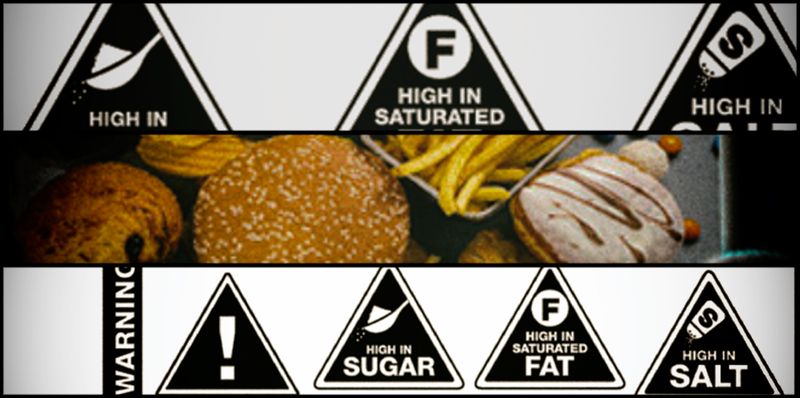
The health department says it has reworked South Africa’s proposed warning labels on sugary, salty and fatty foods, partly to spare the industry unnecessary costs. But no one outside the government has seen the new draft, and it is now being debated behind closed doors at Nedlac, more than three years after it was published.The delay has not been for lack of material to consider. According to the National Department of Health, it received substantive submissions from 179 companies and organisations, with many running to hundreds of pages. Once the comments were captured and reviewed, the department says the material exceeded 6,000 pages, requiring a four-member technical team to work through the submissions, identify issues requiring further consultation and consider possible amendments to the draft.But what happened to those submissions remains unclear to some of the organisations that participated in the process. Legal researcher Dr Aisosa Omoruyi from Priceless SA says the organisation has received no communication from the department explaining how the submissions were considered or incorporated into the regulatory process.“To our knowledge, the submissions themselves have also not been made publicly available,” she says, adding that Priceless had therefore been unable to assess “how the issues raised by stakeholders were considered or addressed in the subsequent process”.Foster Mohale, spokesperson for the Department of Health, told Daily Maverick that the review of the draft regulations had now been completed. The department’s next steps, he said, were a discussion with its legal services, followed by a feedback session with the food industry, academia, civil society and consumer advocacy groups. The final draft would then be processed by legal services before submission to the health minister for publication.Foster Mohale, spokesperson for the Department of Health. (Photo: GCIS) The regulations have already been through a formal public consultation. Regulation 3337 (Regulations Relating to the Labelling and Advertising of Foodstuffs) was published on 21 April 2023, with the initial deadline for submissions set for 21 July. The comment period was later extended by two months, closing on 21 September 2023.Yet nearly three years later, the process has moved into another round of engagement, this time through the National Economic Development and Labour Council, or Nedlac.The role of Nedlac is not simply to provide another opportunity for public comment. The council describes its role as bringing government, business, labour and community constituencies together to seek consensus on significant socioeconomic policy and legislative matters.According to Nedlac, its task team on R3337 is considering the proposed regulations and amendments, with areas of agreement, disagreement and further engagement to be recorded in a report that will be submitted to the health minister before the regulations are finalised and gazetted.But there is already a dispute over how R3337 came to be considered by Nedlac.Foster Mohale said the Department of Health was requested by the Nedlac Trade and Industry Chamber to table the regulations. After considering the public comments and briefing the health minister, Mohale said, the minister confirmed that the draft should be tabled at the chamber, which then requested the establishment of a task team.Section27 has a different understanding. In a 27 May 2026 letter to President Cyril Ramaphosa, the organisation wrote: “We understand that Draft Regulations R3337 ... have been referred to the National Economic Development and Labour Council (Nedlac) at the request of your office.”Section27 warned that the referral could further delay progress and raised concerns about whether public health interests would be adequately represented in the process.Concern over veiled talksThe uncertainty over the referral is compounded by the fact that the discussions taking place inside Nedlac are not yet visible to the public.Responding to Daily Maverick questions sent via email, Nedlac said its social partners were engaging with the proposed regulations and amendments, but that it could not provide information about the issues being discussed or the positions of the different constituencies while the process was under way. The council said the information would become available through its report once the engagements had been finalised.For civil society groups that have followed the regulations since 2023, the lack of visibility into the Nedlac discussions is a particular concern.Omoruyi said Priceless was “not clear what the referral of R3337 to Nedlac is intended to achieve in this particular case”, given that the regulations had already undergone a public consultation process.She said Priceless had not been privy to the discussions and therefore could not comment on “the issues being raised there, the positions taken by the different constituencies, or how the discussions may be influencing the regulatory process”.The community sector’s position within Nedlac has become another point of concern for civil society.Nzama Mbalati, CEO of the Healthy Living Alliance (Heala), told Daily Maverick that “despite being recognised as one of Nedlac’s four constituencies, the community sector’s participation in the chamber system is significantly more limited than that of the other three constituencies”.Heala CEO Nzama Mbalati. (Photo: Heala) He said this created an imbalance because community organisations and civil society groups did not have the same access to discussions in areas such as trade, industry, labour and public finance, even when those decisions had direct implications for communities and public health.Mbalati argues that the imbalance is particularly consequential for R3337: “Yet the communities who stand to benefit from these public health protections, and the civil society organisations that represent their interests, do not have an equivalent seat at the table during these deliberations,” he told Daily Maverick.He described the result as a process that could, in practice, privilege the interests and negotiating power of the more extensively represented constituencies.Mbalati said civil society had already raised concerns about its ability to participate in the Nedlac process. “A speedy process is required to finalise the regulation. The food and beverage industries were given ample time and extension during the process of participation and public submissions,” he said.Nedlac, however, describes its role as a process of bringing government, business, labour and community together to seek consensus on significant socioeconomic policy and legislative matters. Its task team is expected to record areas of agreement, disagreement and issues requiring further engagement before submitting its report to the health minister.The regulations were formally tabled at Nedlac’s Trade and Industry Chamber on 26 August 2026, when the task team first convened for substantive engagement.Nedlac said the social partners are now engaging with the proposed regulations and amendments. The task team’s report will be submitted to the health minister before the regulations are finalised and gazetted.For now, however, the substance of those discussions remains out of public view.Nedlac said the information being sought about the 2023 submissions, the issues being discussed and the positions of the constituencies would only become available once the engagements had been completed and captured in the council’s report.What happened to the submissions?The Department’s explanation for the prolonged process rests partly on the sheer volume and complexity of the submissions it received.Under the Promotion of Administrative Justice Act, Mohale said, the Department had to work through more than 6,000 pages of substantive and technical comments, along with reference material and legal opinions submitted alongside them. The comments had to be blinded and captured according to the different sections of the draft regulations before being considered by the four-member technical team.The department’s own account shows that the review was not confined to processing written submissions.Mohale said that, since the public consultation, the department had consulted international trading partners, government, non-government and professional organisations, as well as academia. He said some industry commentators were also engaged on what he described as technical “industry speak”.But civil society groups said they have had far less visibility into what industry had been proposing.Industry ‘push for self-regulation’Engagement officer at Amandla.mobi Palesa Ndlovu said the organisation was unaware of the specific arguments or proposals being made by the industry on R3337. She identified the Consumer Goods Council of South Africa (CGSA) as the primary industry body engaging on the regulations and said CGCSA had refused to share its submission with Amandla.mobi.Ndlovu said Amandla.mobi was concerned that industry could push for a voluntary approach rather than mandatory regulation.“For the most part, industry pushes for self-regulation and educating the public about nutrition,” she said.But Amandla.mobi’s response also illustrates the limits of what civil society organisations know about the industry position on R3337. The organisation said it was not aware of the specific arguments being made by industry in relation to the regulations. Its concerns about self-regulation were therefore broader than a claim about the contents of the current industry submission.CGCSA, meanwhile, confirmed that it had engaged on food-labelling policy, but said its participation in the current Nedlac process was through Business Unity South Africa and the broader business constituency.“As a member organisation of Business Unity South Africa (Busa), the Consumer Goods Council of South Africa (CGCSA) participates in the Nedlac process through the broader business constituency represented by Busa,” CGCSA spokesperson Sure Kamhunga said.“The current engagement at Nedlac is therefore a Busa-led process on behalf of organised business.”CGCSA did not respond to Daily Maverick’s individual questions about its position on the referral or the current Nedlac discussions. Instead, Kamhunga said the council had “constructively engaged on food-labelling policy matters” and remained committed to working with government, labour, community representatives and other stakeholders.“As reflected in our submissions through the business process, CGCSA supports an approach that balances public health objectives, consumer protection, economic sustainability, competitiveness, innovation and food security,” he said.CGCSA said it welcomed the Nedlac process as an opportunity for the social partners to engage before a final regulatory framework was adopted. It referred detailed questions about the business constituency’s position and the current Nedlac deliberations to Busa.For Priceless, the concern is not simply what position industry may be taking, but whether the public will be able to see how competing submissions have shaped the final regulations.Omoruyi told Daily Maverick that “First, there needs to be greater transparency about what happened to the submissions received during the 2023 consultation.”She said the submissions, or at least a clear summary of the issues raised and how they were considered, should be made publicly available. This, she said, would allow the public to understand how the consultation informed the final regulations.What has changed?The department says the review resulted in amendments to R3337.Mohale said the changes were mainly aimed at making the definitions and text easier to interpret and ensuring that compliance would not impose “unintended or unnecessary costs” on industry, while avoiding consumer deception and balancing public health outcomes.The department has also identified the main areas that generated submissions: definitions, alignment with other regulations and agricultural commodity standards, date marking, mandatory nutrient declarations, front-of-pack labelling, restrictions on marketing foods to children and health and nutrition claims.Until draft R3337 is implemented (regulating what can be marketed and what needs warning labels), packaged food sold at grocery stores in South Africa is not required to have a nutritional information panel. (Photo: iStock)But while the Department says it has completed its review and made amendments, Priceless says it has still not seen a revised version.“Since the 2023 consultation, we have not been made aware of any substantive changes to R3337 or been provided with a revised version by the department,” Omoruyi said.She said Priceless was therefore unable to comment on changes to the text or the reasons for any changes that may have been made.That distinction matters. The department says changes have been made. Priceless is not saying that no revised draft exists; it is saying that the organisation has not been given sight of it.The result is that the public can see neither the revised text nor, at this stage, the detailed arguments being debated by the social partners inside Nedlac.Another layer of delay?Priceless says the Department has attributed much of the delay to the large number of submissions and the capacity required to review them.Omoruyi said that explanation had emerged through the organisation’s engagements with the department and other stakeholders, but she said the length of time remained a concern.“However, the length of time that this process has taken is a significant concern to us, particularly given the public health importance and urgency of the measures contained in R3337,” she said.She said that taking the regulations through Nedlac “introduces an additional layer to the process contributing to an even more prolonged regulatory process”.The department’s account, however, does not suggest that Nedlac has replaced the formal regulatory process. Rather, the council is now considering the proposed regulations and amendments and will report its findings to the health minister.Mohale said the department was awaiting the areas of concern identified through the Nedlac task team. Those would be reported to the minister, after which the Department would proceed with the legal review of the amendments.Several steps to goA further feedback session with the food industry, academia, civil society and consumer advocacy organisations is planned before legal services process the final draft for submission to the minister for publication.There is no firm publication date.That means that, despite the department saying its review of the public submissions is complete, R3337 still has several steps to clear before it becomes law.For now, the substance of the Nedlac discussions remains unavailable. The council says the positions of the constituencies and the issues raised will be reflected in its eventual report.According to Omoruyi, that leaves transparency as one of the central tests of the process.The submissions should be made available, she said, or at least a clear account of the issues raised and how they were considered. She said that any changes to R3337 should be based on clear evidence and public-health considerations, and that if the regulations were being considered through Nedlac there should be transparency around that process and meaningful opportunities for civil society organisations representing the public interest to participate.The department says the review has been completed. Nedlac says substantive engagement is under way. Civil society organisations say they have not seen the revised regulations or been able to follow the positions being debated inside the council.R3337 first went out for public comment in April 2023. More than three years later, the process is still not complete, and there is no firm publication date. DM
DRAFT DODGING: Three years, 6,000 pages, no labels: Who’s stalling SA’s food warnings?
Full Article
Original Source
Read the full article at Dailymaverick →KhanList aggregates and links to publicly available news content. We do not host full articles from third-party sources. Always verify important information with original sources.