
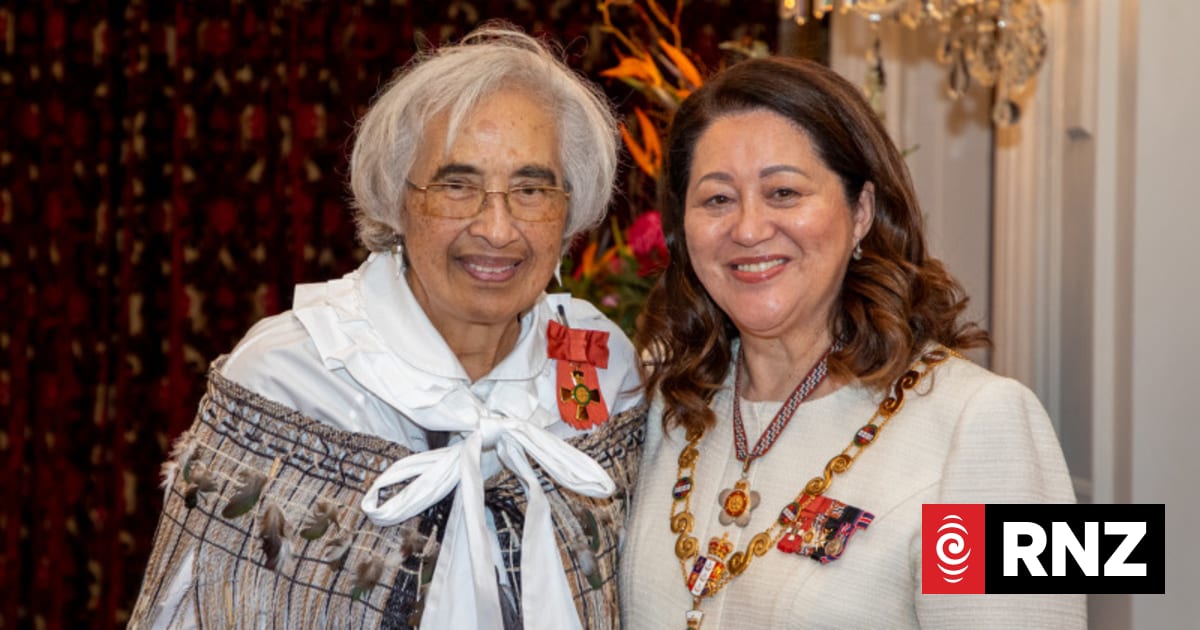
"Mō tēnei hōnore i homaihia nei, kei au te waimarie, nā te mea i a au e tipu mai ana e patua ana i te kura mō te kōrero i tō tātou reo. Ka mutu, koirā anake te reo i mōhio mātou."Recognition like this is poignant, especially considering I was among the generations beaten at school for speaking our language, it's the only language we knew.- Dr Te Ripowai Higgins, QSM, ONZMBeaten for speaking te reo Māori at school, Dr Te Ripowai Higgins (Ngāi Tūhoe) dedicated her career to keeping her language and culture alive.Her relentless dedication to a language she was punished for speaking has been recognised by the Governor-General at an investiture ceremony this week, where she received the Officer of the New Zealand Order of Merit (ONZM) for more than 43 years of service to education and Māori.Dr Higgins reflected on the acknowledgement and shared her thoughts with Pūkāea."Mō tēnei hōnore i homaihia nei, kei au te waimarie, nā te mea i a au e tipu mai ana e patua ana i te kura mō te kōrero i tō tātou reo. Ka mutu, koirā anake te reo i mōhio mātou."I find this type of recognition quite poignant, especially considering I was among the generations beaten at school for speaking our native tongue.The assimilationist education system of the time prioritised English and contributed to the suppression and decline of te reo Māori.But the punishment had the opposite effect on Dr Higgins.She says kaumātua and kuia taught her generation to withstand those pressures and turn adversity into opportunity.Supplied"Nā rātou i tohu, 'kia kaha koutou, ahakoa patua koutou, me ako koutou i taua reo. Kei te pai tō koutou reo Māori. Kua nui ake ngā Pākehā e haere mai ana, me ako koutou i tā rātou ake reo, kia mōhio ake tātou kei te aha ngā kōrero'."They told us not to let the beatings break us; they helped us recognise that learning their language didn't mean we had to abandon our own. They said Pākehā would not stop coming, they told us we had to adapt and master their language so we would always know what they were saying."The ability to navigate two worlds became a defining feature of Dr Higgins' career.She went on to help establish initiatives that created pathways for te reo Māori in education, broadcasting and public life.In 1982, she became a foundation board member of Te Ataarangi, the Māori language revitalisation movement.She remained involved for 42 years, helping generations learn te reo Māori while sharing the approach with Indigenous communities overseas.Her influence extended into Māori broadcasting.She served three terms on the board of Te Māngai Pāho and was instrumental in establishing Te Upoko o te Ika, recognised as Aotearoa's first Māori radio station.Those initiatives established foundations for the ongoing development of more education and media initiatives dedicated to fostering te reo Māori.Dr Higgins says her aspiration is to ensure generations to come maintain pride in their identity."Karekau e tino aro atu ana ki ngā tohu pēnei. Ko te āhua kei te tino hiahia kia kitea, ko te whakakaha ake i te nui o ngā tāngata e kōrero Māori ana, heoi i tū atu I te reo, kia whakatauira ai rātou i te mana me te mōhio o ngā kuia, kaumātua."Things like this have never interested me. The work I have done over the years is focussed on supporting the establishment of initiatives that encourage Māori to embrace their language, beyond that. I want future generations to take pride in their identity and represent their culture with integrity, I hope they, like me aspire to make their kaumātua and kuia proud."Dr Higgins' daughter, Dr Rawinia Higgins is demonstrating the impact of her mother's work through her own role as Māori Language Commissioner, helping lead the revitalisation of te reo Māori.Speaking to Radio New Zealand about the importance of Te Wiki o Te Rep Māori, Higgins said the growing number of people learning the language is encouraging, and the commission's rangahau (research) continues to show that many New Zealanders see te reo Māori as a valuable part of the country's identity."This is a three generation kaupapa," she said.
Dr Te Ripowai Higgins: An unrelenting champion of te ao Māori
Full Article
Original Source
Read the full article at Rnz →KhanList aggregates and links to publicly available news content. We do not host full articles from third-party sources. Always verify important information with original sources.