
U.S. Transportation Secretary Sean Duffy continues to blame a contractor for the events that prompted the Federal Aviation Administration to order a ground stop last week, even though investigators haven't determined the root cause.Since aviation was disrupted for more than four hours on Friday, Duffy has been sharply critical of L3Harris, which owns and maintains the FAA's telecommunications network. A section of old copper wire in Arkansas was being replaced with fiber optic lines before the incident. Duffy said on “The Morning Meeting” show Wednesday that a contractor failed to identify and isolate the router issue that caused the weekend ground stop quickly enough.“The monitoring of the network matters,” he said, adding that officials were working on remedying that problem. In the meantime, any new installations of these same routers have been paused, and technicians have disabled the function that was linked to Friday's outage.The FAA did not offer any updates Wednesday on the investigation into what happened. Computer router blamed This was only the second nationwide ground stop since the Sept. 11, 2001, terrorist attacks. Officials have said that a Juniper router that was installed as part of the upgrade in El Dorado, Arkansas, suddenly started sending thousands of inquiries out every few seconds and that overwhelmed the older parts of the network.That led to inconsistent radar and communications signals at 17 of the 22 key air traffic control centers across the country, so the FAA grounded planes.But FAA Administrator Bryan Bedford said at a different event hosted by The Hill that he understands that his agency is ultimately responsible for what happened even if L3Harris was the one doing the work.“I am the chief accountability officer. I take full responsibility for it,” Bedford said. "I wish people would lay off the secretary. He’s got a lot of work to do, but I’m the guy they hired to get this done. So, blame me.”L3Harris hasn't commented on the ground stop since issuing a statement Saturday pledging to support the FAA's investigation into what happened, and the company declined to say more on Wednesday.It remains a mystery why the device that was installed Friday seemed to behave differently from any of the others that have been installed during 68 previous copper-to-fiber optic upgrade projects that have been completed across the FAA's network. Congress unlikely to approve funding request Officials have suggested the router may have been configured incorrectly. But Bedford has said the technician who performed the work was a highly trained Air Force veteran who had completed the same work dozens of times before.The FAA nearly doubled its funding request to Congress to $50 billion after Friday's ground stop to pay for the rest of the overhaul of the nation's air traffic control system. Last year, the agency received $12.5 billion to get started on the project. Bedford said he understands why members of Congress might be having “some indigestion associated with that.”Several key lawmakers said Tuesday that Congress is unlikely to approve that full amount right now — especially when the FAA hasn't spent all the money that was approved last year. Only about $10 billion of the $50 billion request would go to air traffic control technology. The rest of the money would go to other projects, including upgrades to runways, airport towers and aging air traffic control centers that were built in the 1960s.Chris Sununu, who is president of the Airlines for America trade group, praised Bedford for keeping the airlines informed during the ground stop. Sununu said Bedford asked to set up a conference call with all the airline CEOs and operations leaders within about half an hour of the ground stop starting and briefed them on what he knew so far. Several additional calls were held throughout the ground stop.“To be honest, he stayed on the phone effectively with all the CEOs all night long,” Sununu said. “We did, I think, three or four calls over the period of the next few hours, brought in those operational folks. And so as they learned more, as they understood more of what was happening.”Sununu said the FAA has a difficult job in trying to overhaul “what is really the most robust telecom system on the planet while you’re using it 24 hours a day and ensuring the safety of everyone who is part of it.” And he said this might not be the last technical problem that happens during the project because the work the FAA is doing is akin to trying to get your iPhone to talk to your flip phone.“Can we say, ‘oh, you know, this is really the last time we’re going to have a bump like this?’, No, no. Because the technologies we’re replacing and that we’re asking to talk to each other are literally multigenerational,” he said.____Associated Press writers David Collins and Sudhin Thanawala contributed to this report.
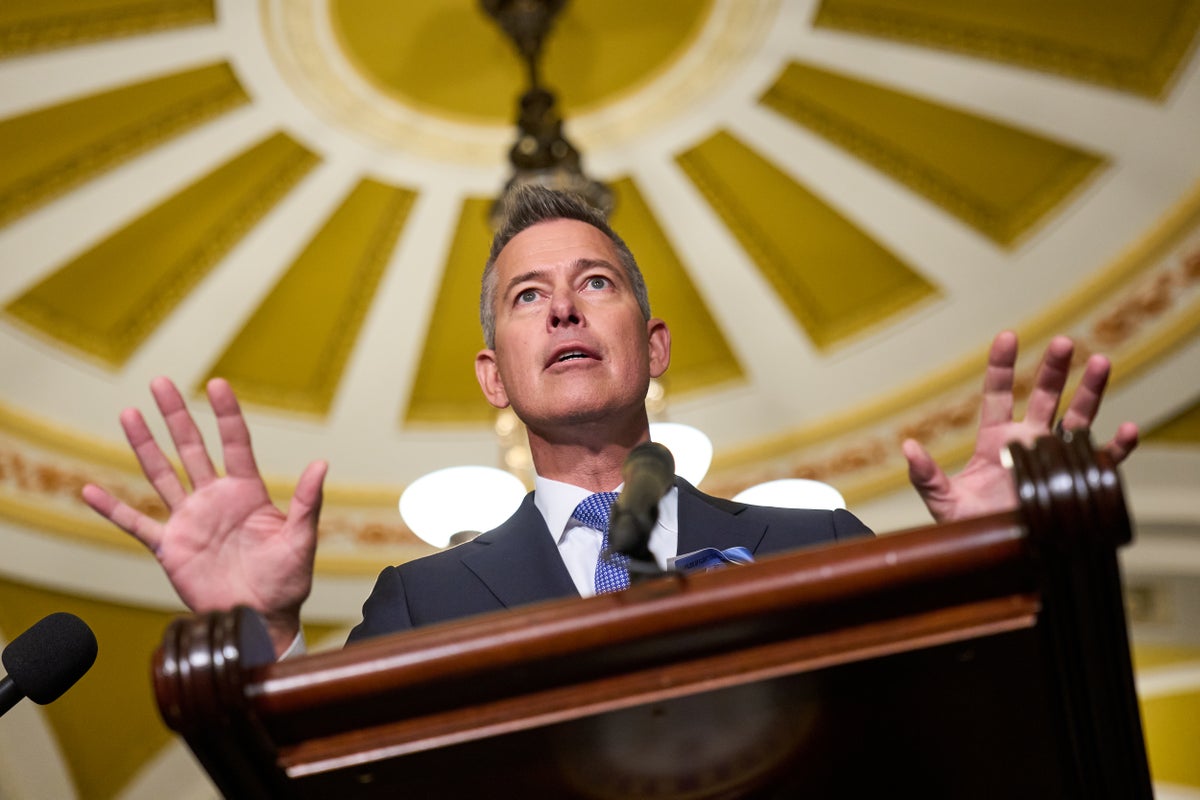
DOT Secretary Sean Duffy keeps blaming L3Harris after FAA ground stop, even as cause remains unknown
Full Article
Original Source
Read the full article at Independent →KhanList aggregates and links to publicly available news content. We do not host full articles from third-party sources. Always verify important information with original sources.