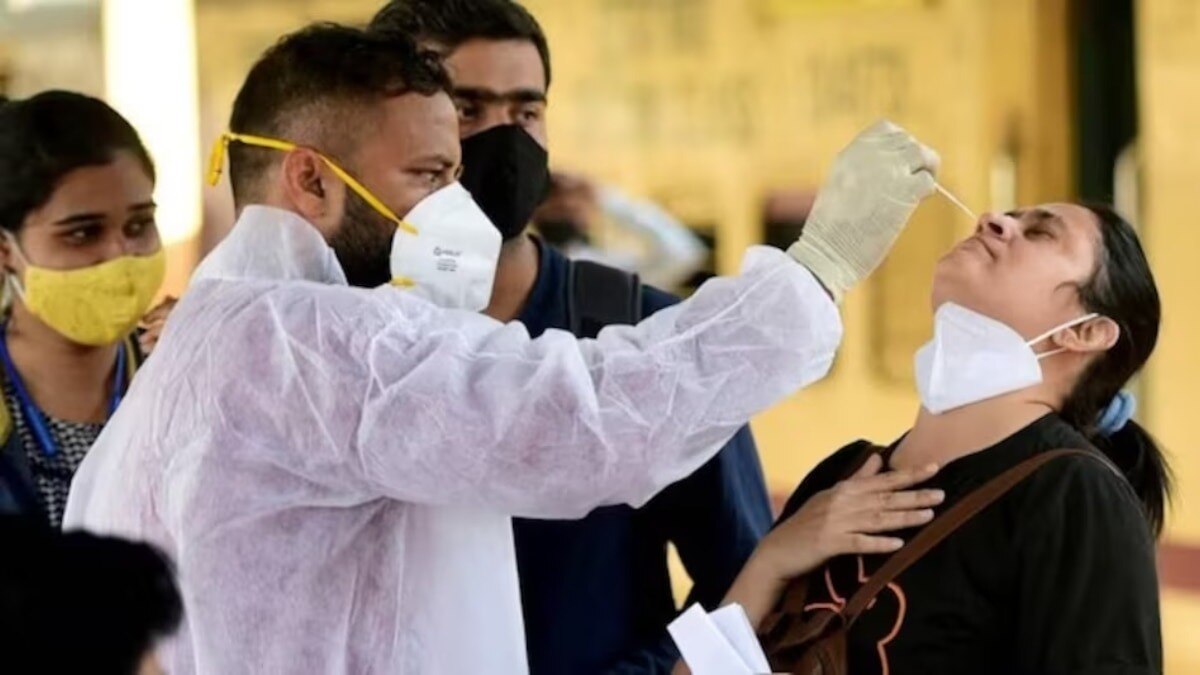
Covid-19 may reactivate viruses that have remained hidden in the body for years, according to a new nature study involving more than 1,100 patients. Researchers found that one little-understood virus family was strongly linked with long COVID and long-term physical disability.Could dormant viruses explain long after COVID-19?(File Photo: ITG)A new study has offered a possible clue into why some people continue to experience health problems long after a COVID-19 infection has cleared. Researchers found that COVID-19 can reactivate viruses that may have remained quietly inside the body for years, including Epstein-Barr virus, cytomegalovirus and herpes viruses.The findings come from a large study involving 1,154 patients across 20 US biomedical research hospitals. Researchers analysed more than 200,000 samples and used genomic sequencing to look for evidence that viruses that had previously remained inactive had become active again during or after COVID-19.The study, published in Nature, identified 11 reactivated viruses within the first 40 days after patients were admitted to hospital. While several viruses showed signs of reactivation, researchers were particularly interested in the Anelloviridae family, a group of viruses that is still poorly understood.The researchers found that reactivation of Anelloviridae was prominently associated with long-term physical disability and long COVID. However, the finding shows an association and does not prove that reactivation of these viruses directly causes long COVID.COVID-19 MAY WAKE UP VIRUSES THAT WERE ALREADY IN THE BODYViruses such as Epstein Barr virus, cytomegalovirus and several herpes viruses are extremely common. After the initial infection, some can remain in the body in a dormant or latent state.For many people, these viruses remain inactive and do not cause noticeable symptoms. However, severe illness can place significant stress on the immune system and the body.The new research suggests that COVID-19 may provide conditions in which some of these viruses become active again.Dr. Ishwar Gilada, Consultant in HIV and Infectious Diseases, UNISON Medicare and Research Centre, Mumbai, and Secretary General, People's Health Organisation India (PHO), said that acute infections are already known to disturb immune regulation and allow viruses that have remained clinically silent in the body to reactivate.ONE VIRUS FAMILY STOOD OUTResearchers detected reactivation of several viruses, with Epstein Barr virus, herpes simplex virus 1, cytomegalovirus and Anelloviridae among those most frequently identified.The most notable finding involved Anelloviridae, a poorly understood family of viruses that commonly remains latent in humans.According to Dr Gilada, what makes the new research particularly significant is the evidence that SARS-CoV-2 infection may trigger reactivation of a broader range of viruses, including Anelloviridae. These are small DNA viruses that commonly persist in humans, usually without causing obvious disease.Researchers found a strong association between reactivation of these viruses and long-term physical disability and long COVID.According to the researchers, this could provide a new direction for understanding why some patients recover from the initial infection while others continue to experience health problems.However, researchers have not established that Anelloviridae reactivation itself causes long COVID. The finding needs to be investigated further before it can be used to guide diagnosis or treatment.INFLAMMATION MAY BE PART OF THE PROCESSThe study also produced another important finding about the Epstein Barr virus and cytomegalovirus. Researchers found that their reactivation appeared to be associated with inflammation, rather than simply occurring because the immune system had become suppressed.This challenges the idea that dormant viruses mainly become active when the immune system is weakened.Instead, the findings suggest that significant inflammation during severe COVID-19 may play a role in waking up viruses that had previously remained inactive.Dr Gilada said this raises the possibility that, in some patients, persistent symptoms may reflect a combination of viral persistence or reactivation, immune dysregulation and inflammation, rather than simply being the after-effects of the original infection.This could help researchers understand the complex interaction between COVID-19, the immune system and viruses that persist in the body.WHY DOES THIS MATTER FOR LONG COVID?Long COVID can involve a wide range of symptoms, including persistent fatigue, brain fog, problems with concentration, shortness of breath, sleep problems and reduced ability to carry out daily activities.Scientists have been studying several possible explanations, including persistent inflammation, changes in the immune system, problems affecting blood vessels and possible viral persistence or reactivation.The new study adds another piece to this research by showing that several viruses that had remained inactive can become active during COVID-19 and that Anelloviridae reactivation was associated with long-term disability.The researchers say understanding these viral changes could eventually help identify biological markers that distinguish patients who are more likely to develop prolonged illness.WHAT DID THE STUDY ACTUALLY FIND?The study followed 1,154 patients across 20 research hospitals in the United States. Researchers examined more than 200,000 samples and generated more than one billion data points during the research period.Within the first 40 days after hospital admission, they detected 11 reactivated viruses. The most frequently detected included Epstein-Barr virus, herpes simplex virus 1, cytomegalovirus and Anelloviridae.The researchers then looked at how these viral changes were related to patient outcomes. The strongest signal of interest was the association between Anelloviridae reactivation and long COVID and physical disability.DOES THIS MEAN VIRAL REACTIVATION CAUSES LONG COVID?Not yet. The study provides evidence of an association, but it does not establish that reactivated viruses are the direct cause of long COVID.Dr Gilada also stressed this distinction, saying that “mere association is not causation.”Long COVID is a complex condition, and researchers are still trying to understand why some people develop persistent symptoms after infection while others recover completely.The findings instead provide a possible biological pathway that deserves further investigation.Researchers now plan to study how the immune system responds to these reactivated viruses over the course of COVID 19 and whether targeting viral reactivation could eventually have a role in treatment.WHAT COULD THIS MEAN FOR INDIA?The findings could be particularly relevant from a diagnostic perspective because several respiratory infections circulate in India and can produce overlapping symptoms.Dr Gilada pointed out that influenza and other respiratory viral infections, including H1N1, are already highly prevalent and can produce overlapping prolonged symptoms.This means doctors may need to distinguish between long COVID, an ongoing infection, a recurrent infection and other causes of persistent symptoms rather than assuming that every prolonged symptom following COVID-19 is necessarily long COVID.Identifying distinct biological mechanisms could eventually help doctors distinguish long COVID from ongoing or recurrent infections and move towards more targeted treatment.WHAT COULD THIS MEAN FOR FUTURE TREATMENT?The researchers hope that understanding viral reactivation could eventually help identify patients at risk of prolonged illness and improve the search for targeted treatments.At present, however, the findings should not be interpreted as evidence that patients with long COVID should be treated for dormant viruses.More research is needed to determine whether viral reactivation is a cause of persistent symptoms, a consequence of severe illness or one part of a much larger biological process.The study nevertheless provides another important clue into the long COVID puzzle. It suggests that COVID-19 may have effects that extend beyond the initial infection, potentially altering the relationship between the immune system and viruses that have remained hidden inside the body for years.- EndsPublished By: Smarica PantPublished On: Aug 18, 2026 10:03 IST
Dormant viruses reawakened after COVID: Why future flu could hit your lungs harder
Full Article
Original Source
Read the full article at Indiatoday →KhanList aggregates and links to publicly available news content. We do not host full articles from third-party sources. Always verify important information with original sources.