
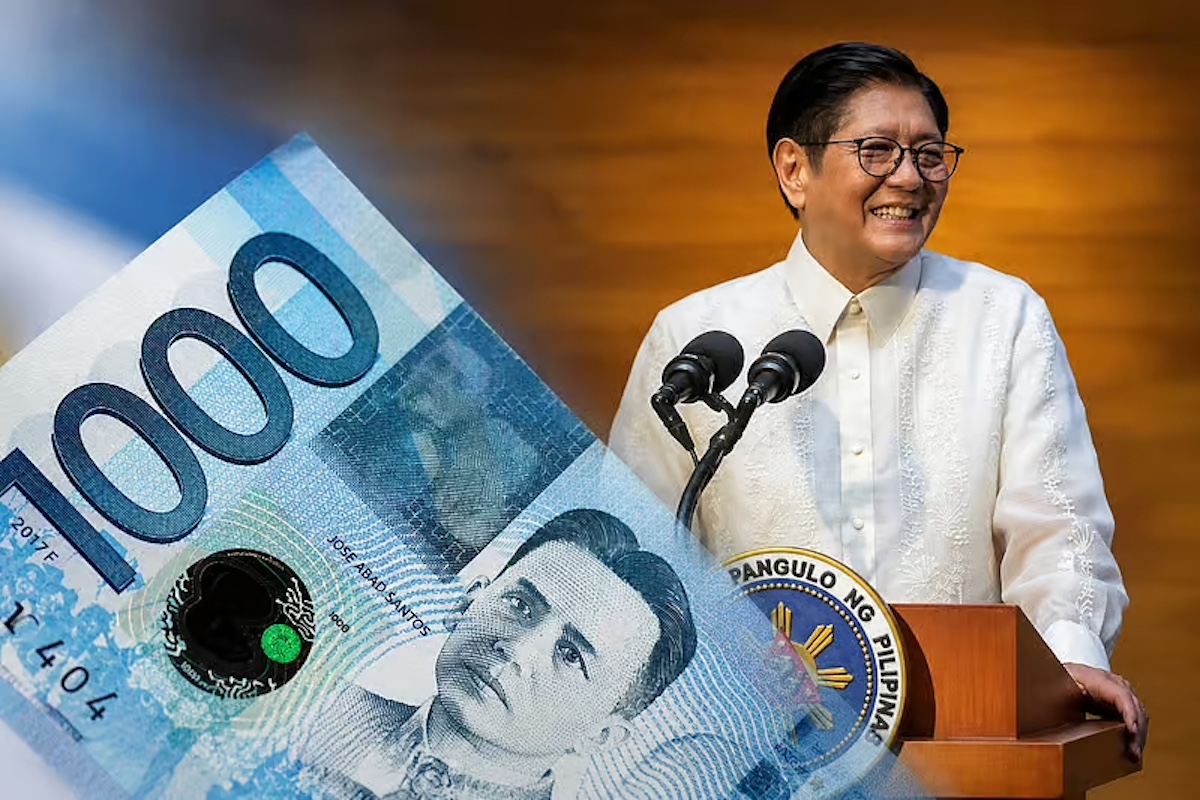
TOKYO – Nothing unsettles investors quite like being told not to panic. Yet as the peso trades near all-time lows, Philippine President Ferdinand Marcos Jr. offers that reassurance, urging Filipinos to stay calm even as financial markets signal the opposite. The peso’s 8.1% drop this year isn’t exactly unique in Asia. The Indonesian rupiah has fallen even further at 8.8% year-to-date. The Thai baht is down 7% and the Indian rupee 6%. But for the Philippines, the slide is especially demoralizing. Its US$501 billion economy was supposed to be riding high after a decade of efforts to raise the nation’s competitive game and attract more overseas investment. Yet the peso’s accelerating decline can’t be blamed on external events alone. This week, Marcos said “don’t panic” because the peso’s weakness “is an effect of rising prices of oil, and consequently the rising prices of fuel, and its effect on the economy.” He has a point. The Iran war’s inflationary effects on global oil and food prices have sent heavy headwinds Manila’s way. In late March, Marcos declared a national energy emergency over the war, citing “imminent danger” to its energy supply and making the Philippines the first country to take such a step. But external shocks don’t tell the full story. The Philippines already faced persistent current account and balance-of-payments deficits, and foreign capital inflows that disappoint even in the best of times. Meanwhile, aggressive rate hikes by the Bangko Sentral ng Pilipinas (BSP), the central bank, to have done little to steady the peso and curb inflation. Even last week’s larger-than-expected 50-basis-point hike to 5.5% has failed to tamp down the flames. Governor Eli Remolona’s assurance that “we remain open to further interest rate hikes” didn’t immediately ease downward pressure on the currency. The BSP has assured global markets it will smooth sharp foreign-exchange swings, even as Manila’s foreign exchange reserves have slipped below $100 billion. Team Marcos says it will defend the peso “as hard as we possibly can.” Fine, but what would really lift the peso is reviving a reform process that is losing momentum year after year. The Marcos government needs to lay out a clear package of steps to curb red tape, raise productivity and reduce corruption. It must also act boldly on the widening current-account and fiscal deficits that make the Philippines less appealing to investors. The World Bank adds that the tax system needs revamping to increase government receipts. Manila can do a lot to stop the bleeding. It just has to act. Investors don’t buy pesos because governments tell them not to worry. They buy because they believe an economy is becoming more productive, more transparent and more competitive. That is the confidence Manila must win back. Various pre-existing conditions make that a hard sale. In 2022, when Marcos took office, many investors feared what a Marcos 2.0 regime might do to a geopolitically vital nation. Those fears proved overdone. Early on, Marcos earned international praise for restoring political and economic calm after Rodrigo Duterte’s chaotic 2016-2022 presidency, which put a bloody war on drugs ahead of economic reform, making global headlines for all the wrong reasons. Since then, however, Marcos has faced mounting domestic criticism over inflation, rising living costs, official corruption and a lack of policy clarity. In September, Marcos’s approval rating was down around 29%-30%, uncomfortably close to Donald Trump territory. Inflation is one key data point: September’s 7.2% year-on-year rate was a troubling acceleration from August’s 6.1%. Meanwhile, the Duterte factor still looms large over Manila. Vice President Sara Duterte, the former president’s daughter and a frontrunner for the presidency in 2028, faces an impeachment trial over alleged hidden wealth – a rich irony coming from a Marcos family-led government. AI is another big risk. Few economies are more exposed to artificial intelligence than the Philippines, where the business process outsourcing (BPO) and contact center industries are macro-critical, directly driving about 9% of GDP. The knock-on effect matters even more. From Metro Manila, Cebu City and Davao City to the Clark Freeport Zone in Pampanga, and from Iloilo to Bacolod to Baguio, sprawling BPO facilities support local jobs in restaurants, shopping centers, hotels, taxis and entertainment. They also fill local government coffers. The trouble is that jobs built on basic customer inquiries, data entry and entry-level support face high automation risk as AI’s role expands. The International Labor Organization warns that more than one-quarter of employment in the Philippines, roughly 12.7 million jobs, is exposed to generative AI. “For the Philippines, the stakes are high,” says ILO economist Khalid Hassan, adding that “women face greater exposure because many work in clerical, administrative and service occupations.” Hassan notes that “this is why skills policy is economic policy—and youth policy. Investments do not automatically become Filipino jobs. Employers need skilled workers. Young people need apprenticeships, employment services and paths from learning into work. Government must provide standards, responsive training systems and support during difficult transitions.” Skills policy alone won’t fix it. The Marcos 2.0 government must raise its policy ambitions for the country’s future while repairing economic cracks that date back decades. The peso’s plunge reminds us that past sins stand in the way of a brighter tomorrow. Few are more telling than remittances. Tepid wage growth still forces millions of Filipinos to work abroad and send money back home in remittances that keep much of the grassroots economy afloat. For years, successive governments have pledged to create quality jobs to keep more talent home, working in the Philippines. Yet in 2026, people arguably remain the Philippines’ most lucrative export. This remittance addiction is one with which Philippine leaders of the last 16 years have been forced to reckon. When he took office in 2010, Benigno “Noynoy” Aquino III aimed to pivot sharply from the pro-remittance policies of his predecessor, Gloria Macapagal-Arroyo. From 2001 to 2010, Macapagal-Arroyo’s administration actively set strict annual deployment targets for sending workers abroad. In 2005, under her watch, remittances first reached 10% of GDP, highlighting the nation’s overreliance on them. When Aquino took office, his “Social Contract with the Filipino People” pledged to transition “from a government that treats its people as an export commodity and as a means to foreign exchange… to a government that creates jobs at home.” Aquino went after tax cheats, strengthened government institutions and vastly expanded online services to cut out rent-seeking middlemen and women. Soon, Aquino earned Manila’s first-ever investment-grade ratings from all three major credit-rating agencies. Suddenly, the Philippines was attracting billions of dollars in foreign-direct investment. Economic growth rates entered the 8% range, rivaling China. Rodrigo Duterte was elected to turbocharge the Aquino-era reforms. He’d earned folk-hero status from his 22 years running the southern city of Davao, where he was reputed to have driven faster growth and lower crime than the national average. Voters saw him as the accelerator Manila needed to shift into another economic gear—a higher one. Unfortunately, Duterte pivoted to law and order via a bloody, whole-of-government assault on the narcotics trade, figuring the economy could wait. Suddenly, the Philippines was getting more global attention from human-rights groups – the bad kind – than investment banks. In March 2025, Duterte was arrested at the request of the International Criminal Court (ICC) and on Marcos’ watch, and is now on trial for crimes against humanity. The country backslid on transparency, government efficiency and the fight against official corruption. When Aquino left office, Manila ranked 95th on Transparency International’s Corruption Perceptions Index. When Duterte left, it ranked 116th. It has slipped further since, to 120th place in 2025. Flipping that script is easier said than done, given the “Game of Thrones” vibe that still runs through Manila’s politics. Aquino’s presidency set out to accelerate the dismantling of the kleptocratic system Ferdinand Marcos Sr. – the current president’s father – built during his 21 years in power, from 1965 to 1986. When Marcos Sr. was elected 61 years ago, the Philippines was a booming economy tipped to become the Japan of Southeast Asia. Over the next two decades, until his ouster in the 1986 “People Power” protests, he hollowed it out. The presidency then passed to Aquino’s mother, Corazon Aquino, the country’s first female president, who served from 1986 to 1992. Her husband, Benigno Aquino Jr., had been assassinated in 1983 while trying to unseat Marcos, and his death became a rallying cry for the pro-democracy movement. So there was something almost Shakespearean about the heir to the Aquino dynasty cleaning up the mess the Marcoses left behind. It didn’t help that Aquino’s two immediate predecessors, Gloria Macapagal Arroyo and Joseph Estrada (1998-2001), had done their part to drag down Manila’s standing on the global corruption tables. By the time the younger Aquino took office, 18 years after his mother left it, Transparency International ranked the Philippines in the same corruption neighborhood as Nigeria. That inheritance helps explain today’s fragility. Oil prices will eventually fall, and the Iran war will end, but the peso’s problems are set to endure. Weak institutions, thin reforms and a corruption ranking stuck at 120th explain why the peso buckles so hard when the world turns rough. Marcos can keep telling Filipinos not to panic about the peso. A better message would be a list of what he is fixing and by when. Follow William Pesek on X at @WilliamPesek
‘Don’t panic’ about the Philippines? The peso says otherwise
Full Article
Original Source
Read the full article at Asiatimes →KhanList aggregates and links to publicly available news content. We do not host full articles from third-party sources. Always verify important information with original sources.