
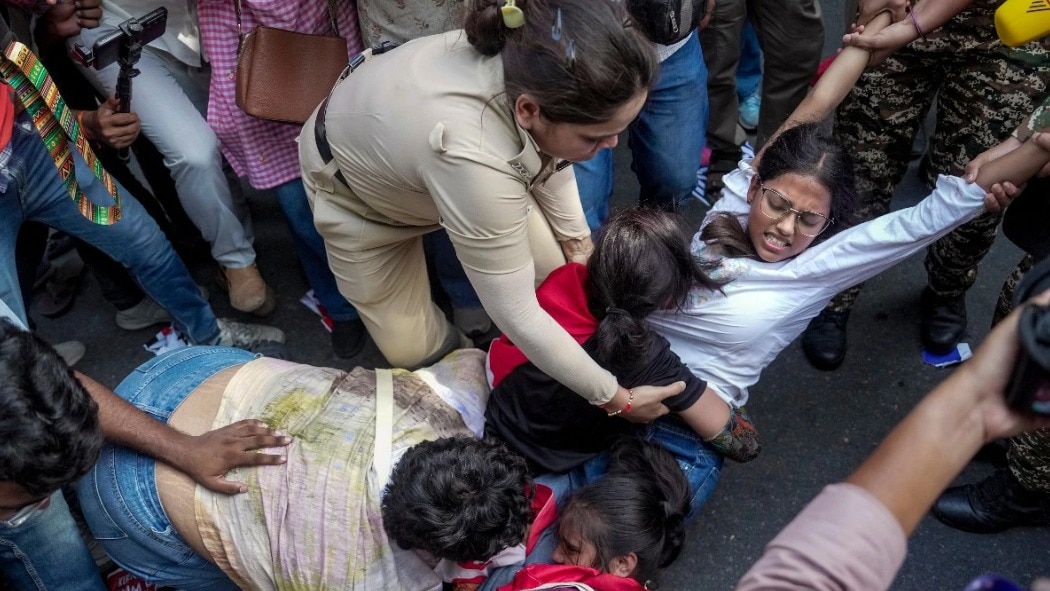
The government on Thursday questioned how journalists could be distinguished from content creators covering protests, with Solicitor General Tushar Mehta telling the Supreme Court that “in this era of technology, anybody with a mobile can be a journalist”.Mehta's remarks came during a hearing on a petition filed by senior advocate Indira Jaising seeking safeguards for women journalists who allegedly faced assault and sexual harassment by Delhi Police personnel while covering protests against Chief Election Commissioner Gyanesh Kumar and the Special Intensive Revision (SIR) exercise in Jantar Mantar.“There are several people with a mic. They say we are recording and then upload it in a reel. We don't know who is a reel-maker, who is an independent journalist,” Mehta told a bench led by Chief Justice of India Surya Kant, responding to submissions by Jaising.Mehta, however, said there should be no disagreement over the principle that no woman, including female police personnel, should be subjected to indecency or mistreatment. The Supreme Court indicated that it would consider constituting a committee to examine allegations of assault and harassment of women journalists by police during the anti-CEC protests in Delhi. CJI Kant said the allegations were serious and suggested that the proposed panel comprise predominantly former women judges and retired IPS officers.He also said the court was examining whether an independent agency should investigate specific allegations against police personnel. Jaising offered to submit two reports in sealed covers – one containing the names of the women journalists who allegedly faced harassment and the other listing retired women judges and police officers who could be considered for the committee. She said the matter required sensitivity and sought safeguards for women covering protests.During the hearing, the bench also discussed the distinction between accredited journalists, independent reporters and social media influencers, with the Chief Justice observing that the exercise of freedom of expression raised questions about how different categories of media practitioners should be identified and protected.The allegations relate to women journalists covering anti-CEC protests in Delhi, including the October 3 protest, with a broader petition, filed by Jaising, covering incidents on October 10 and 11 linked to opposition to the SIR of electoral rolls.FIR AGAINST WOMAN JOURNALISTJaising sought protection for a woman journalist against whom Assistant Commissioner of Police Vivek Bhagat filed an FIR under the Scheduled Castes and Scheduled Tribes (Prevention of Atrocities) Act. The journalist had accused Bhagat of sexual harassment and inappropriate physical contact while she was covering a protest on October 3.Bhagat subsequently filed a counter-complaint alleging caste-based slurs and humiliation. Two other journalists who had accused him were also named in the FIR, according to reports. The allegations and counter-allegations remain subject to investigation.CJI Kant directed Delhi Police not to arrest the woman journalist. Solicitor General Mehta assured the court that she would not be arrested if she joined the investigation.- Ends(with inputs from Shambhvi)
Don't know who's reel-maker or journalist: Govt on 'assault' on women reporters
Full Article
Original Source
Read the full article at Indiatoday →KhanList aggregates and links to publicly available news content. We do not host full articles from third-party sources. Always verify important information with original sources.