
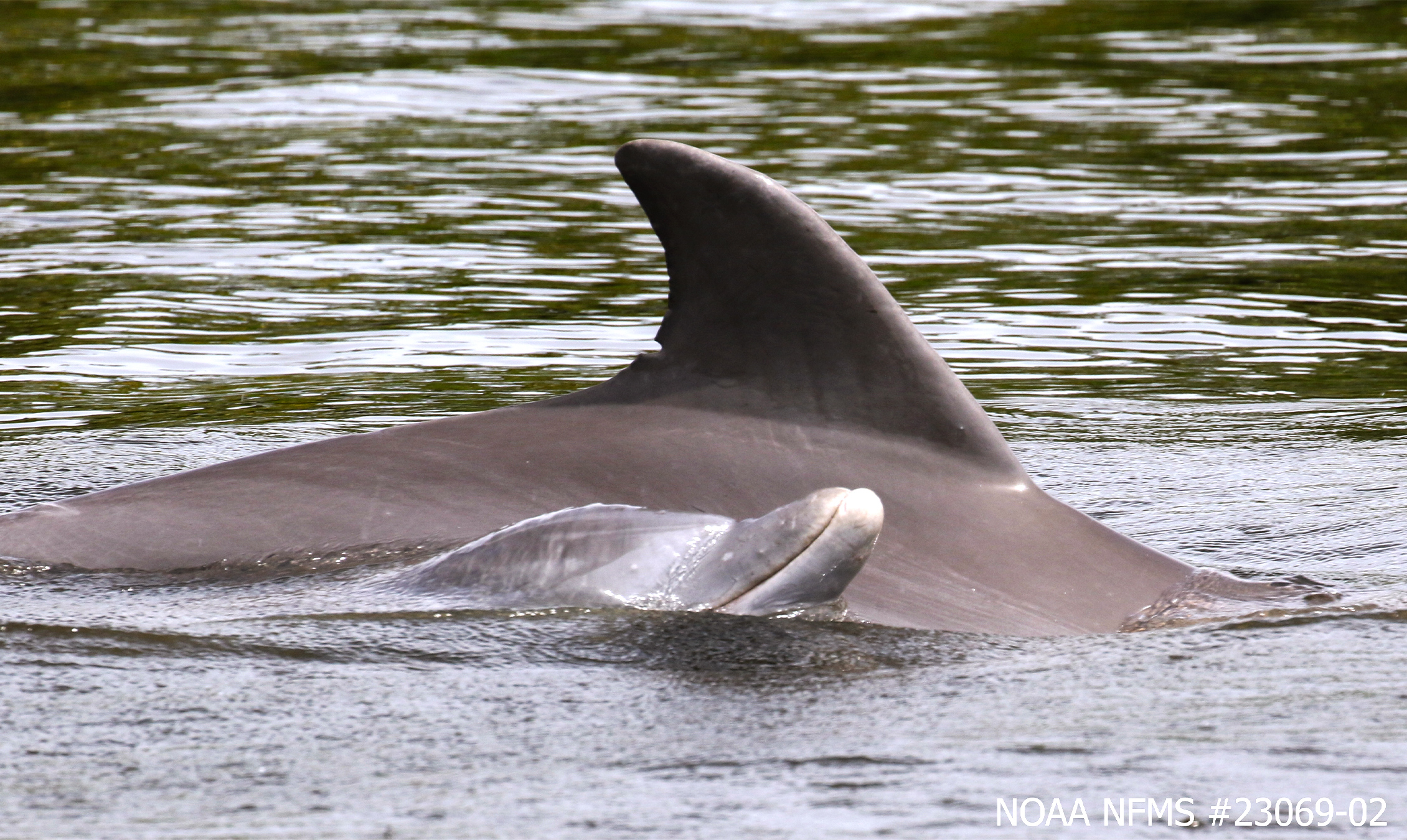
Scientists have found that dolphins have separate areas in the ocean where they hunt and socialize.Dolphins along Florida’s Atlantic coast were found to communicate using whistling sounds in the nearshore locations where they socialize, and rapid clicking sounds in areas with an abundance of prey fish.The data also hinted at the possibility that fish quieten down when they sense a dolphin approaching, indicating that prey might also be listening in to predators.The findings could help better inform policies geared toward protecting dolphin habitats, the scientists say. Dolphins, it turns out, don’t like to mix business and pleasure. Scientists have found that the marine mammals keep their feeding and hunting areas separate from the places where they socialize with one another. A study published in the journal PeerJ details how a team of researchers listened in on dolphins living along the Atlantic coast of Florida to “provide evidence of acoustic habitat differentiation.” “They have distinct habitats that correspond to different behaviors,” Laurent Chérubin, a marine scientist at the Harbor Branch Oceanographic Institute at Florida Atlantic University, who led the study, told Mongabay in a video interview. Scientists gathered the audio data with the help of an acoustic wave glider, a 12-foot (3.7-meter) solar-powered autonomous marine vehicle. The glider was deployed for two months along the East Florida Shelf, between Fort Pierce and Jacksonville. In addition to recording 62 hours of underwater audio, the glider also carried sensors gathering environmental data such as water temperature, salinity, turbidity, and the concentration of chlorophyll-a, a pigment that plays a critical role in photosynthesis. “The glider has a bunch of sensors and can host a lot of payload,” Chérubin said. “It can be at sea on its own for as long as needed because it uses solar power and wave action to move around.” On analyzing the data, the scientists detected dolphins in more than 1,600 recordings. They then classified their calls into whistles, which dolphins use to communicate with each other, and rapid clicking sounds, which the animals use as an underwater radar system to echolocate prey. Scientists used a solar-powered acoustic wave glider, pictured above, to record audio and gather environmental data. Image courtesy of FAU Harbor Branch. Combining the audio with environmental data, scientists found that whistling was influenced by factors such as location, water temperature, and ambient sounds levels. The dolphins were also found to use nearshore waters for socializing. Meanwhile, the click sounds were more prominent in areas where sound-producing fish were in abundance. Chérubin said this could help scientists and conservationists pinpoint and identify feeding and hunting grounds that need to be protected. “There’s a lot of information in there for stakeholders and managers that can be used to implement measures such as helping reduce the impact of noise in areas where the animals tend to hang out and hunt,” he said. The team also found that fish tend to quiet down when they detect a dolphin in the vicinity, potentially suggesting that prey might also be using acoustic signals to watch out for approaching predators. Chérubin said the team plans to repeat the research over the coming years in a bid to track changes in the behavior of dolphins, especially as their habitats change drastically due to marine heat waves, coastal development, and other human activities. “We don’t really know how animals are tracking those changes and that’s something we really need to know,” he said. “Animals are sentinels of what’s happening in our environment, and if we can understand what they are doing, that can reveal something new about the environment to us.” Banner image: Dolphins use whistles to communicate with each other and rapid clicking sounds to locate prey. Image courtesy of NOAA. Abhishyant Kidangoor is a staff writer at Mongabay. Find him on 𝕏 @AbhishyantPK. Counting whales by eavesdropping on their chatter, with help from machine learning Citation: Carvalho, J., O’Corry-Crowe, G., & Chérubin, L. M. (2026). Differential acoustic habitat use in delphinids along the Florida Atlantic coast. PeerJ, 14, e21547. doi:10.7717/peerj.21547 Credits Topics
Dolphins keep their social and hunting lives in separate waters, study finds
Full Article
Original Source
Read the full article at News →KhanList aggregates and links to publicly available news content. We do not host full articles from third-party sources. Always verify important information with original sources.