
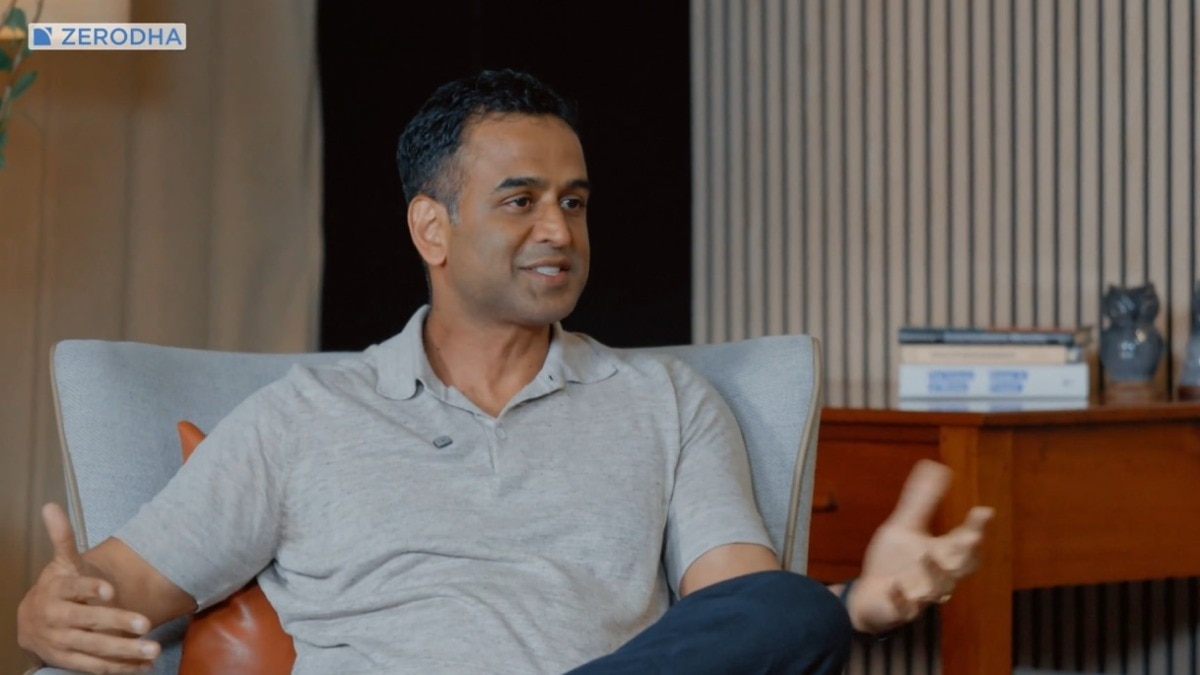
Nithin Kamath has flagged that the new UPI MDR could make brokers pay on client fund transfers even when no trade happens. He said the fee structure may strain broking economics and needs a lower rate for such transfers.UPI MDR capped at Rs 300, borne by merchants, not customers.The new 0.4% Merchant Discount Rate (MDR) on certain large UPI transactions may create an unusual problem for stock brokers. Zerodha founder and CEO Nithin Kamath flagged this issue and said they could end up paying a fee when customers transfer money into their trading accounts but do not actually execute any trades.While responding to the government's decision to introduce MDR on select UPI payments above Rs 2,000 from October 15. Kamath said MDR was "probably inevitable" given the widespread adoption of UPI, but argued that the structure does not work well for some use cases, particularly investing and broking."That being said, there are some use cases, like investing and broking, where the proposed MDR structure doesn’t really make sense," Kamath said in a post on X. For a regular merchant, a UPI payment usually accompanies a purchase. A customer pays Rs 20,000 for a product, the merchant completes the sale and earns revenue, while the MDR becomes part of the cost of accepting that payment.The situation is different for a stock broker. A customer could transfer Rs 2 lakh to a brokerage account through UPI but not buy a single share. The broker would still have incurred the payment-related cost, but there would be no corresponding trade from which it could earn brokerage or other transaction-linked revenue.Kamath said this is the central problem with applying the same MDR structure to broking."As brokers, we can’t force a customer to trade after transferring money. And if we can’t pass the UPI charge on to the customer, there is essentially no limit to the cost a customer can impose on a broker without generating any revenue," he said.The new framework provides for a 0.4% MDR on eligible merchant UPI transactions above Rs 2,000, with the fee capped at Rs 300 for payments of Rs 75,000 and above. The MDR is to be borne by merchants and cannot be passed on to customers.KAMATH'S RS 2 CRORE EXAMPLEKamath illustrated the potential problem with a hypothetical example.Suppose 10,000 customers each make 50 UPI transfers of Rs 2 lakh in a month without executing a single trade. At the proposed MDR, he said, this could potentially cost a broker around Rs 2 crore.This is not a projection of Zerodha's actual costs, but an example used by Kamath to show how repeated fund transfers could create a payment expense without generating corresponding business.The issue becomes more complicated because customers do not necessarily leave all their money with a broker indefinitely.QUARTERLY SETTLEMENT ADDS ANOTHER LAYERKamath also pointed to Sebi's quarterly settlement (QS) requirement.Under the framework, brokers are required to return unused client funds at prescribed intervals. Customers who want to continue investing can then transfer the money back into their brokerage accounts.Kamath said more than half of these transfers happen through UPI.This can create a cycle in which money moves from the customer's bank account to the broker, back to the customer and then back to the broker — potentially generating UPI-related costs without necessarily resulting in a trade.His concern is that brokers could therefore bear the payment cost for transactions that are effectively just movement of client funds.WHY ZERODHA MAY NOT BE ABLE TO ABSORB IT FOREVERKamath also pointed to Zerodha's existing business model.The broker currently does not charge brokerage on equity delivery trades, saying the economics of the business allow it to offer them for free.But Kamath said absorbing an additional cost on every UPI transfer could become difficult if the customer does not actually trade."But if every UPI transfer starts carrying an additional cost, irrespective of whether the customer actually trades, I don’t see how we can absorb this indefinitely," he said.That does not mean Zerodha has announced a change in its brokerage structure. Kamath was highlighting a potential pressure on the economics of the business if the MDR applies to repeated fund transfers.KAMATH WANTS A LOWER MDR FOR BROKINGImportantly, Kamath is not arguing against MDR altogether.He said having an MDR is acceptable, but suggested that broking should have a different structure from ordinary merchant transactions.His proposal is an MDR of around 0.02%, with a cap of Rs 5 or Rs 10 per transaction.That compares with the new general MDR of 0.4% and the Rs 300 maximum fee for eligible transactions of Rs 75,000 and above.His argument is essentially that a UPI payment for a purchase and a transfer of funds into a brokerage account have different economics and should not necessarily attract the same payment fee.The issue highlighted by Kamath points to a broader question around the new UPI MDR regime: should the same pricing structure apply to every type of merchant transaction?For a retailer, a UPI payment generally represents a completed sale. For a broker, the transfer of money into a trading account does not guarantee that the customer will actually trade.That distinction could become increasingly important once the new MDR regime starts from October 15.The government has said the new framework is aimed at creating a more sustainable revenue model for the UPI ecosystem while keeping UPI free for consumers. The challenge for financial platforms such as brokers could be managing the cost of fund transfers that do not necessarily generate revenue.Kamath's comments therefore raise a specific industry concern: the cost of UPI may be straightforward for a merchant selling a product, but much harder to absorb when the transaction merely moves money and does not lead to a revenue-generating activity.- EndsPublished On: Sep 16, 2026 14:00 IST
Doesn't really make sense: Nithin Kamath flags a problem with new UPI MDR
Full Article
Original Source
Read the full article at Indiatoday →KhanList aggregates and links to publicly available news content. We do not host full articles from third-party sources. Always verify important information with original sources.