
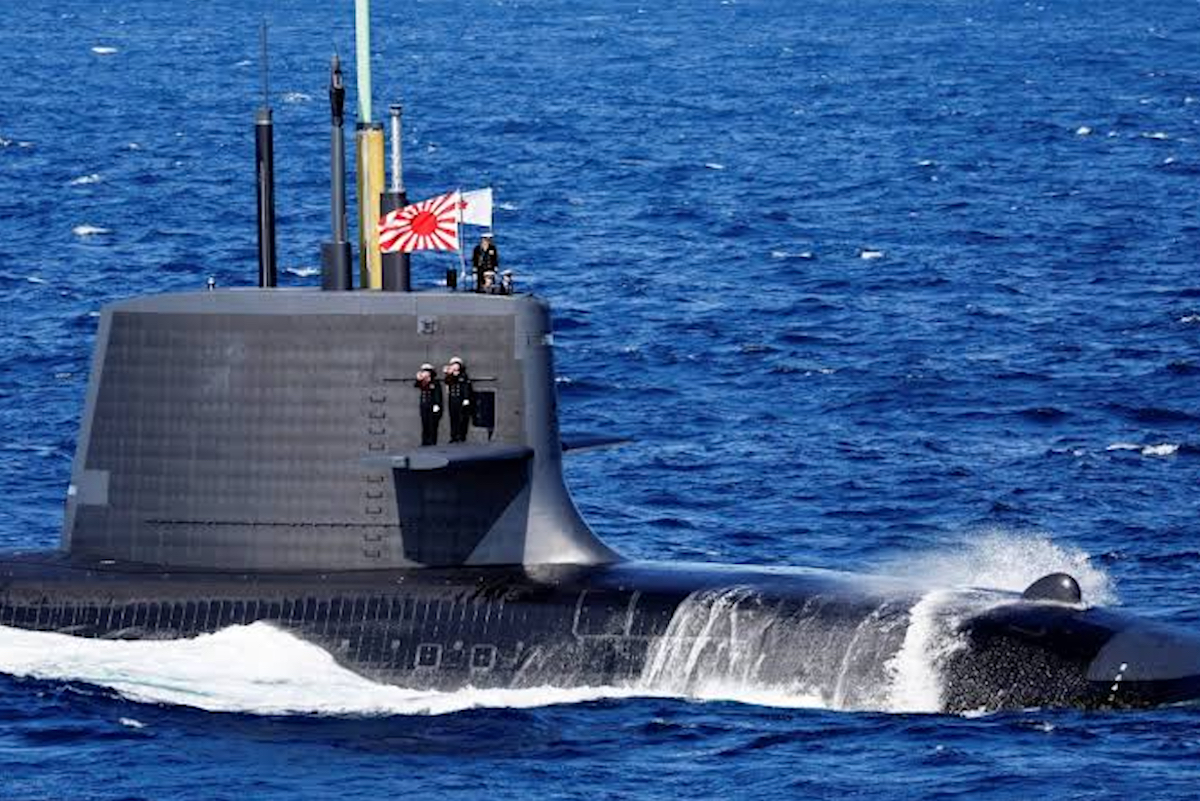
Japan’s debate over nuclear-powered submarines is gaining momentum, but political deliberation should not be mistaken for a done deal. As Tokyo prepares to revise its three principal national security documents by the end of 2026, Prime Minister Sanae Takaichi has opened the door to a long-politically sensitive capability. On October 14, she told parliament that her government would examine the possibility in a concrete and realistic manner. China’s expanding naval reach, growing submarine capabilities and increasingly active presence across the western Pacific have sharpened Japan’s concerns about maritime deterrence. Nuclear-powered submarines can remain submerged for extended periods, sustain higher speeds and operate farther from their home bases than conventional diesel-electric boats. For a country whose security depends heavily on maritime access, these advantages deserve serious consideration. But Japan must still determine whether nuclear propulsion would address a clearly identified operational gap, whether the military benefits justify the financial and institutional costs, and whether the government can assemble sufficient political support. The debate is therefore about more than China. It is a test of whether Tokyo can translate changing threat perceptions into a sustainable and credible defense capability. The distinction is important because the nuclear submarine proposal is not yet a settled national consensus. Japan’s ruling coalition holds differing views on how far military modernization should go and which technologies should be prioritized. Nor does the prospect of nuclear propulsion imply that Japan intends to acquire nuclear weapons. Propulsion technology and nuclear armament are separate matters, even if the former carries political and strategic sensitivities that the latter inevitably brings into public discussion. The immediate question, then, is not whether Japan should rush to build nuclear-powered submarines. Rather, it is whether the government can establish a convincing operational, legal and fiscal case to turn the politically sensitive option into a long-term national commitment. The strongest political push has come from the Japan Innovation Party (JIP), the junior partner in the governing coalition. In June, the party called for Japan to quickly introduce nuclear-powered submarines. Seiji Maehara, a senior JIP lawmaker responsible for its national security discussions, has argued that China’s expanding naval operations into the Pacific make greater underwater endurance increasingly important. His view reflects a wider concern that Japan must prepare for a maritime environment extending well beyond its immediate coastal approaches. The Liberal Democratic Party (LDP), however, has not embraced the idea as explicitly, at least not yet. Although both coalition partners support strengthening Japan’s defenses, their June security proposals diverged over nuclear propulsion. The government’s later willingness to consider a study has moved the issue closer to formal policy deliberation without resolving the disagreement. Reports on October 13 indicated that some lawmakers remained unconvinced that the military purpose of acquiring nuclear submarines had been adequately defined. This is the first test of political reality. Takaichi must reconcile a junior partner seeking a firm commitment with a senior party that remains cautious. Defense Minister Shinjiro Koizumi has kept the option open but has also acknowledged the trade-offs. Nuclear-powered submarines offer long endurance and high sustained speeds, yet they are expensive and require specialized expertise to maintain and operate. Conventional submarines, meanwhile, can retain important advantages in underwater quietness. China’s naval buildup explains why the debate has gained traction, but does not establish that nuclear propulsion is Tokyo’s only credible response. Takaichi’s government must thus distinguish between agreeing on the need to strengthen deterrence and agreeing on how to do it. Japan already operates 23 diesel-electric attack submarines. That is a substantial foundation, not an absence of underwater capability. The relevant question is what additional missions nuclear propulsion would make possible, and whether those missions justify the investment. Japan’s defense budget sharpens the question. Japan allocated 9 trillion yen (US$57.3 billion) for defense-related spending in fiscal 2026, up 3.8% from the previous year. The higher budget includes 120.8 billion yen to build a tenth Taigei-class submarine, 16 billion yen for submarine-launched missiles and 100 billion yen for the SHIELD coastal defense program, which combines unmanned systems into a layered defensive network. Those line items show the alternatives competing for budget outlays. Japan must fund submarines, missiles, surveillance systems, unmanned platforms, personnel and supporting infrastructure. A nuclear-powered fleet would add requirements for reactor engineering, specialized maintenance facilities, safety systems and highly trained crews. The costs would extend well beyond the price of the vessels themselves. The government should therefore weigh nuclear propulsion against a portfolio of alternatives, including improved conventional submarines, underwater sensors, maritime patrol aircraft and anti-submarine warfare systems. The goal should be the greatest operational gain for the money, not an assumption that the most sophisticated platform necessarily yields the greatest strategic return. The legal dimension is just as important. Japan’s Atomic Energy Basic Act limits nuclear development and use of nuclear energy to peaceful purposes, raising questions about the legal framework for acquiring military nuclear propulsion. The government would need a defensible interpretation of the law, together with appropriate arrangements for reactor safety, fuel management and institutional oversight. Japan’s three non-nuclear principles prohibit possessing, producing or permitting the introduction of nuclear weapons, but they do not automatically prohibit nuclear-powered vessels. The two issues should not be conflated. Nor can Japan move straight from political approval to operational deployment. Nuclear propulsion requires a specialized industrial ecosystem, including reactor engineering, testing, maintenance and safety capabilities. Japan’s civilian nuclear expertise provides a potential foundation, but it does not eliminate the need to develop military-specific institutions, train personnel and establish procedures for operating and maintaining reactors at sea. That would take years and require sustained funding across successive governments. The coming revision of Japan’s three national security documents, expected by the end of 2026, will therefore be an important test. A formal study of nuclear-powered submarines would mark a meaningful shift in the policy debate without necessarily committing to build them. A study could establish operational requirements, assess legal obstacles, estimate lifecycle costs and compare nuclear propulsion with conventional alternatives. It could also conclude that the investment is unjustified. If that outcome comes to pass, it should not be seen as a failure. A serious defense review must preserve the ability to reject an option when its costs, risks or institutional demands outweigh its benefits. Equally, a decision to proceed would require more than a general appeal to China’s growing naval power, and would need a defined mission, credible funding, a feasible industrial plan and durable political support. Japan’s nuclear-submarine debate has advanced because the regional security environment is changing and influential politicians are willing to challenge old assumptions. Whether it goes further will depend on whether the government can turn that urgency into a coherent, sustainable program. Ronny P Sasmita is a senior international affairs analyst at the Indonesia Strategic and Economic Action Institution, a Jakarta-based think tank. He holds a PhD from the University of Tokyo.
Does Japan need nuclear subs? The debate is bigger than China
Full Article
Original Source
Read the full article at Asiatimes →KhanList aggregates and links to publicly available news content. We do not host full articles from third-party sources. Always verify important information with original sources.