
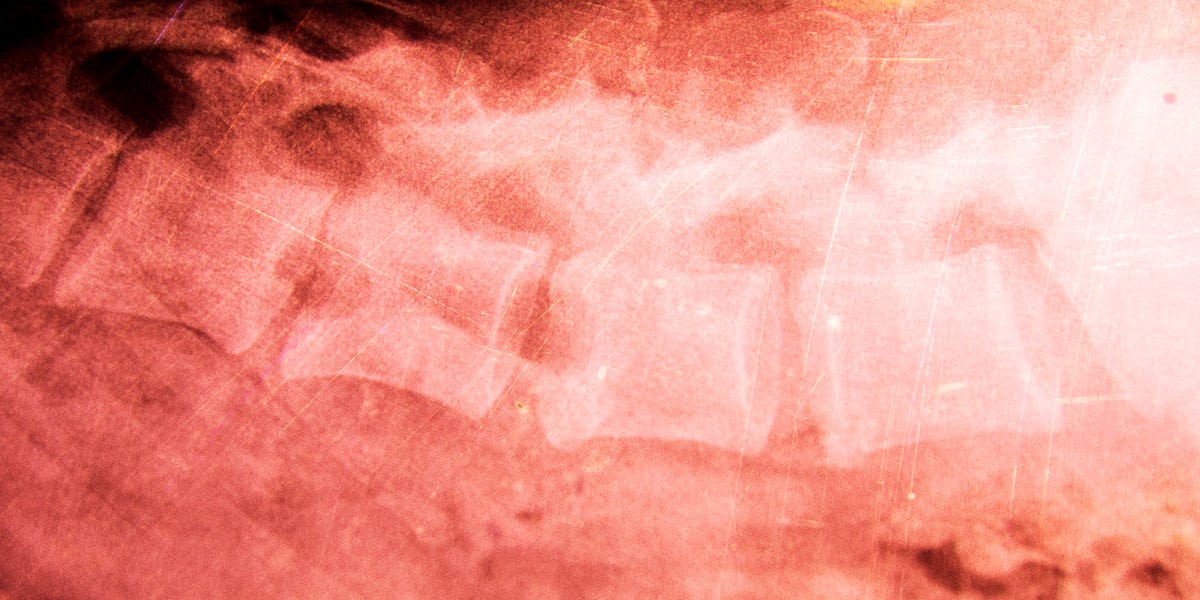
3 min readThe history of medicine is filled with firsts, and those pioneering attempts are often met with criticism and skepticism. On December 3, 1967, South African surgeon Christiaan Barnard performed the world’s first human-to-human heart transplant, and the daring procedure filled the world with fascination and apprehension. Although Barnard’s famous medical intervention came with its own bevy of controversies, especially the politics of organ transplantation in an apartheid state, the science backing heart-to-heart transplants was sound (in fact, just three days later, surgeons at Stanford University Hospital performed the first heart transplant in the U.S.).The same cannot necessarily be said for the world’s first human-to-human spinal cord transplant, which took place earlier this month at the Sklifosovsky Institute for Emergency Medicine in Moscow, Russia. According to New Scientist, the operation was carried out by Chinese surgeon Xiaoping Ren, who replaced a damaged segment of a patient’s spinal cord with a corresponding segment provided by a brain-dead donor.While details about the procedure are limited (including its level of success), Ren says the operation involved polyethylene glycol (PEG), a kind of biological glue that was used to fuse the donor’s spinal cord to the recipient’s. Some evidence suggests that PEG can play an important role in spinal cord repair, but the glue hasn’t been used at this scale before.“A unique surgical procedure, which lasted 12 hours, was performed at the Sklifosovsky Institute of Emergency Care,” Moscow mayor Sergei Sobyanin said in a translated press statement on the hospital’s website. “The patient, who was facing complete immobility, now has a chance to recover. He is now feeling well.”Ren has long championed spinal cord transplantation, and in 2021 he co-authored a paper that made the case for it and walked through how the procedure might work. One of his co-authors was Sergio Canavero, who had previously pitched human head transplants (an idea that was likely a bit too Frankensteinian for the U.S. medical community). As for the spinal cord transplant, some surgical experts remain skeptical about the procedure’s ethics, its effectiveness, and its toll on the patient’s well-being.“I’m concerned for the patient’s safety as they likely will be much worse off after this procedure, given the need to recover from a substantial surgery, with very little benefit,” Melissa Andrews, a spinal cord specialist at the University of Southampton, told New Scientist.Of course, the need for such a procedure is immense. Millions of people worldwide live with debilitating spinal cord injuries, and Ren’s “fusion” technique could help restore their mobility and improve their quality of life. Animal studies have also shown some hopeful signs. Earlier this year, researchers led by Michael Lebenstein-Gumovski published a study in PLOS One reporting that three paralyzed pigs were walking on all four legs 60 days after treatment with a polyethylene glycol-chitosan glue. (Lebenstein-Gumovski also works at the Sklifosovsky Institute, though he wasn’t involved in the spinal cord transplant.) However, as New Atlas notes, that study differs from a transplant in one key way: It involved freshly severed spinal cords, not ones that had already adapted to extensive nerve damage.For now, the medical world will have to wait for the full results to learn whether spinal cord transplants are truly possible, or whether they remain frustratingly out of reach.Watch Our Science VideosDarren lives in Portland, has a cat, and writes/edits about sci-fi and how our world works. You can find his previous stuff at Gizmodo and Paste if you look hard enough.
Doctors Just Completed the First Spinal Cord Transplant. Experts Aren’t Sure It Should’ve Happened.
Full Article
Original Source
Read the full article at Popularmechanics →KhanList aggregates and links to publicly available news content. We do not host full articles from third-party sources. Always verify important information with original sources.