
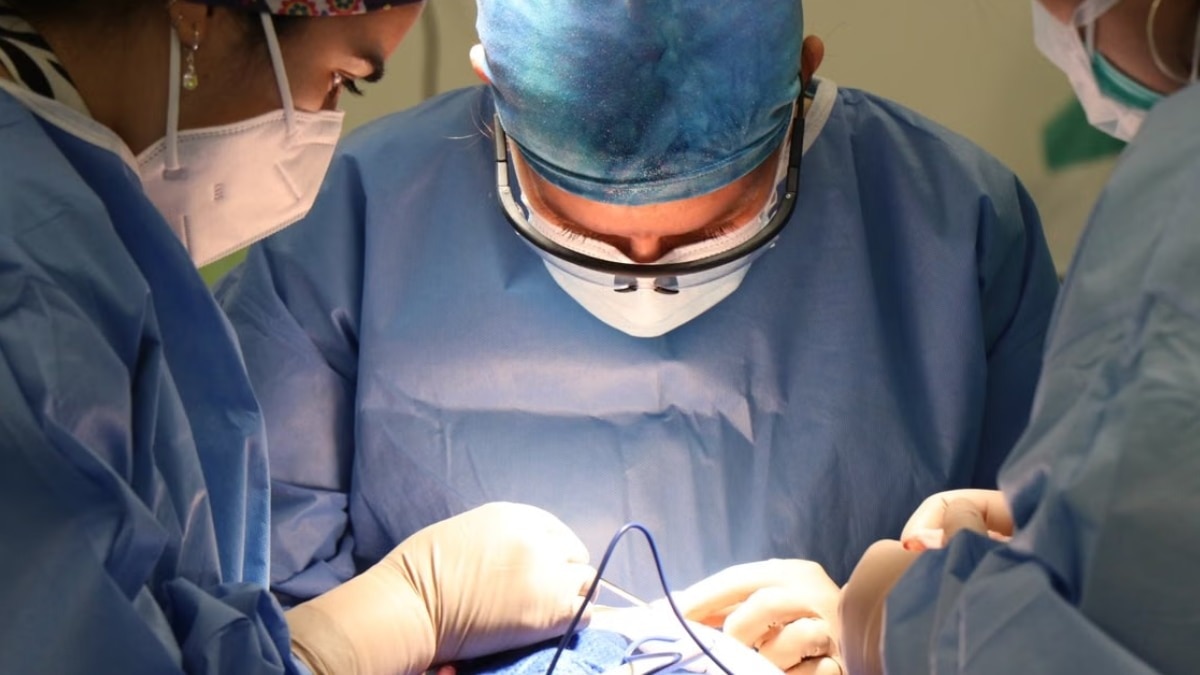
During some awake brain surgeries, doctors ask patients to talk, count or sing while specific brain areas are stimulated. The responses help surgeons map vital functions and avoid damaging speech, language or movement.Why surgeons ask patients to singImagine lying on an operating table while surgeons are working on your brain, and instead of being completely asleep, you are asked to talk, count numbers or even sing a song.It may sound like something from a movie, but singing during brain surgery is a real technique that has been described in medical research. In selected patients undergoing an awake craniotomy, surgeons may ask them to perform specific tasks while they carefully stimulate different parts of the brain. The purpose is not entertainment. It is to find out which areas are responsible for important functions and avoid damaging them during surgery.This is particularly important when a brain tumour or another abnormal area is located close to regions involved in speech, language, movement or other important abilities. Studies suggest that singing can sometimes provide additional information about how different parts of the brain control language and music.WHAT IS AWAKE BRAIN SURGERY?During an awake craniotomy, a patient is awake and able to respond during an important part of the operation. The brain itself does not have pain receptors, although the scalp and tissues around it do, which allows doctors to use carefully planned anaesthesia while keeping the patient comfortable. The main reason for waking the patient is brain mapping.Surgeons can stimulate small areas of the brain and ask the patient to perform tasks such as naming objects, speaking, reading, counting or moving a hand. If a particular function suddenly becomes difficult when a specific area is stimulated, doctors know that the region may be important for that function. This information can help surgeons decide how far they can safely remove a tumour while reducing the risk of neurological problems.SO WHY SING?Speech and singing may seem similar, but they do not rely entirely on the same brain networks.A study published in the Journal of Neurosurgery examined five patients undergoing awake brain surgery and used singing as part of direct cortical mapping. Researchers found that areas involved in singing could differ from areas involved in ordinary speech and language tasks.In some patients, stimulating particular brain regions interrupted singing without producing the same effect on speech. The findings suggested that singing and speaking can use partly different pathways in the brain.This distinction can be useful when surgeons are operating near areas that are important for communication.SINGING CAN HELP REVEAL PROBLEMS IN REAL TIMEDuring brain mapping, surgeons are looking for changes in the patient's performance.If a patient suddenly stops singing, cannot maintain the melody or develops difficulty producing sounds when a particular area is stimulated, the surgical team receives immediate information about that part of the brain.The team can then use this information when deciding where it is safer to operate.A systematic review published in the European Journal of Neuroscience looked at 10 studies involving 14 patients who performed music during awake craniotomy. Music mapping was successfully carried out in 13 of the 14 patients.The review found that music-related changes could sometimes occur independently of speech or language problems. It also identified brain regions involved in music production in both the left and right hemispheres.IT IS NOT ONLY ABOUT PROFESSIONAL SINGERSThe technique is not necessarily limited to musicians.One published case report described a woman with severe aphasia, a condition that affected her ability to speak. Although she could barely verbalise her own name, she was able to sing familiar nursery rhymes.Doctors used her ability to sing during awake surgery to help monitor her language function. The report said that approximately 90% of the tumour was removed while her language function was preserved and later improved.The case highlights something researchers have been studying for years: familiar songs can sometimes remain accessible even when ordinary speech is severely affected.THE GOAL IS SAFER BRAIN SURGERYDoctors do not ask every brain surgery patient to sing. The tasks used during an operation depend on where the tumour or abnormal tissue is located, the patient's condition and the functions surgeons need to protect.For some patients, talking or naming objects may be enough. For musicians, singing or playing an instrument may be particularly important because preserving musical ability can also have a major impact on their daily life and work.The evidence for music mapping is still based largely on small studies and case reports, so researchers say more research is needed. However, existing findings show that singing can provide a unique window into the brain while surgery is taking place.So, the next time you see a video of a patient singing while surgeons operate on their brain, it is not a bizarre medical experiment. The song is actually part of the operation.It can be a way for surgeons to listen to the brain while they are protecting it.- EndsPublished By: Smarica PantPublished On: Sep 4, 2026 14:24 IST
Doctors ask patients to sing during brain surgery. Here's why
Full Article
Original Source
Read the full article at Indiatoday →KhanList aggregates and links to publicly available news content. We do not host full articles from third-party sources. Always verify important information with original sources.