
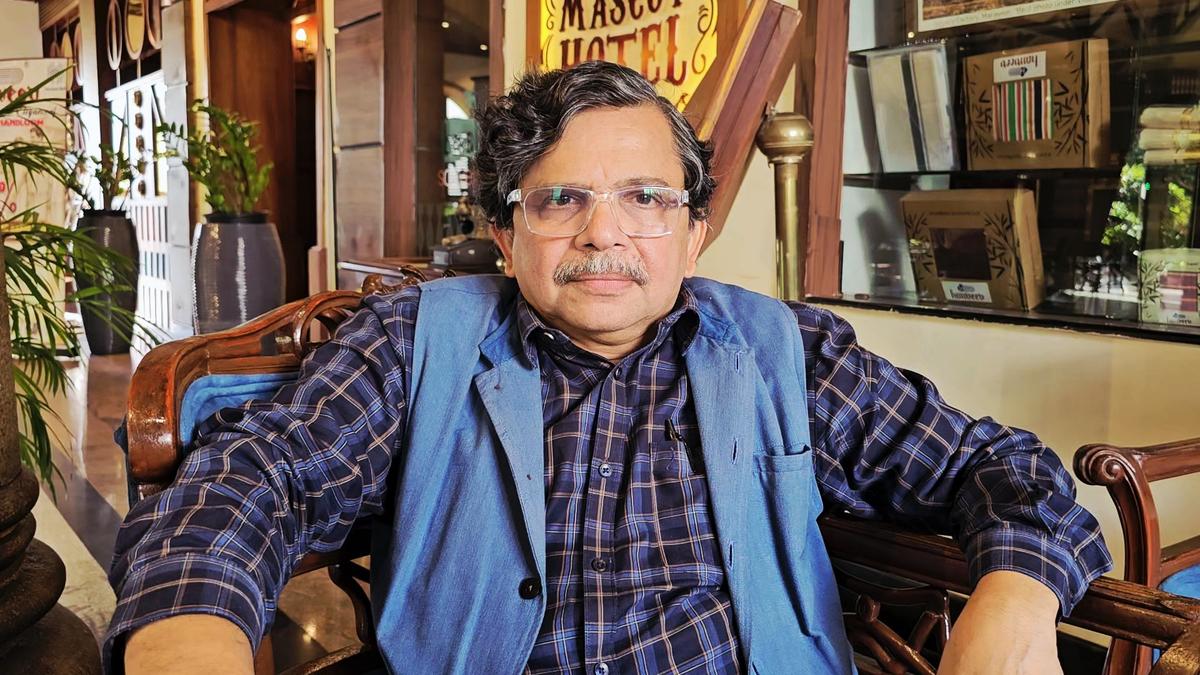
Former Chief Justice of the Orissa High Court S. Muralidhar, who chairs the United Nations Independent International Commission of Inquiry on the Occupied Palestinian Territory, including East Jerusalem, and Israel, speaks to Sarath Babu George about international humanitarian law, India’s position on Palestine, the ability of international institutions to hold powerful States accountable, judicial independence, constitutional offices, civil liberties and the Gen Z protests. India has historically supported the Palestinian cause while maintaining strategic relations with Israel. From the standpoint of international law, how should India navigate this relationship? India will have its own compulsions. But there is a bottom line that we should never allow to be crossed. Here, the bottom line is international humanitarian law. We should not be among those countries that find it acceptable that children are dying of starvation or that children are dying for want of medical aid. I don’t think India is that kind of a country. It has never held itself out to be that kind of a country. If it is supporting the Palestinian cause, it should be deeply distressed by what is happening. And when it negotiates with Israel, it should place this at the forefront, express its disapproval of such actions, and take it from there. Do you think international institutions such as the International Criminal Court are still capable of restraining powerful States when geopolitical interests run strongly in the opposite direction? The International Criminal Court is under a great deal of stress and pressure because sanctions have been imposed by the United States on its judges. This is very, very unfortunate. The rest of the world community, apart from making token protests, is doing very little about it. That is not a good sign. We expect all these international adjudicative bodies to be truly independent and free of political pressure. One hopes that this will change. We want all these systems to work. It is in the interest of countries such as India, countries in Africa and countries in South America, which are under tremendous geopolitical pressure, to have a mechanism where we can ask for answers. We must be able to hold governments and individuals within those governments accountable. There must be some forum where that can be done. So, it is very important, in the interest of all nations, that these mechanisms, whether the International Court of Justice or the International Criminal Court, are allowed to work fearlessly and truly independently. Do you think the Indian judiciary today enjoys the level of institutional trust that it did a decade ago? What, in your view, has changed? I don’t think there has been a shift in the overall level of trust in the judiciary. Perhaps the judiciary has not always been able to meet the expectations that people have of it at different points in time. But there are also moments when it gives people hope. So, I would call it a mixed record; it is not a consistent one. People continue to come to the courts. There is also an element of choicelessness in coming to the courts. When you criminalise more and more ordinary activities, such as protests, people are bound to face the coercive element of the law and are forced to go to court. So, filings have gone up. If you go merely by the number of cases being filed, you cannot say that people have lost faith in the judiciary. Q: There has, however, been growing apprehension about the independence of the courts -- from judicial appointments to the manner in which governments respond to judgments. What are the most serious institutional pressures facing the judiciary today? We have to look at the judiciary at three levels. I invariably emphasise that the district judiciary is far less independent than perhaps the High Courts or the Supreme Court ought to be. The extent to which individual judges succumb to pressure varies greatly. There are judges at all levels - the district judiciary, the High Courts and the Supreme Court - who have shown a remarkable degree of independence. But those judges are fewer in number than we would like them to be. That is what invites the comment that perhaps the judiciary is not as independent as it should be. I think the judiciary should be more assertive when it chooses people to be appointed to the High Courts and the Supreme Court and should not succumb to pressure at that stage. Secondly, it should take up cases involving government action in good time. It took four years to decide whether the conversion of a State into a Union Territory was legally valid. It took six years to decide whether demonetisation was legally valid. You cannot afford to take that long over electoral bonds. You allow so many elections to take place and then finally decide that the scheme was completely illegal. But then you allow the very party that collected the maximum funds to retain them. Somewhere, all of this is disappointing. It also raises questions about how independent and responsive the judiciary ought to be. So, again, it is not a consistent track record. I would say the hope is that it will become more independent. Of late, we have witnessed a series of tussles between State governments and Governors. Does the constitutional design give Governors too much discretionary space, or is the problem primarily that constitutional conventions are not being respected? I don’t think either explanation is entirely true. You should see Governors for what they are. Whether it was under the earlier dispensation or the present one, Governors have acted according to the dictates of the Union Home Ministry. It has always been like that, and it continues to be like that. The office of the Governor has always been misused to invite someone to form a government or to dismiss a democratically elected government. That misuse continues. After the S.R. Bommai judgment, the imposition of President’s Rule has come down. But the misuse of the Governor’s office continues. I don’t think the Constitution envisaged the Governor as someone who was meant to exercise independent discretion in this manner. The office has effectively functioned as an extended arm of the Central government. And I want to emphasise that this is not peculiar to the present dispensation. The use of investigative agencies has generated allegations of selective or politically motivated prosecution. What safeguards should the judiciary insist upon when the State invokes coercive powers? Criminal law is tested by procedure. There should be no dilution of procedural safeguards, such as furnishing the grounds of arrest. Whatever the coercive process, you cannot say that the requirement to furnish the grounds of arrest applies only under the regular criminal statutes and not under the Prevention of Money Laundering Act or some other law that also permits search, seizure and arrest. We must use the Constitution to say that, under any law, no arrest should take place without furnishing the grounds of arrest. When someone complains that the grounds were not furnished, you cannot say that the case has already progressed to the investigation stage and that it is too late to complain about the arrest. We must place the liberty of the individual at the highest value and be completely intolerant of any attempt to bypass procedure. Procedure is what tests criminal law and the actions of the State under criminal law. That is the most precious liberty a person has, and the courts have to stand very firm on this. In this regard, how do you view the recent actions of the Enforcement Directorate across the country? There are judges in the Supreme Court who have told the Enforcement Directorate what it should and should not do. When the court tells it what it should not do, the Enforcement Directorate must respect that. The courts should be able to pull up the agency at every level. You should not have to go to the Supreme Court every time to establish that an action by the Enforcement Directorate is wrong. You should be able to go even to the court of first instance and say: don’t mechanically remand this person to the Enforcement Directorate's custody or judicial custody. Insist that the procedure is followed. The day that happens across the judicial hierarchy, citizens will have greater assurance that their liberties are secure. We have also seen the emergence of Gen Z protests, with young people expressing distrust of institutions over examinations, jobs and questions of fairness. Is the problem that young people are becoming too distrustful of the system, or has the system given them too many reasons to distrust it? No. Distrusting a system is not a problem at all. It is a sure sign of democratic progress. We want our systems to function for the people. It is government by the people, for the people and of the people. Ultimately, governments are answerable to the people. Here, the people happened to be Gen Z, and they were doing a very basic exercise in democracy: asking for accountability in the exercise of power. They were making a simple statement: “We have entrusted you with certain powers, which have to be exercised for our benefit. Are you doing it or are you not? We believe you have not been doing it. We want you to answer for it.” They were exercising freedom of speech, freedom to form associations and the freedom to assemble peaceably and without arms and to express their voice. If you look at Article 19, I think Gen Z was exercising Articles 19(1)(a), 19(1)(b) and 19(1)(c) very systematically. And they were doing it with a wonderful sense of humour. There was also fearlessness. These are all healthy signs in a democracy. Under such circumstances, how should the judiciary distinguish between legitimate civil disobedience and disruptive or violent protests? All of us were watching the same protests through the same media, social media and electronic media. We could see that this was a peaceful protest. No student was armed. There is a clear distinction between a peaceful protest and a violent protest. The attempts to portray these protests as violent also failed because it was not possible to pinpoint any one student who had gone beyond the known boundaries. On the other hand, we could clearly see the disproportionate force that was used. In such an instance, I think what ultimately persuaded the court to quash all these FIRs was precisely this: it could clearly distinguish between a peaceful protest and a violent one.
Distrusting a system is not a problem at all, it is a sure sign of democratic progress: Former Orissa HC Chief Justice S. Muralidhar
Full Article
Original Source
Read the full article at Thehindu →KhanList aggregates and links to publicly available news content. We do not host full articles from third-party sources. Always verify important information with original sources.