
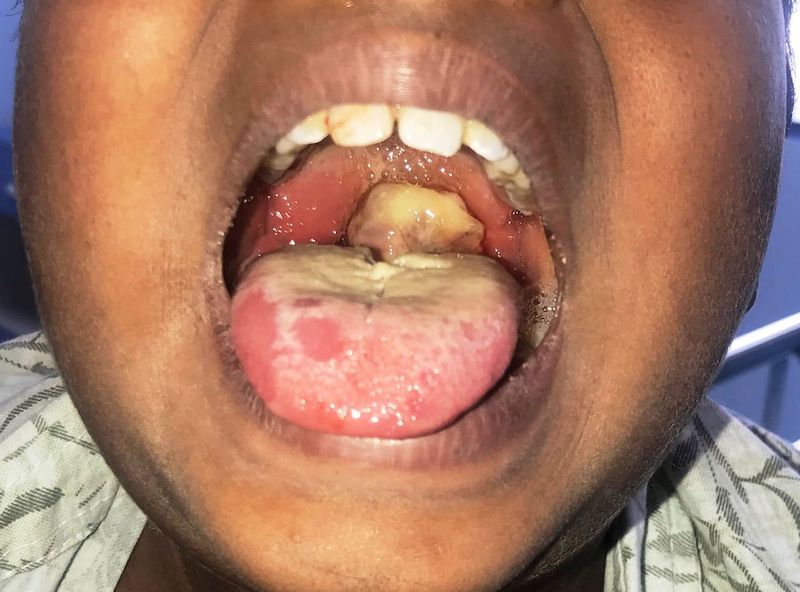
PAT ONUKWULI argues for surveillance and a catch-up vaccination in schools and communities An earlier article, “Nigeria’s Immunisation Gap,” warned that vaccine availability must not be mistaken for vaccine protection. It argued that doses may reach warehouses while children remain unvaccinated, partially immunised, or lost to follow-up. Plateau State has now provided a grim answer to that warning: when prevention is weak, emergency becomes policy, and routine protection becomes crisis management. Plateau has closed public and private primary and secondary schools following a diphtheria outbreak affecting Jos North, Jos South, Bassa and Wase. By September 7, health authorities were reporting 148 suspected cases and 25 fatalities. Across Nigeria, eight states, including Plateau, accounted for 98 per cent of confirmed cases in the latest NCDC assessment; about 68 per cent of confirmed cases were unvaccinated. This is more than an outbreak. It is a governance alarm. Diphtheria is vaccine-preventable. Schools are closing not because prevention is impossible, but because protection has been incomplete. Clinics exist, yet children are missed; vaccines are supplied, yet immunity gaps persist; institutions report activity, yet communities remain exposed. The contradiction is administrative before it becomes epidemiological. The National Primary Health Care Development Agency sits close to the centre of that contradiction. Its mandate includes technical direction for primary healthcare, support to states and local governments, monitoring, immunisation, community engagement and control of preventable diseases. Its National Emergency Routine Immunisation Coordination Centre was created specifically to detect routine immunisation gaps, strengthen accountability and expand services in poorly performing areas. That mandate makes repeated immunity gaps harder to explain away. NPHCDA cannot be blamed for every missed child: state agencies, local governments, insecurity, poverty, hesitancy and household circumstances all matter. But where preventable outbreaks recur, it must answer whether weak LGAs were identified early, whether data prompted action, whether missed children were tracked, and whether corrective supervision followed warning signs. The issue is therefore not whether programmes exist, but whether they work. NPHCDA already promotes approaches to identify, enumerate and vaccinate chronically missed children through child-by-child tracking. If such mechanisms exist nationally while large susceptible populations remain locally, the gap is no longer between knowledge and ignorance. It is between design and delivery, promise and performance, and paperwork and protection. Urgency now requires more than emergency vaccination. Plateau, in collaboration with NPHCDA, NCDC and neighbouring states, should immediately map zero-dose and incompletely vaccinated children ward by ward; deploy mobile and fixed vaccination teams; verify vaccine and cold-chain availability; strengthen contact tracing and laboratory confirmation; and secure antitoxin, antibiotics and infection-control supplies for treatment centres. The response should also extend beyond clinics. Traditional rulers, religious leaders, school heads, women’s groups and community health workers should be mobilised to identify missed children and counter rumours promptly. Public communication must be clear, local and relentless: explain symptoms, where treatment is available, who needs vaccination and why completing the schedule matters. Silence creates space for fear; trusted information creates space for action. The cost of delay is measured not only in case numbers but also in emptied classrooms and bereaved families. Schools should not simply reopen when case numbers fall. Before reopening, health and education authorities should organise catch-up vaccination in schools and communities, intensify symptom surveillance, and provide parents with clear information on vaccination schedules and early treatment. A closure that interrupts learning must also interrupt transmission and close the immunity gap that allowed transmission to flourish. Data must now be held to account. Plateau and NPHCDA should publish LGA-level coverage, zero-dose numbers, missed vaccination sessions, stock-outs and follow-up performance. Where reported coverage appears reassuring, but outbreaks reveal large susceptible populations, those figures should be audited. Where funds were released for outreach, supervision or commodities, the government should show what reached facilities and what reached children. Neighbouring northern states should act before their classrooms become casualty lines. Kano, Kaduna, Katsina, Borno, Bauchi, Sokoto and Zamfara already bear much of the national diphtheria burden. Surveillance, catch-up vaccination and rapid-response readiness must move ahead of the pathogen, not behind it. Public health fails when government waits for death to validate risk. A philosophy of government underlies this emergency. The old republican maxim, salus populi suprema lex (the welfare of the people shall be the supreme law), places prevention at the heart of legitimate authority. Government is not justified merely by reacting loudly to a crisis, but by acting quietly, consistently and competently before foreseeable harm becomes mass suffering. Plateau must therefore become a turning point, not another temporary headline. Emergency response may contain today’s outbreak; competent governance must remove the conditions that create tomorrow’s. That means stronger routine immunisation, honest data, functioning primary healthcare, visible responsibility, and consequences for persistent failure. The final test is brutally simple: the government should not wait to count the dead before it counts the unvaccinated. Where prevention is known, affordable and available, failure to deliver it is not fate. It is deferred governance, and children pay the interest. Dr. Onukwuli is a legal scholar and public affairs analyst. patonukwuli2003@yahoo.co.uk
DIPHTHERIA CRISIS: THE IMMUNISATION GAP
Full Article
Original Source
Read the full article at Thisdaylive →KhanList aggregates and links to publicly available news content. We do not host full articles from third-party sources. Always verify important information with original sources.