
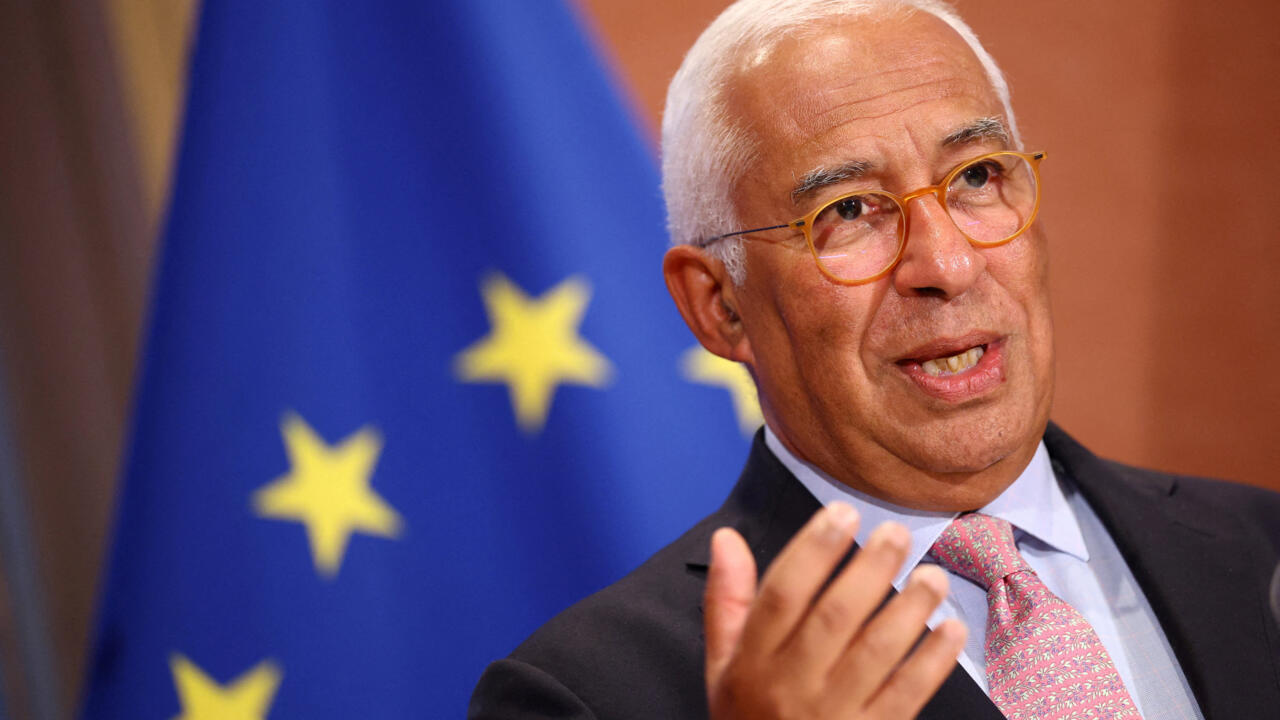
EU leaders meet in Brussels on Thursday and Friday for another round of talks on the bloc's next long-term budget, with a deal still far from certain despite a proposal to cut spending by €204 billion. Issued on: 25/11/2026 - 21:21 2 min Reading time European Council President António Costa has put forward a revised draft of the 2028–2034 budget, cutting more than €200 billion from the European Commission's original €2 trillion proposal. He has also proposed a new tax on large digital companies, set at 3 per cent of their annual turnover from online services, and said the taxation of crypto-assets could be examined. Deep divide The plan is meant to bridge a deep divide between member states. France has called it "very disappointing", arguing that it fails to guarantee income support for farmers under the Common Agricultural Policy. EU proposes digital companies tax as France and Germany clash over cuts Germany, by contrast, says the cuts do not go far enough. Chancellor Friedrich Merz described the proposed increase of more than 40 per cent in the EU budget as "excessive", while Sweden has warned that a compromise is still some way off. The European Parliament has also rejected the scaled-back budget, saying it cannot adequately fund priorities such as defence, security and competitiveness. Costa argues that the revised plan preserves the EU's capacity to act while keeping national contributions within "reasonable limits". Meanwhile, the EU is only now finalising its 2027 budget, the last annual budget under the current 2021–2027 framework, worth €199.7 billion in commitments and €211.5 billion in payments. The Council formally adopted it on 23 November, and the European Parliament approved it on Wednesday. Next budget The next long-term budget will shape EU spending for seven years, from agriculture and regional development to defence, climate policy and migration. Leaders hope to make progress this week and reach agreement at their 17–18 December summit. But France's political calendar raises the stakes. President Emmanuel Macron has warned that negotiations cannot drag on beyond December without a deal, raising the prospect that a final agreement could be delayed until after next spring's presidential election. For Costa, the challenge is to persuade northern member states that spending can be cut without hollowing out the EU's ambitions – while reassuring France that its farmers will not pay the price. (With newswires)
Digital tax and farm aid at stake as EU budget talks resume
Full Article
Original Source
Read the full article at Rfi →KhanList aggregates and links to publicly available news content. We do not host full articles from third-party sources. Always verify important information with original sources.