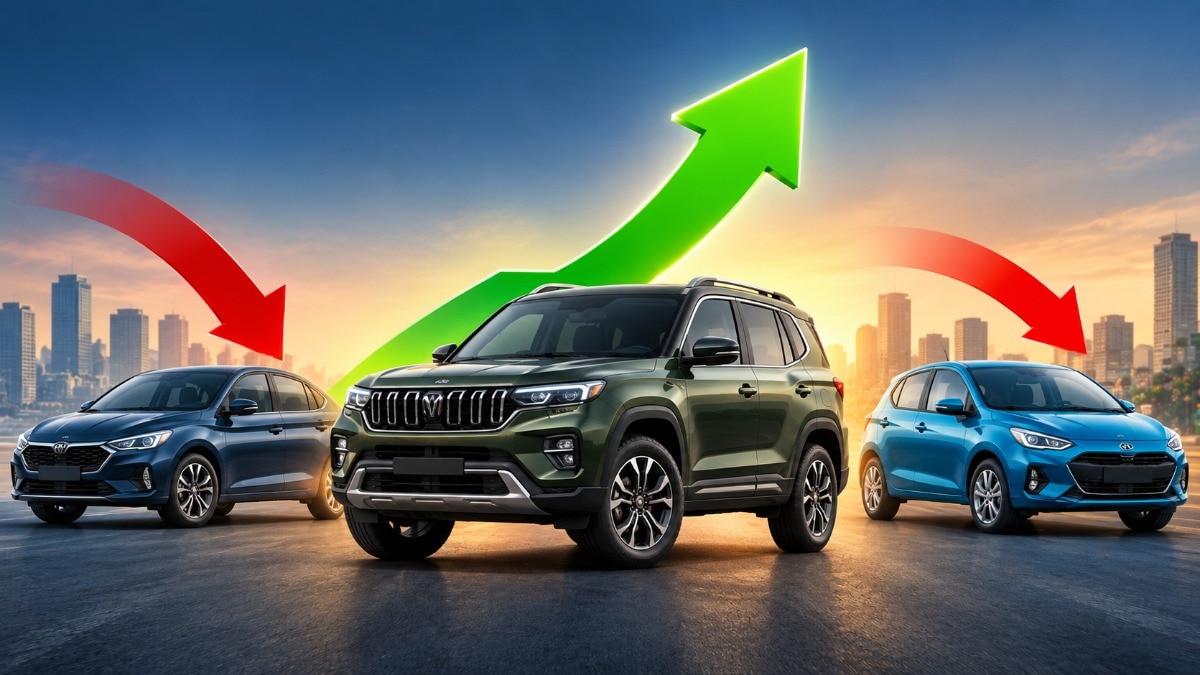
Diesel cars are disappearing from hatchbacks and sedans, but the fuel remains relevant in SUVs. Rising diesel demand, an expanding SUV market and E20 concerns are reshaping India's diesel landscape.Once a staple in hatchbacks and sedans, diesel is now increasingly an SUV fuel, surviving where torque, highway efficiency and long-distance usability matter most.For years, diesel used to be the popular choice for buyers looking for better fuel economy, lower running costs and strong, torquey performance. It powered everything from small hatchbacks and compact sedans to large SUVs. But that era is rapidly disappearing. Diesel has not died in India, it has simply moved up the vehicle hierarchy and, increasingly become an SUV fuel.The clearest evidence of this shift can be seen in the list of India’s most affordable diesel passenger vehicles. The Tata Altroz is currently the cheapest diesel car in the country, with prices starting at Rs 8.24 lakh (ex-showroom). After the Altroz come the Mahindra Bolero and Bolero Neo, Tata Nexon, Hyundai Venue, Kia Sonet, Mahindra Thar, Kia Syros and Tata Curvv.Look closely at that list and one thing immediately stands out: the Altroz is the only hatchback. Every other model is an SUV or SUV-derived vehicle. That would have been almost unthinkable a decade ago.From hatchbacks and sedans to SUVsDiesel was once spread across almost every major segment of the Indian passenger-vehicle market. Buyers could choose diesel versions of small hatchbacks, premium hatchbacks, compact sedans, mid-size sedans and SUVs. Maruti Suzuki, India’s largest carmaker, once offered diesel engines across several of its most popular models. The Swift, Dzire, Celerio, among others, were available with diesel power. The Celerio was particularly notable because it used a tiny 793cc two-cylinder diesel engine, an engine that represented just how far manufacturers were willing to go to offer diesel economy in affordable cars. Hyundai also offered diesel engines in models such as the Grand i10, i20 and various sedans and SUVs. The market had no shortage of diesel choices for buyers who prioritised efficiency. That world has almost completely disappeared. Today, there is no mass-market diesel sedan in India. The hatchback segment has effectively abandoned diesel as well, with the Altroz now standing almost alone. If a buyer specifically wants a diesel engine without stepping into an SUV, the choices are extremely limited. The change is not simply about consumers losing interest in diesel. It is also the result of the economics and complexity of modern diesel engines.Diesel survived where it makes the most senseThe SUV boom has given diesel a second life, albeit in a much narrower role. SUVs are generally larger, heavier and more likely to be used for long-distance travel than small hatchbacks. Diesel's characteristics: strong low-end torque, highway efficiency and relatively good fuel economy under load suit these vehicles particularly well. That makes diesel easier to justify in a Thar, Scorpio, XUV, Fortuner or other SUV than it is in a small hatchback. There is also a psychological element. A customer spending considerably more on a large SUV is more likely to accept the additional cost and complexity of a diesel powertrain if it delivers better highway efficiency and torque. The result is a curious transformation: diesel has gone from being an economy fuel to becoming a utility fuel. It is no longer the engine you choose because you want the cheapest possible kilometres in a small car. Increasingly, it is the engine you choose because you want a large vehicle that can travel long distances efficiently.July's fuel mix offers another clueThe latest retail data from the Federation of Automobile Dealers Associations (FADA) adds another interesting layer to this story.Petrol/ethanol-powered passenger vehicles accounted for 41.68% of retail sales in July 2026, down from 43.15% in June and 47.62% in July 2025.Diesel, meanwhile, increased its share to 17.73% in July from 16.32% in June. While that remains slightly below its 17.97% share a year ago, the month-on-month increase is significant in the context of a market undergoing a broader fuel transition.At the same time, CNG accounted for 24.67% of passenger-vehicle retail sales, hybrids 8.02% and EVs 7.90%. Together, these three powertrains accounted for 40.59% of the market, just 1.09 percentage points behind petrol/ethanol.A year ago, the gap between petrol/ethanol and these three alternatives was 13.21 percentage points.That is a substantial change in a single year.E20 is adding another twistThe diesel story becomes even more interesting against the backdrop of India's transition to E20 fuel. FADA noted that consumer concerns around E20 influenced buying decisions in July, nudging some buyers towards CNG, hybrids and EVs. Petrol/ethanol's share consequently fell sharply compared with the previous year.This does not mean that consumers are abandoning petrol overnight, nor does it mean that diesel is suddenly making a broad-based comeback. Instead, the data suggests that buyers are becoming more open to alternatives — and diesel remains one of those alternatives, particularly in vehicle categories where it continues to make practical sense.There is an important distinction here.The rise in diesel's share should not be interpreted as a revival of diesel just yet across the entire passenger-car market. As SUVs account for a growing proportion of India's passenger-vehicle sales, and as diesel remains available predominantly in SUVs, the two trends naturally reinforce each other.Diesel's future may be smaller, but not irrelevant. The death of diesel has been predicted several times in India. Yet diesel continues to survive because there are still buyers and vehicle categories for which it makes sense. What has changed is where those buyers are.The old diesel customer could have been someone buying a Celerio, Swift, i10 or compact sedan and looking to maximise fuel economy. Today's diesel customer is much more likely to be buying an SUV and looking for torque, highway efficiency and long-distance usability. That explains why the cheapest diesel car in India is a hatchback surrounded by SUVs. It also explains why India's largest carmaker can completely abandon diesel while other manufacturers continue investing in diesel engines for SUVs. Diesel is not dead. It has simply been pushed out of the mass-market car segments and concentrated in the SUV market.And as long as Indian buyers continue to favour SUVs and as concerns around petrol/ethanol, range, fuel prices and long-distance efficiency remain part of the purchasing conversation, diesel may continue to have a place in India. Just not under the bonnet of your next small hatchback.Subscribe to Auto Today Magazine - EndsPublished On: Aug 16, 2026 08:00 IST
Diesel is not dead, but it has become an SUV fuel
Full Article
Original Source
Read the full article at Indiatoday →KhanList aggregates and links to publicly available news content. We do not host full articles from third-party sources. Always verify important information with original sources.