
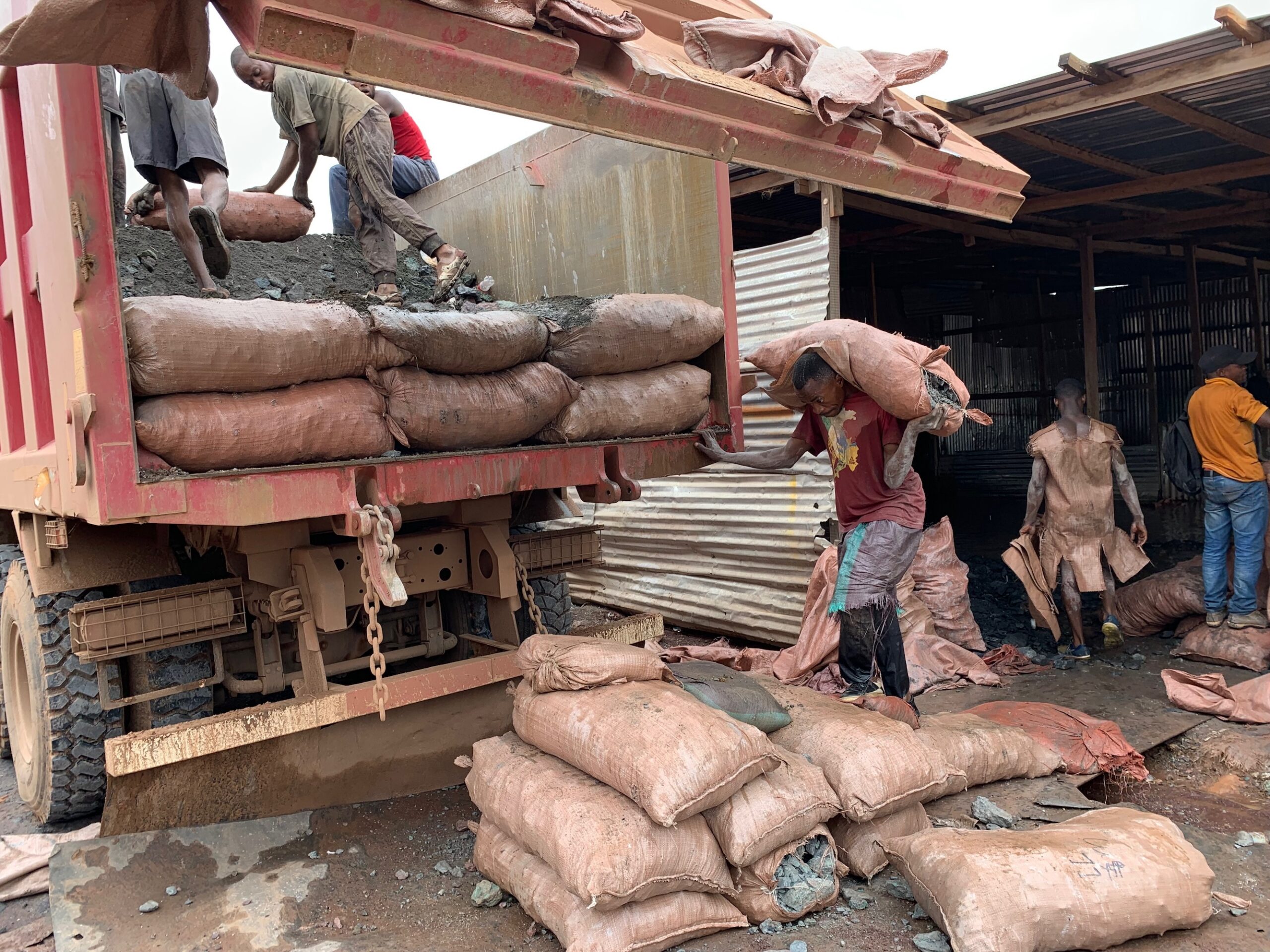
A new report published by U.S.-based think tank the Oakland Institute warns that the rush for critical minerals comes with massive implications for the world, especially African countries. The report, “RUSH: Global Scramble for Minerals Wages War on People and Planet,” challenges the popular narrative that an expansion of mining operations is necessary for the global green energy transition. “The intensification of mineral extraction has already had devastating consequences around the world, destroying land, livelihoods, and waters,” Oakland Institute policy director Frederic Mousseau told Mongabay in an email. He added the projected expansion of mining to meet global mineral demands will only perpetuate this devastation. Global demand for critical minerals is projected to increase drastically over the next two to three decades. Between 2000 and 2024, nickel production rose by 187%, rare earth extraction by 329%, and lithium production by 1,602%. According to projections by the International Energy Agency, demand for six key minerals — copper, graphite, lithium, cobalt, rare earth elements, and nickel — will further skyrocket in the coming decades. The IEA forecasts that total mineral demand from clean energy technologies will at least double by 2040. However, the Oakland Institute report found that currently, most of the critical minerals produced end up in industries unrelated to the green energy transition. Solar, wind, battery storage, and power networks for renewables together make up around a fifth of the demand, while defense and aerospace, conventional transport, AI data centers, and construction account for the rest. In Africa, home to 30% of the world’s known mineral reserves, the stakes are particularly high. Currently, the continent’s mineral-producing countries process less than 15% of their mineral output domestically. Most of the value-added processing takes place outside the country, though some governments are pursuing more local processing and industrialization. However, one of the questions the report raises is whether the increase in control over mining and processing will actually lead to more value generation for local communities and create jobs on the ground. “Where will equity be if extraction takes place against the will of the people living on the land that is destroyed, drinking water that is contaminated, and breathing toxic air,” Mousseau asked. He pointed to Zambia and the Democratic Republic of Congo as two countries that illustrate the risks of intensifying extraction on the continent. In Zambia, copper mines consume more than half of the country’s electricity, while only 43% of households are connected to the national grid. According to the report, in the DRC, mining operations consume more than 60% of generated electricity, while less than a fifth of the population has access to electricity. “The plan is to massively expand copper and cobalt mining in countries where decades of extraction have translated into land grabbing, massive pollution of waterways, and destruction of livelihoods,” Mousseau said. Banner image: The price paid for cobalt is the main determinant of artisanal miners’ incomes and livelihoods. Image by Afrewatch 2020/The International Institute for Environment and Development via Flickr (CC BY-NC-ND 2.0.) Credits Topics
‘Devastating’ rush for critical minerals has little to do with green energy: Report
Full Article
Original Source
Read the full article at News →KhanList aggregates and links to publicly available news content. We do not host full articles from third-party sources. Always verify important information with original sources.