
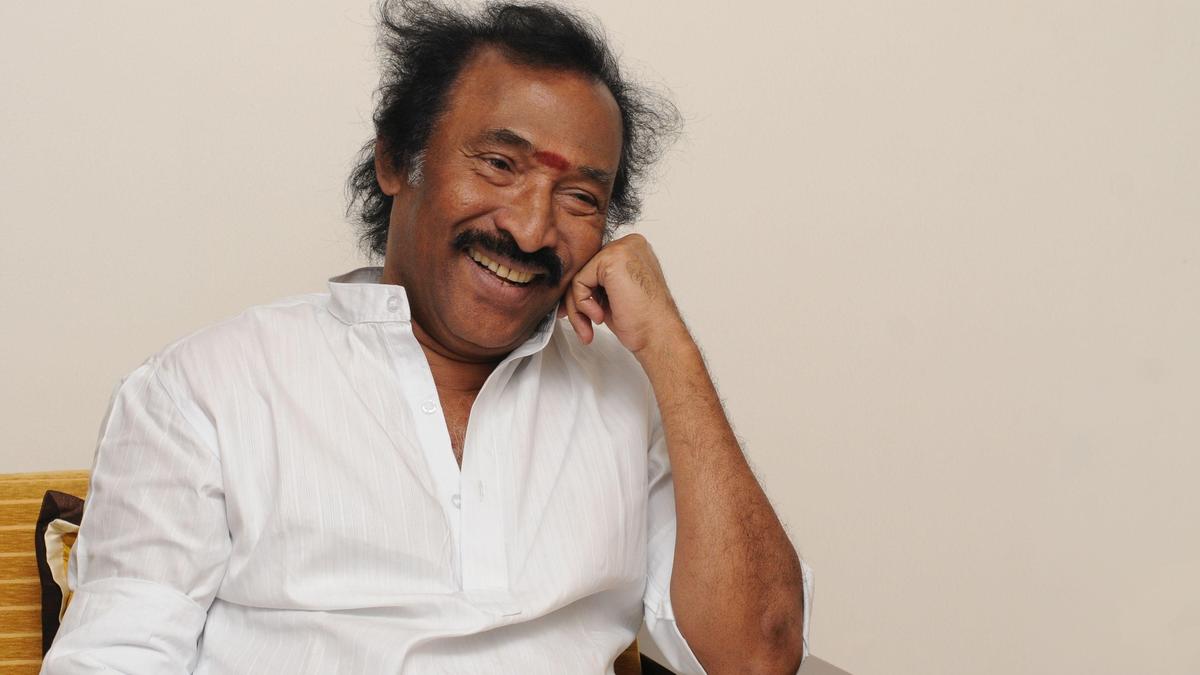
Music director Deva. File | Photo Credit: R. Ashok Tamil film music composer Deva, who brought gaana music into mainstream cinema and whose songs and background scores for Rajinikanth-starrers such as Annamalai, Arunachalam, and Baashha became hugely popular, died on Saturday (October 17, 2026), aged 75. Hospital sources said he had no pulse when he arrived and efforts to revive him remained futile.Deva’s music bridged seemingly disparate worlds — the earthy rhythms of Chennai’s gaana tradition, the mass appeal of Tamil cinema, and the melodic richness of classical and devotional music.Gaana in Deva’s music“Every music composer has a style of his own and is associated with a genre of music. I hail from Chennai, and gaana is inseparable from Chennaiites. I used to say ‘gaana song’, and only later did I come to know that ‘gaana’ means song in Hindi. It has a different taste and a very peculiar sound. It may sound raw, but the musicality of this genre is very deep,” the composer, popularly known as Thenisai Thendral Deva, had told The Hindu in an interview.Born Devanesan Chokkalingam, Deva worked in the Public Works Department (PWD) of the Tamil Nadu government before entering the film industry. His debut as a film music composer was with Mattukkara Mannaru in 1986. Though the film failed at the box office, its songs later gained popularity.He began attracting attention with the Ramarajan-starrer Manasuketha Maharasa. It was Vaikasi Poranthachu, released in 1990, that brought him wider recognition and his first Tamil Nadu State Film Award for Best Music Director.His talent soon caught the attention of leading filmmakers, and Annamalai, starring Rajinikanth and Khushbu, proved to be a turning point. The peppy song “Kondaiyil Thazhamboo, Nenjile Vaazhapoo, Koodaiyil Enna Poo — Khushboo” captured the hearts of many and also enhanced the growing popularity of actor Khusbhu in Tamil Nadu. The following stanza referred to Rajinikanth. All the songs in the film became chartbusters.“Baatcha, Baatcha” is the refrain that echoed in cinemas, heralding Rajini’s arrival on screen in a new avatar in Baashha. The film marked a turning point in the actor’s screen image, amid growing speculation about his political ambitions. The song “Singam Ondru Purappattathey” in Arunachalam further reinforced this image of a larger-than-life hero. String of successesAccording to The Hindu, Deva had 20 films on hand within two months of Annamalai’s release.“Lalaku Dol Dappima”, from Suryan, featuring Prabhu Deva’s sinuous dance movements, was another hit that showcased the composer’s flair for catchy, energetic music.In “Kavalaipadathe Sagothara”, Deva blended the gaana idiom with touches of Carnatic music to give expression to the theme of love. “Autokaran, Autokaran”, another popular number, captured the rhythms and swagger of urban life. In contrast, “Thangamagan Indru Singanadai Pottu” drew on a classical idiom. “Oru Pen Pura” from Annamalai stood out for its pathos, demonstrating his ability to move beyond foot-tapping numbers.The touch of classicThe classical element in his compositions was also reflected in his collaborations with some of the leading voices in devotional music, including Sirkazhi Govindarajan, P. Susheela, M. Balamuralikrishna and Madurai Somu. “Kariyangal Niraiverum Ganapathiye”, rendered by Sirkazhi Govindarajan, continues to be heard in temples across Tamil Nadu in the early hours of the day. Published - October 17, 2026 12:42 pm IST
Deva, the composer who took Chennai’s gaana to mainstream cinema, is no more
Full Article
Original Source
Read the full article at Thehindu →KhanList aggregates and links to publicly available news content. We do not host full articles from third-party sources. Always verify important information with original sources.