
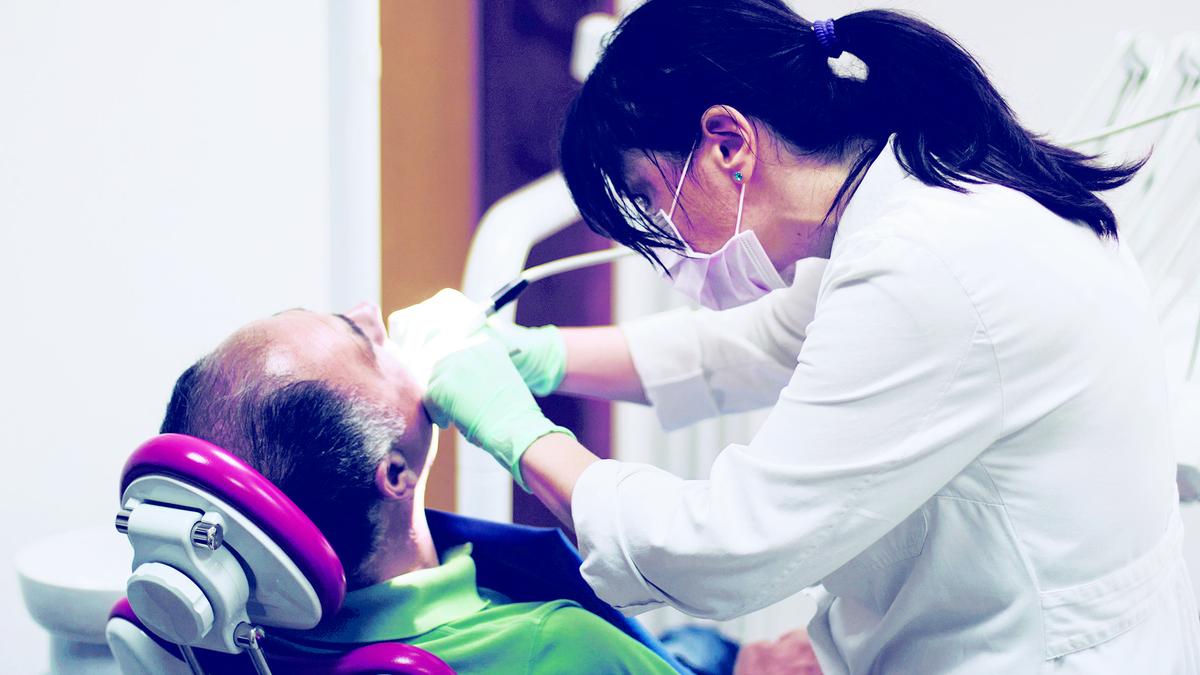
Roughly a third of people have significant dental anxiety, and roughly a tenth have a clinical phobia. Image used for representational purposes only | Photo Credit: Getty Images/iStockphoto During my 10+ years of clinical experience in various States and with numerous patient populations, I have seen that dental anxiety is a constant challenge. I have seen this phenomenon in children clutching their parents’ hands before their first cleaning and in accomplished professionals quietly cancelling appointment after appointment in the hope that the problem will somehow resolve itself.It doesn’t.In my experience, the longer you leave a fear unchecked, the greater the clinical and human cost becomes. Dental anxiety is not a moral failing. This is a well-documented psychological response—and one with important, measurable public health consequences.How severe is it?Roughly a third of people have significant dental anxiety, and roughly a tenth have a clinical phobia. That’s not a little footnote. That means a lot of the population is actively avoiding or delaying care that could prevent serious disease. The downstream consequences of this avoidance are visible daily in my clinical work: infections tolerated for months, decay advanced far beyond what early intervention would have required, and patients presenting with pain that could have been prevented years ago.Knowing where it startsDental anxiety typically has a definite source. A painful or poorly done procedure in childhood can be a source of dental anxiety. A provider who was in a hurry or didn’t tell the patient what was happening. The specific sensory environment of a dental office—the sounds, the smells, and the physical vulnerability of lying back with your mouth open—can leave powerful imprints, especially in young patients. That memory is not just wiped out; it impacts behaviour for decades. For some, it’s not just one event but an accumulation. Years of avoidance layered on top of embarrassment about how their teeth look now, and a fear of judgment prevents them from asking for help. This cycle of shame avoidance is one of the hardest patterns I see clinically. When these patients do come in, they need much more intervention than if they had come in sooner, and this becomes an instance of the very fear that kept them away.The health price of avoidance Research literature teaches us, that oral health is not an island. Untreated dental disease is a chronic inflammatory load on the body. It has been linked to cardiovascular risk, dysregulated blood sugar, and impaired immune function. When a patient avoids dental care for years, it is not just their smile that is at risk; they are carrying a preventable health load that will rise elsewhere in time.In addition to the system effects, the impact on quality of life is immediate and real. A toothache interferes with sleep. It impacts nutrition, concentration, and the ability to speak with confidence. These are not trivial consequences; they affect how people show up in their professional and personal lives every day.What works in practiceThe most significant change I’ve made in my practice is making communication a priority before any procedure begins. When patients feel informed and in control, it greatly reduces their dental anxiety. A stop signal—a raised hand that stops everything instantly—can alter the psychological dynamic in the room. It shifts the patient from passive recipient to active participant, and that shift matters enormously. I also allow extra time for anxious patients. The problem is not that procedures take longer, but that rushing them increases anxiety. I explain everything before it happens, check in frequently, and never minimise what a patient is feeling. These should not be luxury accommodations; they should be routine parts of effective care.For patients with more severe anxiety, pharmacological support is appropriate. Nitrous oxide is safe, effective, and rapidly reversible. There are also oral sedation choices if needed. These are clinical tools, not last resorts, and patients should feel comfortable asking about them.A message to patientsIf fear has kept you from the dentist, remember you are not alone, and you are not too far gone to be helped. What I ask of patients in this situation is one small step—not a treatment plan, not a procedure, simply a conversation. Come in and tell us about your nervousness. A good provider is a good listener and will start there. There is no need to be afraid of the dental chair. With the right approach, it can be a place where you take difficult things and make them manageable—and where the relief on the other side is worth it.(Dr. Sowjanya Gunukula is a U.S.-licensed dentist with international training who focuses on preventive and evidence-based oral healthcare and contributes to advancing community and public health dentistry. sowji.gunukula@gmail.com) Published - October 10, 2026 03:56 pm IST
Dental anxiety: when fear becomes a barrier to care
Full Article
Original Source
Read the full article at Thehindu →KhanList aggregates and links to publicly available news content. We do not host full articles from third-party sources. Always verify important information with original sources.