
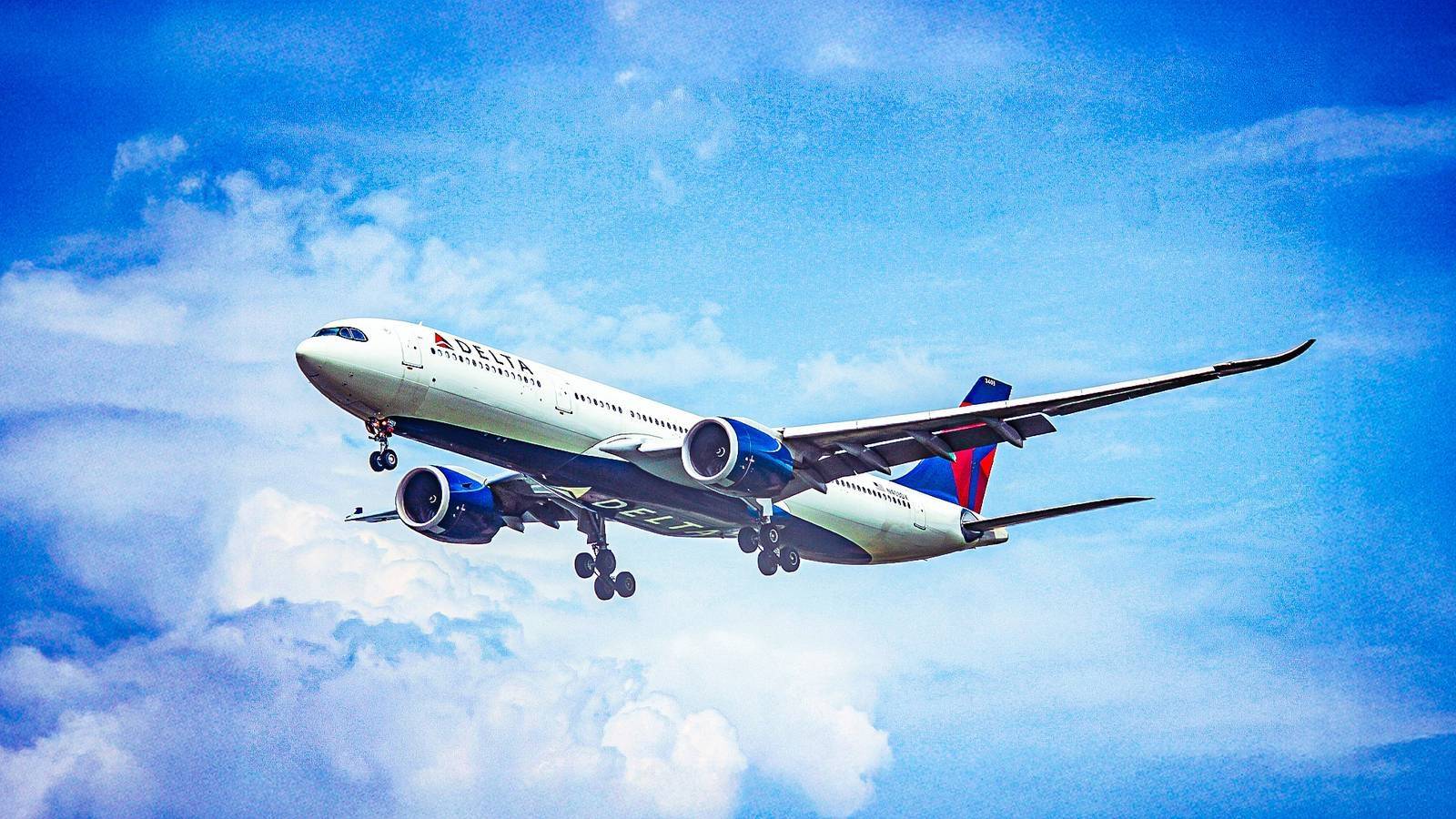
Published Sep 9, 2026, 11:00 AM EDT Brandon's passion for aviation started at a young age. He became involved in the flight simulator and VATSIM communities, which sparked his interest in aviation and eventually led him to earn his private pilot license. Outside of work, he continues to build flight hours, explore new airports, and stay involved in the aviation community. Delta Air Lines will launch daily nonstop service from Austin Bergstrom International Airport(AUS) to Paris Charles de Gaulle Airport (CDG) on March 27, 2027, using the Airbus A330-900neo. The route makes Delta the only US airline offering nonstop service from Austin to Europe. British Airways, KLM, and Lufthansa already serve London, Amsterdam, and Frankfurt, respectively, from Austin, but no US carrier has operated a transatlantic route from the airport until now. Combined with KLM's existing Amsterdam service, Delta and its Air France-KLM joint venture partners will offer up to ten weekly nonstop flights between Austin and Europe during peak summer. The Paris route is part of a broader Delta build-up at Austin that will grow the airline's operation from 28 peak-day departures in 2019 to more than 70 by summer 2027 across approximately 30 destinations. Delta is applying the same strategy at Austin that it used at Tampa, where year-round A330-900neo service to Amsterdam preceded a 20-year anchor lease at the airport's new $1.528 billion terminal. At both cities, Delta is launching widebody international service from mid-size US airports that previously had limited or no nonstop European options from a US carrier. What Delta Announced From Austin Credit: Shutterstock Delta Air Lines will launch daily nonstop service between Austin-Bergstrom International Airport (AUS) and Paris Charles de Gaulle Airport (CDG) on March 27, 2027, using the Airbus A330-900neo. The route will operate during the summer season, making Delta the only US airline offering nonstop service from Austin to Europe. Joe Esposito, Delta's Executive Vice President and Chief Commercial Officer, stated that "launching Austin's first nonstop service to Paris is a defining milestone" and described the route as part of the airline's broader investment in Central Texas. The A330-900neo on the route will carry four cabin classes: Delta One suites with lie-flat seats, privacy doors, and chef-curated meals, Delta Premium Select with wider seats and additional legroom, Delta Comfort+ with extra pitch, and Main Cabin with memory-foam seat cushions and seatback entertainment. Passengers connecting beyond Paris can access nearly 70 destinations across Europe, India, and Africa through Delta's joint venture partnership with Air France-KLM. Combined with the existing Air France and KLM service from Austin, the joint venture partners will offer up to 10 weekly nonstop flights between Austin and Europe at peak summer, covering both Paris and Amsterdam. Austin Mayor Kirk Watson described Delta's investment as evidence of the city's emergence as a global destination. "Austin and Paris are united by a spirit of culture, creativity, and discovery, and this new route will bring our communities closer together while creating new opportunities for people to experience all that makes our city special," Watson said. The route adds to Austin's small but growing international network, which has expanded from a handful of destinations in Mexico and the Caribbean a decade ago to include nonstop service to Europe for the first time. Delta's Broader Build-Up At Austin-Bergstrom Credit: Shutterstock The Paris route is one piece of a larger Delta expansion in Austin that spans domestic flying, staffing, and airport infrastructure. By summer 2027, Delta will serve approximately 30 destinations from Austin-Bergstrom International Airport (AUS) and operate more than 70 peak-day departures. The airline currently employs more than 900 people in the Austin area and recently opened a base of more than 100 flight attendants at the airport, a level of local staffing investment that signals a long-term operational commitment rather than a seasonal schedule adjustment. Three additional route changes accompany the Paris launch. Delta will begin new daily nonstop service from Austin to San Diego International Airport (SAN) on April 12, 2027, using the Airbus A319. The airline's Austin to Cancun (CUN) service, previously operated only during the winter season, will become year-round. And the Austin to San Jose (SJC) route, which launches October 6, 2026, will add a second daily frequency on the A319 starting April 12, 2027. The San Jose service connects two of the country's largest technology employment centers, and the doubled frequency reflects the corporate travel demand between them. Delta operates an existing Sky Club at Austin-Bergstrom and has plans for a second, larger lounge as part of the airport's future terminal expansion. The airline has been allocated 15 gates in the planned Concourse A, which will become Delta's primary operating area at the airport when completed. The combination of a European widebody route, a growing domestic network, a dedicated flight attendant base, two lounges, and a 15-gate concourse commitment positions Austin as one of Delta's most significant focus city investments outside its established hub network. Five years ago, Delta's Austin operation was a fraction of this size. How This Fits Delta's Strategy Of Adding International Service From Secondary Cities Credit: Shutterstock Austin is not the first secondary city where Delta has launched widebody international service in recent years. Tampa International Airport (TPA) received year-round A330-900neo service to Amsterdam (AMS), making it Delta's first scheduled widebody international route from the airport. Delta followed that with a 20-year anchor lease for at least six gates in Tampa's new $1.528 billion Airside D terminal, which includes a dedicated Federal Inspection Services area for processing international arrivals and a purpose-built Delta Sky Club. The Tampa investment positions Delta to add additional European routes from the airport once the terminal opens in 2029. The pattern is consistent. Delta is identifying mid-size US cities with growing populations, strong corporate travel bases, and limited or no existing nonstop service to Europe, and launching widebody routes that connect those cities to Europe via its joint-venture network. Austin's technology sector generates demand for Paris, London, and Amsterdam. Tampa's finance, healthcare, and tourism economy generates demand for Northern European destinations. In both cases, Delta is using the Air France-KLM joint venture to extend connectivity beyond the nonstop destination, offering passengers in Austin or Tampa access to dozens of European cities through a single connection at Paris or Amsterdam rather than requiring them to connect domestically through Atlanta (ATL) or New York JFK (JFK) first. The strategy works because the A330-900neo makes routes viable so that a larger widebody could not serve profitably from a secondary city. The aircraft's operating economics allow Delta to fly a 250-280 seat widebody on routes where the local demand may not fill a 350-seat 777 or A350. If the Paris route from Austin performs as well as Tampa's Amsterdam route has, Delta has the fleet, the joint-venture network, and the airport infrastructure commitments in place to add a second European destination from Austin without starting from scratch. United's Parallel International Expansion To Secondary US Cities Credit: Airbus, Simple Flying United Airlines announced on August 25, 2026, what it described as the largest international expansion in the company's nearly 100-year history. The airline is adding 10 new international destinations for summer 2027, including Okinawa from San Francisco International Airport (SFO), and nine European cities from Newark Liberty International Airport (EWR) and Washington Dulles International Airport (IAD): Luxembourg City, Toulouse, Marseille, Ibiza, Valencia, Terceira in the Azores, Ljubljana, Olbia in Sardinia, and Catania in Sicily. Eight of the 10 new destinations have no competing nonstop service from another US airline. The expansion is built around the Airbus A321XLR, which will serve five of the 10 new cities. United's A321XLR makes its international debut on December 1, 2026, with service from Washington Dulles to Amsterdam (AMS) and Dublin (DUB). The aircraft carries United's latest Polaris business class suites and a true premium economy cabin, replacing the aging Boeing 757-200 as the airline's thin-route transatlantic workhorse. The A321XLR allows United to serve European destinations where demand is strong enough for a narrowbody but would not fill a 787 or 777 on a daily basis. United CEO Scott Kirby described Newark as "the best Atlantic gateway in the country" and stated that the expansion builds on the carrier's post-pandemic strategy of opening routes to secondary European cities that other US carriers do not serve nonstop. Delta and United are pursuing the same strategic objective from different directions. Delta is using the A330-900neo to launch widebody international service from secondary US cities like Austin and Tampa, feeding passengers through its Air France-KLM joint venture. United is using the A321XLR to launch narrowbody international service from its established hubs to secondary European cities such as Toulouse, Ljubljana, and Terceira that cannot support widebody service. Both airlines are expanding their international networks into city pairs that previously lacked nonstop service, using aircraft sized to demand rather than waiting for demand to grow large enough to justify their largest widebodies. What Austin's International Network Looks Like In 2027 Credit: Shutterstock By summer 2027, Austin-Bergstrom International Airport (AUS) will offer nonstop service to four European capitals: London Heathrow (LHR) on British Airways, Amsterdam (AMS) on KLM, Frankfurt (FRA) on Lufthansa, and Paris Charles de Gaulle (CDG) on Delta. British Airways was the first carrier to launch transatlantic service from Austin in 2014. KLM and Lufthansa followed in subsequent years. Delta's Paris route adds a fourth European destination and makes Delta the first US airline to operate nonstop European service from the airport. OAG schedule data shows airlines offered approximately 352,000 two-way seats between Austin and Europe during summer 2026, up 9.1% from the previous year. The European service sits alongside a growing international network to Latin America, the Caribbean, and Canada. Aeromexico connects Austin to Mexico City (MEX). Copa Airlines serves Panama City (PTY). Air Canada operates to Toronto (YYZ) and Montreal (YUL). Viva Aerobus flies to Monterrey (MTY) and Mexico City. WestJet serves Calgary (YYC) seasonally. The airport now hosts 19 airlines serving approximately 136 destinations as of August 2026, a network that would have been difficult to imagine a decade ago, when Austin's international service consisted of a handful of routes to Mexico.
Delta's New Paris Route Will Make It The Only US Airline Flying Austin To Europe
Full Article
Original Source
Read the full article at Simpleflying →KhanList aggregates and links to publicly available news content. We do not host full articles from third-party sources. Always verify important information with original sources.