
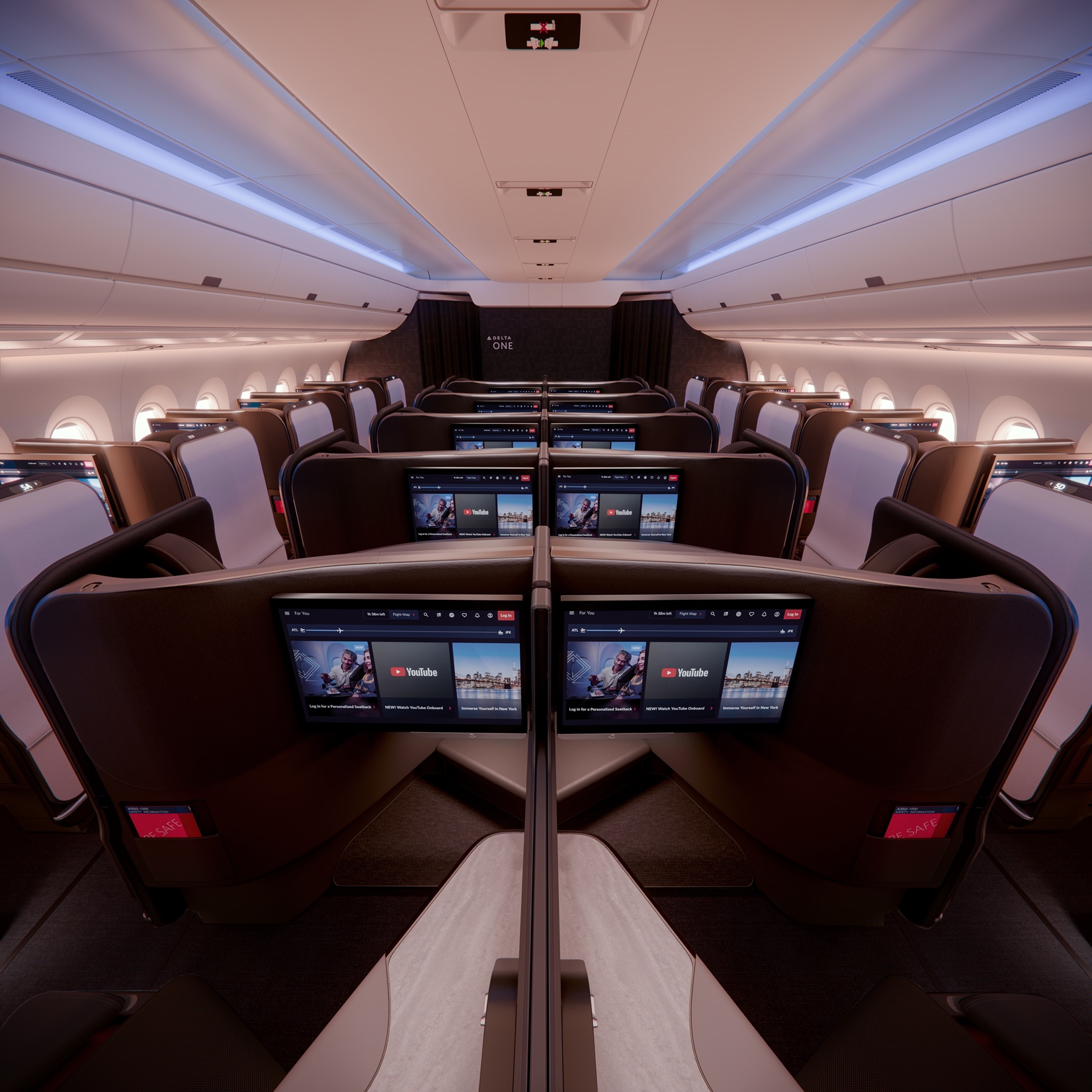
Delta Air Lines sold a passenger a business class upgrade from Atlanta to Seoul for just $17.34. That’s a lie-flat suite for a 15-hour flight for less than lunch at the airport. And Delta actually honored it. The passenger received the offer in July. It was also available for 1,700 SkyMiles. And the charge appeared on his Delta American Express card. How’s this for an upgrade price? by u/xjaehyun in delta He was still about six weeks from travel and spent the rest of the time until his trip checking his reservation, expecting Delta to decide that this was a mistake. Instead, he checked in normally and flew the trip in Delta One. Whether it was a mistake or not, the ridiculously low $17.34 was honored. The traveler posted photos of seat 10D, the wing over Seoul, dinner and French toast breakfast. Update to the $17.34 upgrade by u/xjaehyun in delta Delta Will Take Almost Any Amount For A Premium Seat Delta has led the industry in monetizing its premium cabins. United pioneered “Tens of Dollars” buy ups on domestic flights years ago, but nobody leveraged taking some amount for a premiun seat, even internationally, the way Delta has. In 2009, only about 11% of Delta’s domestic first class seats were occupied by paying passengers. Another 8% went out empty, while 81% were filled by upgrades, awards and employees. Today Delta sells about 87% to 88% of those seats, leaving only around 12% to 13% for upgrades. Former Delta President Glen Hauenstein, the architect of the carrier’s commercial strategy, spoke freely about turning domestic first class from a loss leader into a profit center. Other airlines followed. Twenty-six dollars is more than zero. If Delta can find a coach passenger willing to pay $26 for the last first class seat, that produces more revenue than giving it to a Diamond member. But it’s $26 from an infrequent flyer versus the value of rewarding a customer who spends $30,000 to $50,000 a year with the airline and on its credit card. Delta chooses the $26. This Atlanta–Seoul upgrade didn’t directly take a complimentary upgrade away from a Diamond member. Delta doesn’t offer complimentary Medallion upgrades to international business class. But the $17.34 is the same philosophy: keep lowering the price until somebody gives the airline an amount above zero rather than letting a premium seat go unsold or honored with a Global Upgrade Certificate. Long Haul Business Class Has Been Getting More Expensive – And Cheaper Several years ago, Delta generally wouldn’t offer long haul business class upgrades below about $599. Then in 2024, I wrote about Delta selling a Paris–Seattle upgrade to Delta One for $299. Readers reported $350 Rome–New York upgrades and $499—or 49,000-mile—Seattle–London upgrades. At the time, Delta was undercutting even American, which had been selling $350 coach-to-business upgrades from Los Angeles to Sydney and Dallas to Seoul. This is even as paid ticket prices have gone up. It was common before the pandemic to find sub-$2,000 business class roundtrips to Europe. I haven’t seen that much in a long time. And $17.34 is exceptionally low, but still not truly an outlier. One traveler reports paying an $87 upgrade for Amsterdam–Minneapolis in Delta’s business class. Another reported a $50 upgrade from New York to Paris, with a total ticket cost under $400. Someone else saw Los Angeles–London premium economy for $29. Delta’s offers can appear immediately after ticketing, a month before departure or at check-in. They can rise, fall or vanish entirely. Some customers check the seat map every day. How A $1,671 Upgrade Became $17.34 This passenger’s reservation was especially complicated. The outbound was New York LaGuardia – Atlanta in coach B inventory and Atlanta – Seoul in premium economy G inventory. The return was Hong Kong – Los Angeles – New York JFK in Delta One I inventory. The Atlanta – Seoul upgrade initially cost $2,390. Two months after ticketing the offer increased to $2,661. The following day it dropped to $1,812. The passenger changed his return from Hong Kong to Seoul so that he could fly Korean Air’s Boeing 747 to Los Angeles. The return moved into Z inventory, Delta’s lowest-priced business class bucket. That forced the entire itinerary to reprice. New York – Atlanta moved into W inventory and Atlanta – Seoul moved from discounted G to more expensive A inventory. The Delta One upgrade dropped to $1,671 and then, a few days later, became $17.34. There were several theories in the comments: Delta intended to charge $1,734 and misplaced the decimal point. The passenger had already paid so much for Premium Select that the difference to a discounted Z-class business fare was almost nothing. Delta needed to move someone out of premium economy because that cabin was becoming full. The upgrade algorithm simply broke after several itinerary changes. Artificial intelligence had produced another piece of pricing chaos. The $4,500 total ticket price of the ticket received the most attention. Several commenters dismissed the upgrade entirely, arguing that the passenger had already paid a Delta One price for Premium Select. That’s not right. The $4,500 roundtrip for premium economy outbound and business class return was still less than Delta wanted for business at the time. And the initial upgrade offer was about 100 times as much. Instead, the passenger was on an expense A fare premium economy outbound and a new discount business class inventory appeared. So the fare difference did shrink between the cabins. And there wasn’t a price floor on the upgrade offer. When an airline offers you long haul business class for $17… you take it. Topics on this page
Delta’s $17.34 Business Class Upgrade On A 15-Hour Flight Looked Like An Error—Then The Passenger Actually Flew It
Full Article
Original Source
Read the full article at Viewfromthewing →KhanList aggregates and links to publicly available news content. We do not host full articles from third-party sources. Always verify important information with original sources.