
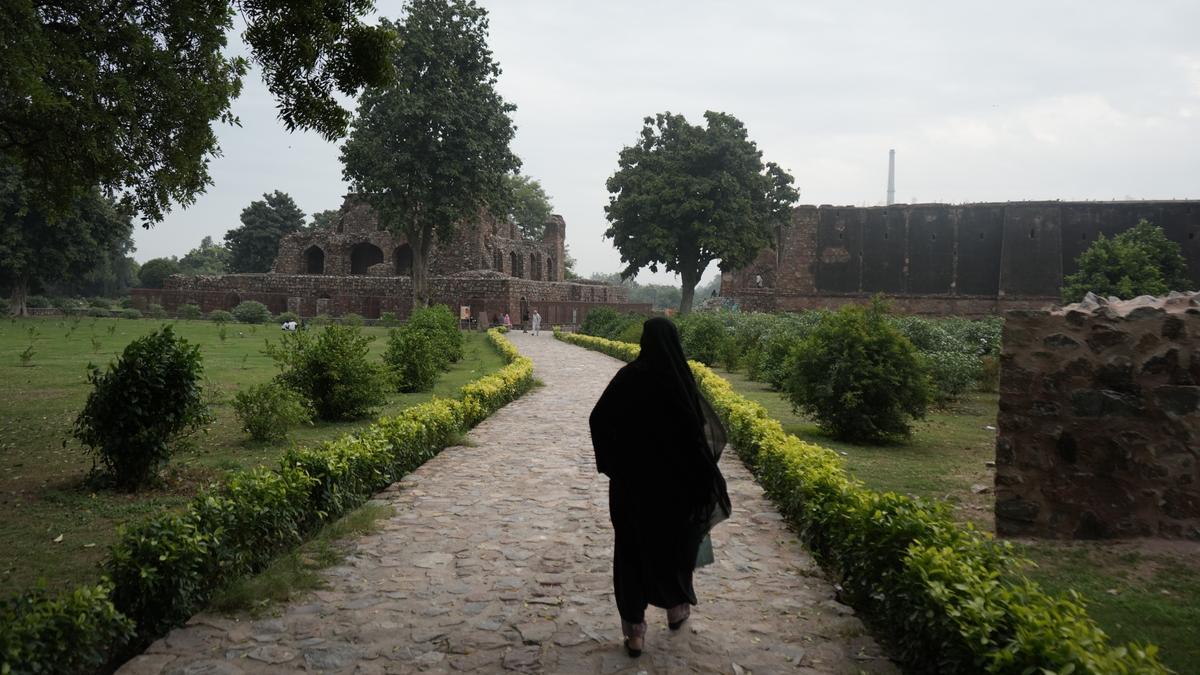
If you are looking for an adventure this winter, skip the usual spots and head to the 14th-Century fort complex on Bahadur Shah Zafar Road known as Kotla Firoz Shah. Sultan Firoz Shah, the third emperor of the Tughlaq dynasty, built it after reluctantly inheriting the throne from his mad cousin, Muhammad Bin Tughlaq. The citadel became part of the fifth city of Delhi, known as Firozabad, which, according to 14th-Century historian Afif, extended to kush-e-shikar, near Delhi’s North campus. But the citadel of Firoz Shah is famous not just for its history, but for the unseen residents within it. Every Thursday, hundreds of believers come to the ASI monument to appeal to the fort’s djinns.Who are the djinns?Djinns, jinns, genies, and jinn mamu are some of the names given to these supernatural beings intrinsic to Islamic belief. They occupy the space between popular imagination, religious beliefs, and folklore. For many believers, djinns are not just legends or creatures of folklore. They live in a world alongside ours, invisible to most. Many believe the population of djinns outnumbers that of humans. The Arabic root word ‘j-n-n’ means concealment or ‘unseen ’, which lies at the heart of belief in djinn. 14th-Century fort complex on Bahadur Shah Zafar Road - Kotla Firoz Shah | Photo Credit: Muzammil Bashir The mythological legends of djinns predate the Quran. According to tradition, djinns were created from smokeless fire, humans from clay and angels from light. Djinns, like humans, have finite lives, but they are stronger, can shapeshift, and live longer. They can choose between good and evil, and are accountable for their actions. It is an imagined parallel society with its own moral choices. Offering sugar and milk is common in the abode of djinns, in hopes of protection and relief.The djinns of Kotla Firoz ShahKotla Firoz Shah is not a monument often visited by travellers or tourists. Only on Thursday is the monument abuzz with activity. From two in the afternoon, when entry is free, devotees arrive in the hundreds, drawn not by the medieval fort but by the djinns that inhabit it. Devotees move around with petitions, prayers and offerings, hoping to have their complaints heard by the djinns. | Photo Credit: Muzammil Bashir The citadel’s entrance is a battered, broken bastion with arrow slits still visible. Upon entering, guard rooms with broken quartz sit alongside the entrance. Walk further into the complex and the heavy scent of incense and rose petals begins to overpower everything else. Devotees move around with petitions, prayers and offerings, hoping to have their complaints heard by the djinns. The fort stood on the banks of the River Yamuna, whose course has since shifted East of the city. The complex included halls of public audience, residential quarters, a hall of private audience, women’s quarters, a grape vineyard, circular baoli, mosque, and Hawa Mahal. Much of the fort has since fallen into disrepair, with stone quarried to build later forts and cities in Delhi, including Shahjahanabad. The most striking life of the citadel is not its architectural ambitions but the religious significance it holds amongst the believers. The building was once connected to the Jama Masjid mosque inside the complex by a bridge | Photo Credit: Muzammil Bashir Inside the complex, one striking, unusual structure is the Hawa Mahal, or the pyramid of cells. The building was once connected to the Jama Masjid mosque inside the complex by a bridge. The pyramid of cells is probably the most well-known and significant structure in the complex, topped by an Ashokan pillar. The Hawa Mahal has small vaulted chambers surrounded by a terrace. As you enter the fenced structure, a winding staircase takes you to each level, with dark chambers lit only by light from the entrance. The three-tiered structure, with diminishing floors, offered a commanding view of the Yamuna from its roof.For devotees, the pyramid is more than a medieval monument; it is considered to be the house of djinns. Inside the chambers lie offerings of sugar candies, incense, and rose petals along with handwritten letters to the unseen djinns. These letters of complaint or ‘shikwah’ speaks troubles of the devotees which they may find harder to share elsewhere. These complaints can be about anything: lovers’ quarrels, a cruel mother-in-law, an indifferent husband, financial or health problems. No grievance is considered too trivial that it cannot be brought to the djinns. Kotla Firoz Shah | Photo Credit: Muzammil Bashir For many women who visit Kotla, the Hawa Mahal is affectionately called ‘babul’ or ‘mayika’, the parental home where a woman can take refuge. The djinns are considered as protective brothers who will listen and solve problems without judgment. This relationship is reflected in how children call the unseen beings as ‘djinn mamu’, or maternal uncle.The letters themselves look like formal petitions. The believers also attach a passport size photo and address almost filing an official complaint. It is believed that the king of djinns Iblees holds a court every evening in Kotla Firoz Shah and decides which complaints require immediate action. The process has its own rhythm, devotees return every Thursday, week after week, to get their complaint heard. When a wish is fulfilled the devotees express their gratitude by offering prayer at the Jama Masjid and offering biryani to everyone.When did djinns arrive at Kotla Firoz Shah? In his book Jinneology, anthropologist Anand Vivek Taneja traces the practice to the period 1975-1977, during India’s Emergency and the political unrest it caused in the city. The forced sterlisation campaign caused widespread distress within the city’s poor. People from areas such as Turkman Gate, Pahadganj, and Seelampur started coming to Kotla Firoz Shah. According to belief, even the taq or the alcoves of the walls needs to be kept open to let djinns pass through. | Photo Credit: Muzammil Bashir Over time, the citadel’s reputation as the house of djinns firmly took shape in popular imagination. According to the urban legend, a bootlegger named Naseen came to the citadel and sat under the Ashokan Pillar. He started playing the flute and enchanted the djinn of Kotla Firoz Shah, who fell madly in love with him. His son Chand claims that his father, since then, had the blessings of the djinn. Another popular legend is that of Ladoo Shah, who was displaced from Turkman Gate, started living in the fort and was blessed with extraordinary powers by the djinns. Soon, the rumour spread that Ladoo Shah could perform miracles, and people began flocking there. For Taneja, such places of worship and belief grew where the government failed to address people’s grievances. Where official institutions offered little relief, people sought another avenue of justice and protection.Visiting the abode of djinns comes with its own set of unwritten rules. Devotees are advised not to keep their hair open, or wear perfume and to treat animals with kindness, they can be forms of djinns. According to belief, even the taq or the alcoves of the walls needs to be kept open to let djinns pass through.As evening falls over Kotla Firoz Shah, the djinn’s nightly court takes over. This is the insaaf ki jagah, the court of justice where all decisions are weighed. In Delhi, the supernatural needs no festival or costume. In a city built upon ruins of the past, some unseen inhabitants never quite left.Anoushka Jain is a historian and the author of Badass Begums: The Incredible Women Who Shaped Mughal India.
Delhi’s Kotla Firoz Shah becomes a courtroom for faith, doubt and belief
Full Article
Original Source
Read the full article at Thehindu →KhanList aggregates and links to publicly available news content. We do not host full articles from third-party sources. Always verify important information with original sources.