
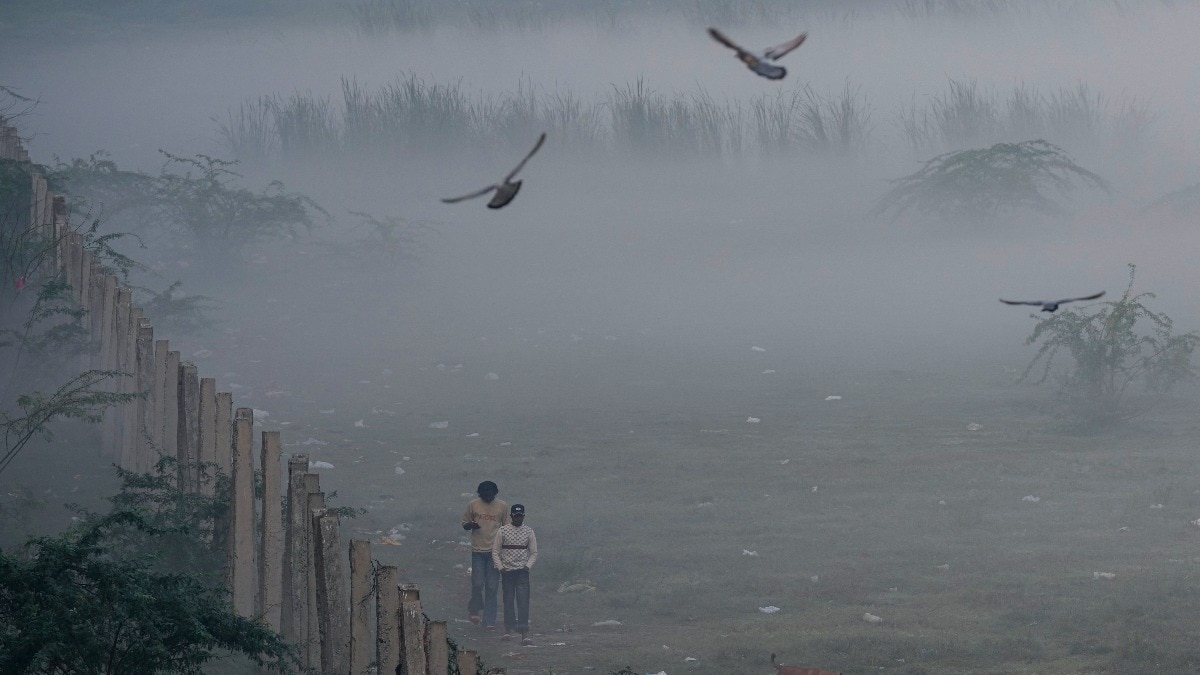
Delhi's air quality remained in the severe category on Thursday, with the Air Quality Index (AQI) reaching 466 at 11:31 am, according to AQI.in.Pollution levels had stayed above 400 since 9 pm on Wednesday, November 11, climbing to 503 at 6:01 am on Thursday, before easing through the morning but hovering above the 400 limit.The latest reading, however, showed that the capital was still breathing heavily polluted air. A worker walks in the Red Fort premises as a layer of haze covers the area, in New Delhi. (Photo: PTI) The latest spell comes days after Diwali, when firecracker smoke added to an already high pollution load. But fireworks are only one part of the problem. Local emissions, smoke from farm fires and weather conditions have all contributed to the pollution hanging over the city.DIWALI WORSENED POLLUTION PROBLEMDelhi was already dealing with high pollution before Diwali on November 8. A graph illustrating Delhi's AQI in the last 24 hours. (Photo: AQI.in) Firecrackers pushed levels higher, with the Indian Institute of Tropical Meteorology (IITM) estimating that they contributed 71.1% of PM2.5 pollution during the early hours of Diwali night.Their contribution fell in the following days, but fireworks added to pollution from vehicles, industries, household fuels and road and construction dust.These pollutants do not clear quickly when winds are weak.Cooler conditions and the layer of air in which pollutants can spread can keep dirty air close to the ground. People ride a rickshaw amid hazy weather, in New Delhi. (Photo: PTI) FARM FIRES AND POLITICAL BLAME GAMESmoke from crop-residue burning in Punjab and Haryana is another seasonal source.After the paddy harvest, some farmers burn leftover stubble to clear fields quickly for the next crop. Smoke can travel towards Delhi when winds carry it in that direction.The issue has fuelled a political dispute. Dense smoke billows into the sky as a farmer burns stubble at a farm in Amritsar, Punjab. (Photo: PTI) Delhi's BJP government has blamed the AAP government in Punjab for farm fires, while Punjab leaders have rejected the charge and argued that Delhi must tackle pollution generated within the capital.Farm fires contribute, but they are not the only cause. Vehicles, dust and industrial emissions remain important local sources.WHAT RESTRICTIONS ARE IN PLACE?Stage III of the Graded Response Action Plan (GRAP) has been in force across Delhi-NCR since November 6.Measures include a ban on most construction and demolition work, restrictions on older vehicles and certain goods vehicles entering Delhi, and the closure of stone crushers and mining operations. Vehicles move amid hazy weather, in New Delhi. (Photo: PTI) Schools up to Class V have also been asked to shift to hybrid classes.AQI.in's hourly reading of 466 does not, by itself, determine the GRAP stage.The Commission for Air Quality Management (CAQM) makes decisions using official air-quality assessments and forecasts, including CPCB data.Delhi's pollution is not simply a post-Diwali problem. Firecrackers added to the issue, but everyday emissions, farm fires and unfavourable weather continue to keep the capital's air severely polluted.- Ends
Delhi's AQI has been above 400 since last night. What's choking the capital?
Full Article
Original Source
Read the full article at Indiatoday →KhanList aggregates and links to publicly available news content. We do not host full articles from third-party sources. Always verify important information with original sources.