
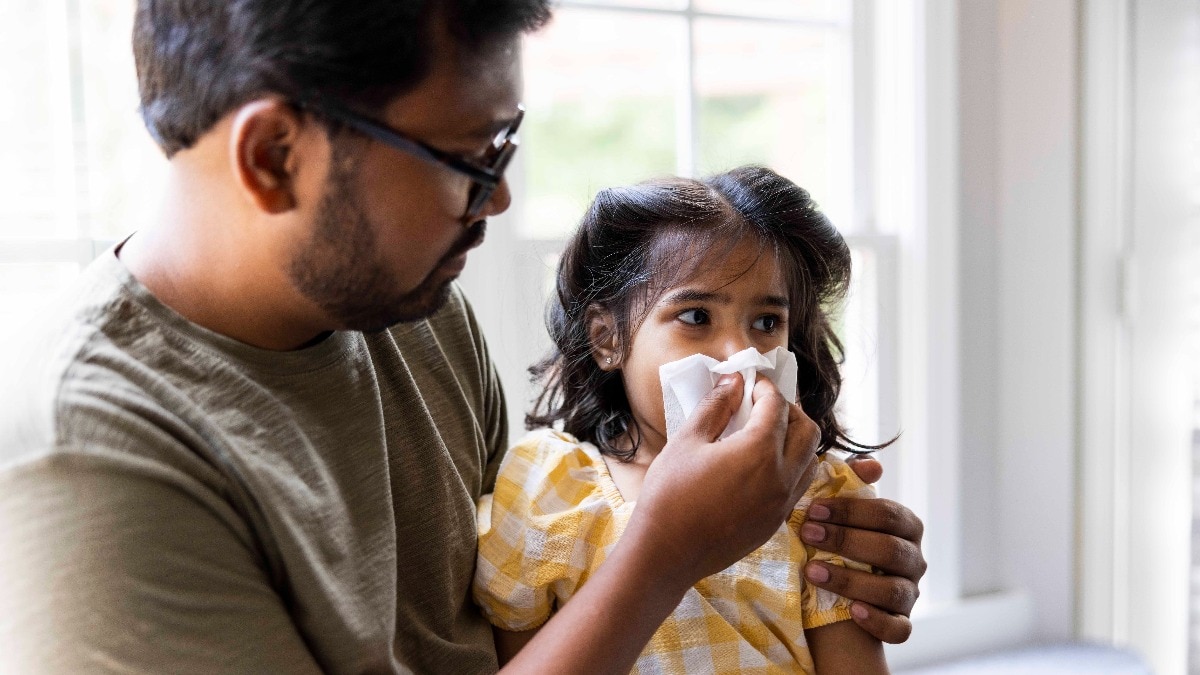
Sudden changes in temperature, humidity, dust and air quality can trigger breathing problems in children with sensitive airways. Here's what parents should watch for.As Delhi-NCR transitions from monsoon to winter, changing weather conditions can be challenging for children with asthma and allergies. Fluctuations in temperature, humidity, dust, and air quality can irritate sensitive airways and trigger coughing, wheezing, and breathing difficulty.According to Dr. Nikhil Rajvanshi, Consultant - Paediatric Pulmonologist, Allergy and Sleep Specialist, Rainbow Children's Hospital, Delhi, pollutants such as particulate matter can irritate the airways, increase inflammation, and make children more prone to respiratory symptoms."Weather changes can also aggravate allergic rhinitis, leading to sneezing, nasal blockage and post-nasal drip, which may further worsen asthma symptoms," Dr. Rajvanshi says. The Union Environment Ministry said Delhi recorded an average AQI of 102 in September 2026, the lowest September average in five years. However, the AQI on September 30 was still 129, in the "moderate" category. The ministry has also noted that Delhi-NCR's air quality generally worsens during winter because of weather conditions and emission sources.WHY WEATHER CHANGES AFFECT CHILDRENChildren's airways can be particularly sensitive to environmental changes. Sudden temperature changes may cause airway narrowing in susceptible children, while dry air can irritate the airway lining. "Children's airways are smaller and can be more sensitive to environmental changes," says Dr. Vishal Jain, Lead Consultant - Paediatrics and Neonatology, CK Birla Hospital, Delhi.Humidity can also influence indoor allergens such as dust mites and mould, while poor air quality can increase airway inflammation and sensitivity."When several factors occur together, children who are already prone to asthma or allergies may develop coughing, wheezing, chest tightness or difficulty in breathing," Dr. Jain adds.SIGNS PARENTS SHOULD WATCH FORParents should look for a change from their child's usual respiratory pattern. Warning signs includeIncreasing cough, particularly at night or during exerciseRecurrent wheezingShortness of breath or chest tightnessReduced exercise toleranceWaking at night because of coughing or breathing difficultyIncreasing sneezing, nasal blockage or itchy, watery eyesNeeding the reliever inhaler more frequently than usualIf a child is struggling to speak, breathing very rapidly, showing chest retractions or becoming unusually drowsy, urgent medical attention is required.WHAT PARENTS CAN DOParents should ensure that prescribed asthma or allergy medication is being taken correctly and regularly. They can also check the local AQI before prolonged outdoor activities and consider shifting strenuous exercise indoors when pollution is high.At home, keeping bedrooms dust-free, washing bedding regularly, controlling dampness and mould, and avoiding tobacco smoke and indoor burning can help reduce exposure to triggers.Dr. Rajvanshi says children with asthma do not necessarily need to remain indoors all the time. "The goal is to reduce exposure during periods of poor air quality while maintaining appropriate treatment and normal activities when conditions permit."Parents should also keep the child's individual asthma action plan and prescribed medicines easily accessible.- Ends
Delhi-NCR weather: What doctors say about asthma risks in kids
Full Article
Original Source
Read the full article at Indiatoday →KhanList aggregates and links to publicly available news content. We do not host full articles from third-party sources. Always verify important information with original sources.